Early Giving is Open, Michter’s Spookeasy at the Frazier, America250 Family Day this Saturday, and More
Happy Labor Day! Today, we celebrate the workers whose skill, effort, and production have shaped Kentucky and the nation—for example, the workers in Christian County, the “Batter Capital of the World.”
I learned about the impact of Christian County flour mills in our 120: Cool KY Counties exhibit.
Now, I’m so excited that this exhibit is going on the road! We’ll bring the Frazier’s 120 exhibit to Kentuckians, sharing how each county’s unique story forms our state’s history. In doing so, we’ll remove barriers to museum experiences.
Our goal is to ensure that every Kentuckian, young and old, has access to museum-quality experiences. Why? Because we believe that understanding the past is the way to create a better future. With support from our generous donors, we can bring exhibits like 120: Cool KY Counties on the road to new audiences. We can preserve Kentucky’s history, providing education and community programming.
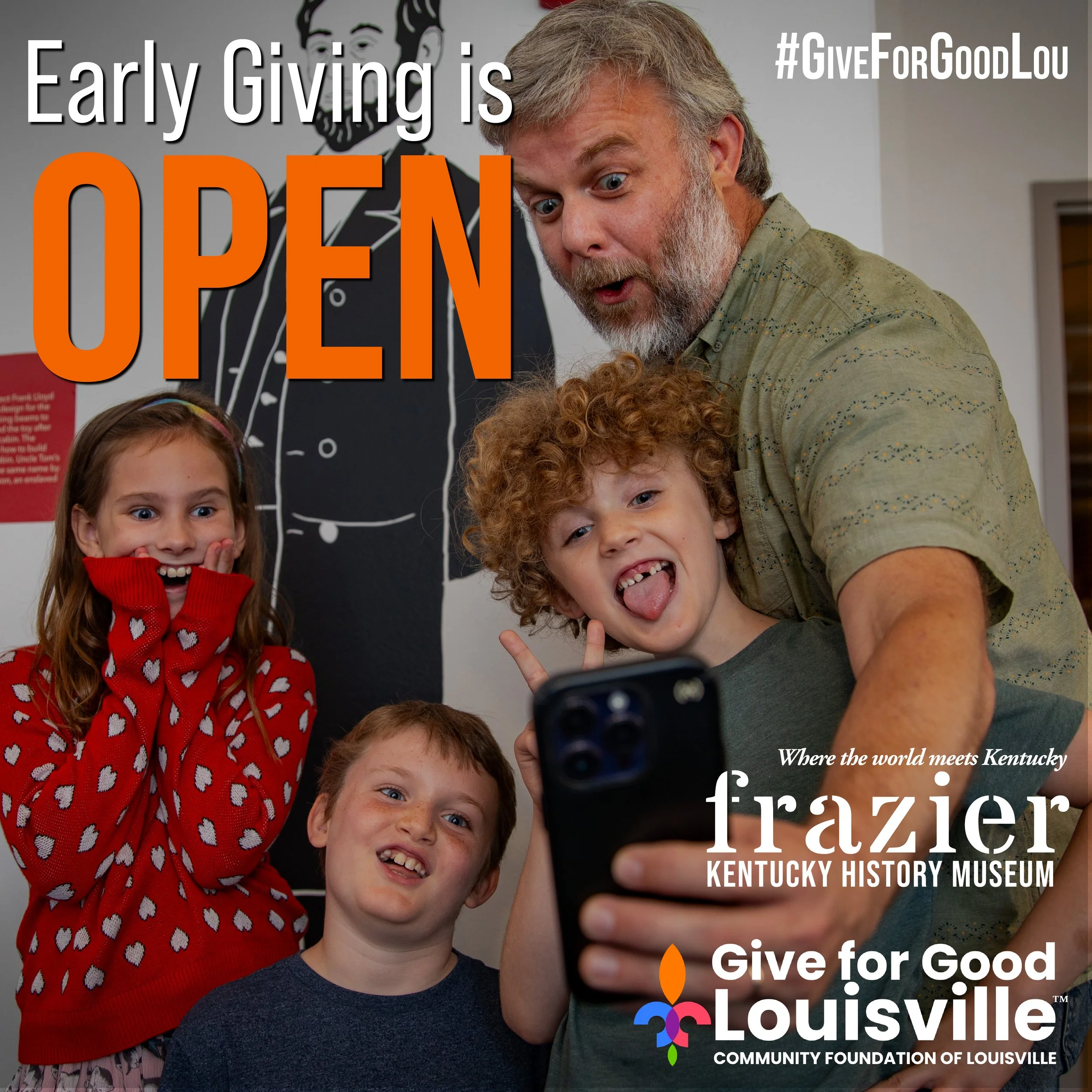
This week is Give for Good Louisville, our city’s largest day of annual giving. Early giving is open now, and every gift makes an impact on our mission! Show your support and donate here.
In today’s issue of Frazier Weekly, we commemorate the twenty-fifth anniversary of 9/11. We’ve asked US Army Special Forces veteran Scott Neil of Somerset and Marine Corps veteran Amy McGrath of Edgewood to reflect on that harrowing day.
Next, we announce two programs coming in October. First, Simon Meiners and archaeologist Dr. A. Gwynn Henderson will explore the last Native American village in Kentucky. Then, we’ve got our annual Michter’s Speakeasy—spookily rebranded for Halloween week.
Finally, we tease Saturday’s America250 Family Day and next week’s program for Underground Railroad Month.
And of course, we mark Labor Day with some Rosie the Riveter souvenirs in our shop.
Thank you for your continued support!
Becky Morris
Director of Development
Frazier Kentucky History Museum
This Week in the Museum
Cool Kentucky Shop: Rosie the Riveter Merch
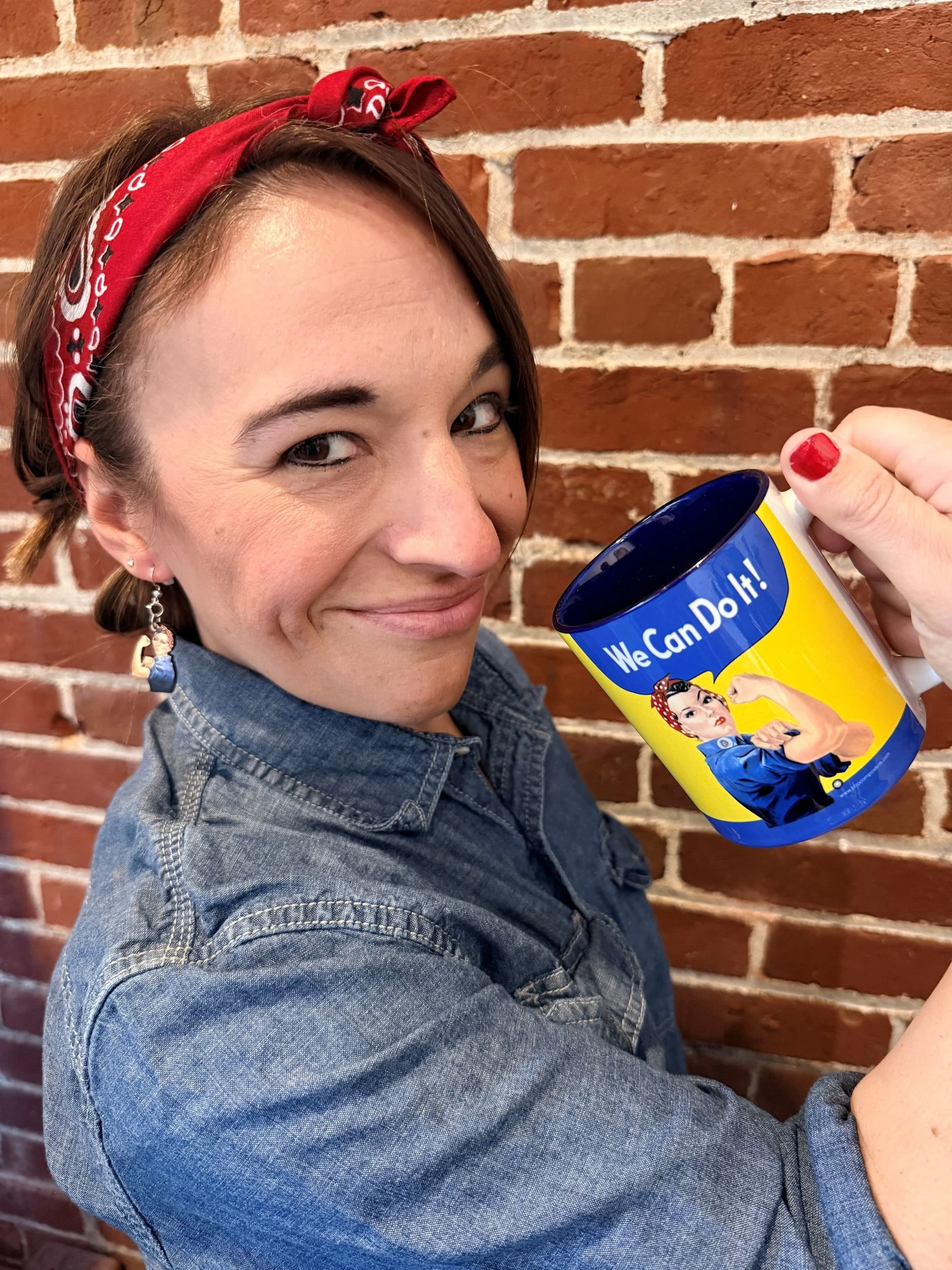
Heidi Janes models Rosie the Riveter merch sold in the Frazier’s Cool Kentucky Shop!
The iconic image of Rosie the Riveter was inspired by Kentucky’s own Rose Will Monroe, a real-life Rosie who worked as a riveter during World War II. Her story—and the image she inspired—became a powerful symbol of women stepping into roles traditionally held by men.
Rose’s strength, determination, and “we can do it!” spirit continue to inspire women today.
Celebrate Kentucky’s own Rosie with our graphic Rosie mug or iconic Rosie earrings—available now in the Cool Kentucky Shop!

Join Us for the 2026 Michter’s Spookeasy at the Frazier!
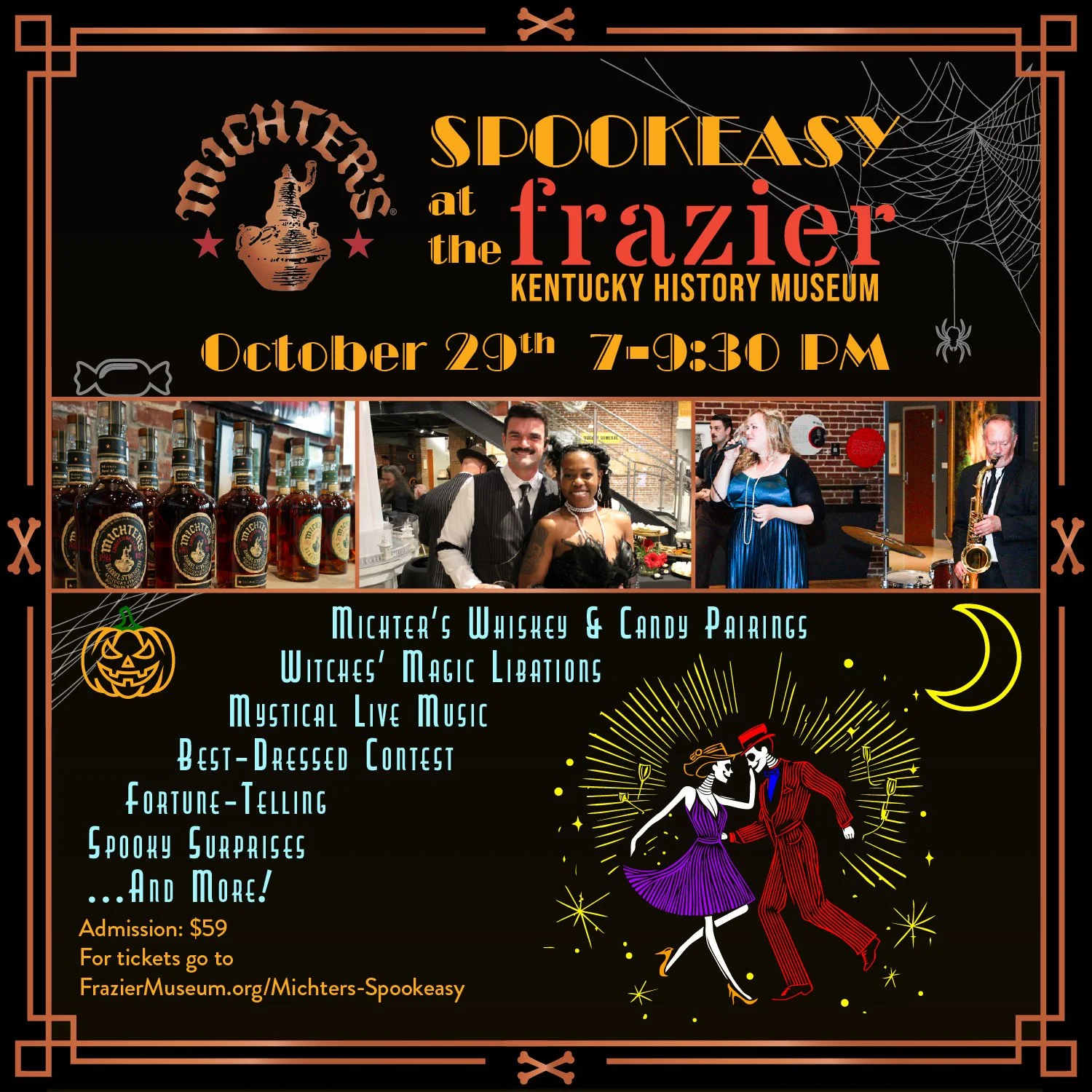
Grab your pinstripes, fringe, and a pair of dancing shoes, then Charleston your way into the shadows for the 2026 Michter’s Spookeasy at the Frazier!
You read that right—this year, we’re taking the blind pig to Sleepy Hollow. After years of being Louisville’s go-to Prohibition-style party, the Michter’s Speakeasy is getting a fun Halloween twist. We’re mixing the glamour and mischief of the Roaring Twenties with the ghosts and legends of All Hallows’ Eve for an unforgettable night. Come dressed to impress and ready to indulge!
Admission is only $59—and that includes hand-crafted cocktails, Michter’s gin and whiskey tastings, hors d’oeuvres, music and dancing, fortune telling, and 1920s revelry.
The lights will be low, the cocktails will be flowing, and the Spirits will be out. This is the one Speakeasy you don’t want to miss!
Join us Thursday, October 29, 7–9:30 p.m., for 2026 Michter’s Spookeasy at the Frazier.
What was the Last Native American Village in Kentucky?
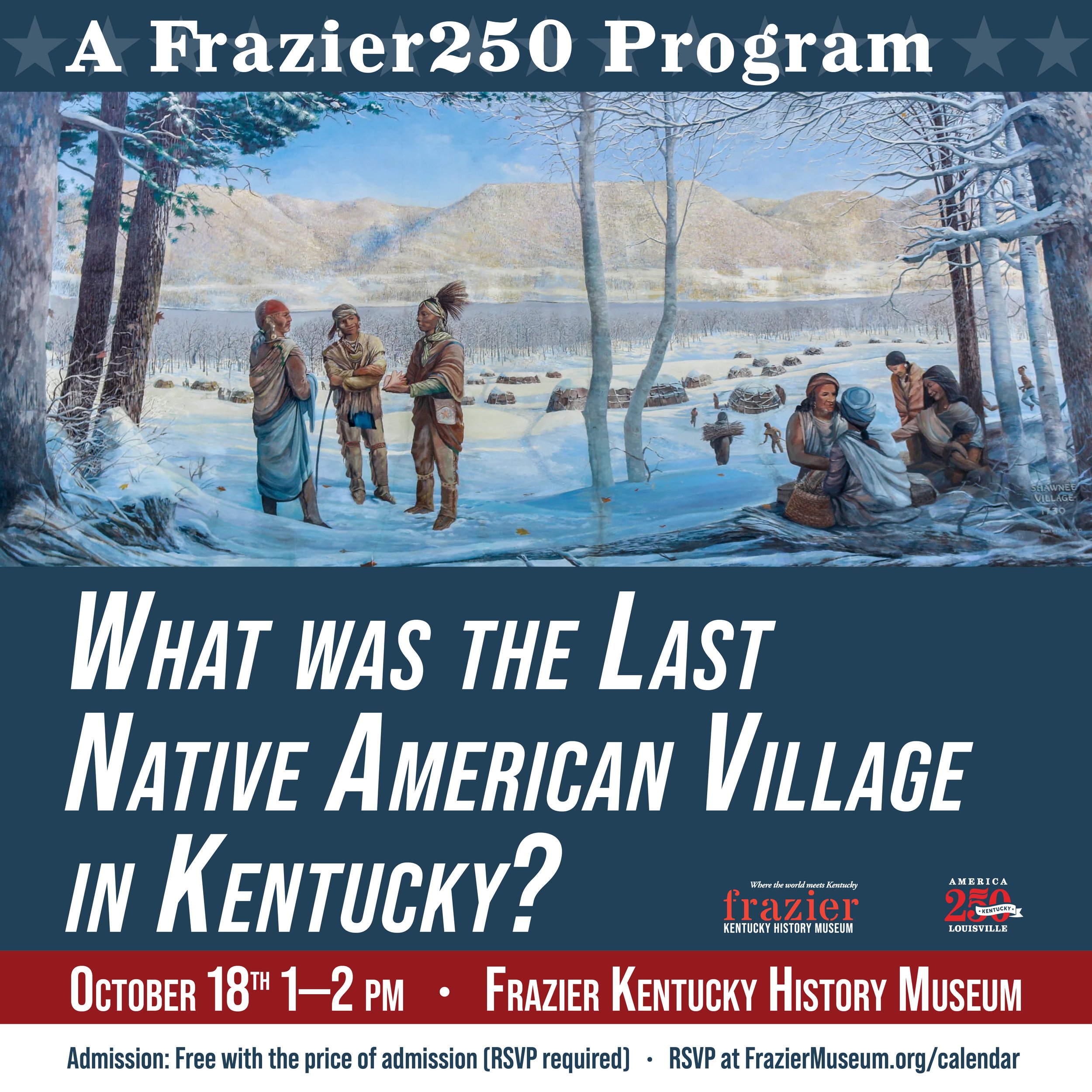
What was the last Native American village in Kentucky? Where was it, who lived there, and how did they live?
Join me (yes, this is my first program at the Frazier!) in conversation with archaeologist Dr. A. Gwynn Henderson, the Education Director at the Kentucky Archaeological Survey. As the Frazier marks 250 years since 1776—the year America declared its independence—we will shine a light on the Native American presence in Kentucky leading up to that time, specifically at Lower Shawnee Town.
This program will take place Sunday, October 18, 1–2 p.m., in the Frazier Museum’s Brown-Forman Theatre. Admission is free with the cost of museum admission.
Simon Meiners
Communications & Research Specialist
Frazier to Host America250-Themed Family Day this Saturday, September 12!
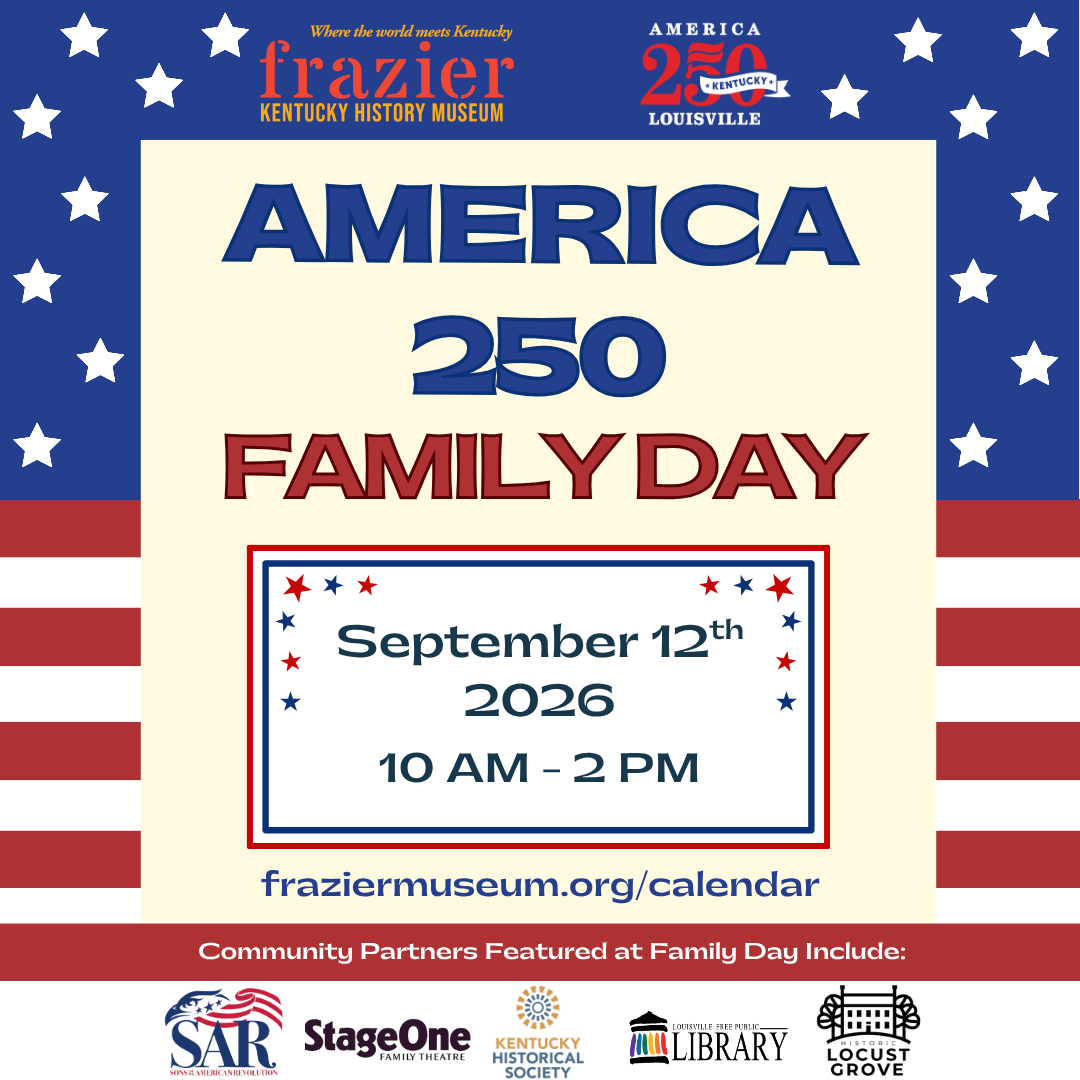
As we have entered the month of September and inch closer to the beginning of fall, the time to soak up the last bit of the summer fun with the family is now. Not sure how to spend it? Look no further than our America250 Family Day this Saturday!
Experience the Frazier’s four temporary exhibits inspired by American Independence and the contribution of Kentuckians to it: Pursuit of Happiness, Louisville to Liberty, I Too Am a Kentuckian, and Revolutionary Threads. With admission to the event, you and your family can engage in a series of hands-on crafts and activities provided by the Frazier’s Education team, participate in museum-wide scavenger hunts, guided tours, get up close with the collection, witness a live theater performance titled Early America Through Music, and gain access to the rest of the Frazier’s three floors of exhibitions!
The Frazier’s America250 Family Day will take place Saturday, September 12, with admission to the event being from 10 a.m. to 2 p.m.—and we are so excited to partner with five different local community organizations to bring you fun and engaging activities for the whole family! Learn about the history of the American Revolution and its connection to the Bluegrass State from Sons of the American Revolution, Kentucky Historical Society, and Historic Locust Grove! Watch a storytelling performance from StageOne Family Theatre and try on a variety of costumes and props. Afterwards stop by the Louisville Free Public Library’s table and grab a free America250-themed book.
Don’t miss out on this amazing opportunity to learn and make memories with the whole family. Mark your calendars and join us this weekend!
Tori Kennedy
Manager of Youth & Family Programs
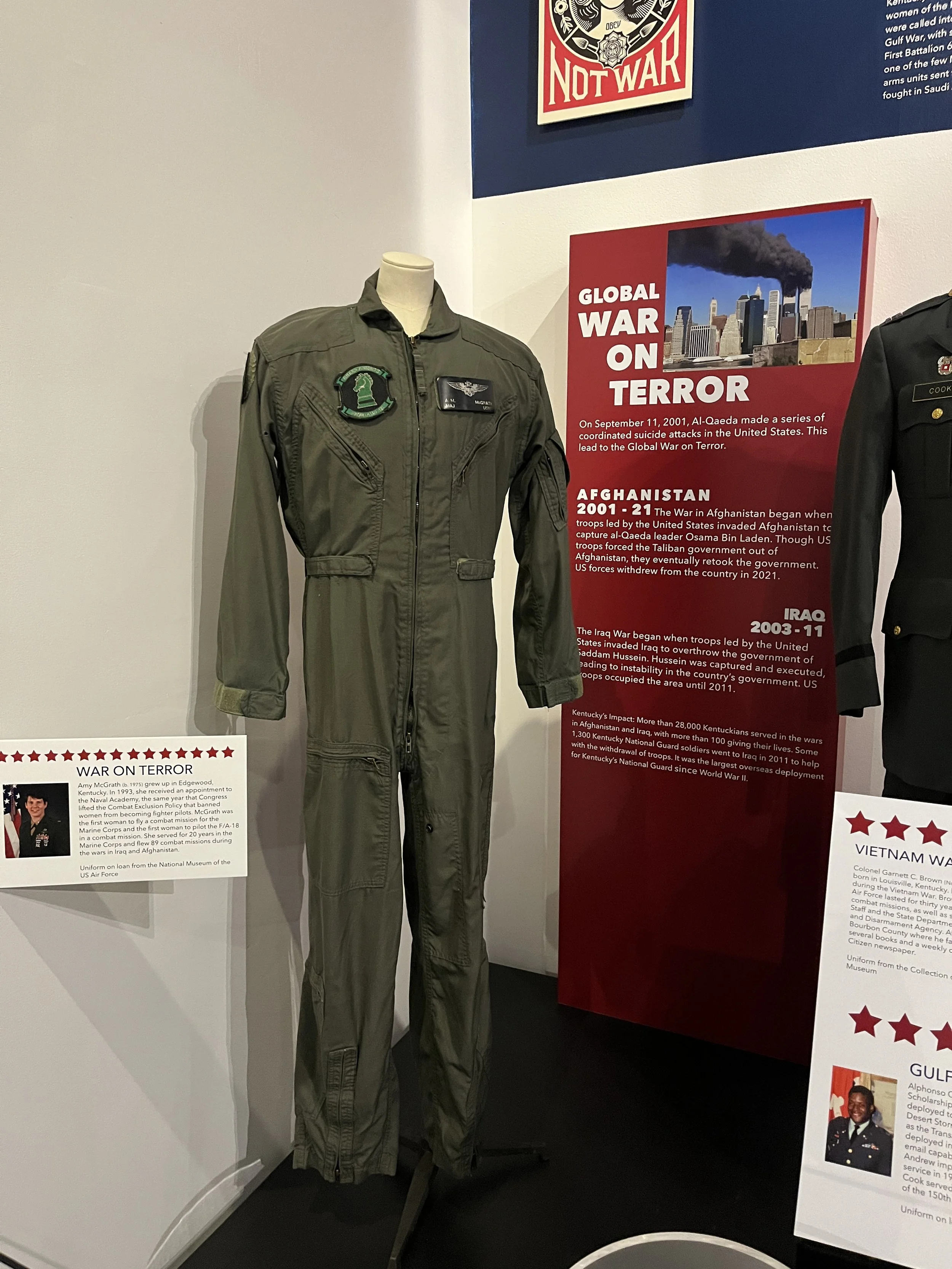
Marine Corps veteran Amy McGrath’s flight suit on display in the Frazier’s I Too Am a Kentuckian exhibition, August 28, 2026.
As we mark the twenty-fifth anniversary of 9/11, many of us will be thinking about where we were that morning when the terror began to unfold. After calling family, my first call was to Congressman Ron Mazzoli to join me on WHAS-TV to help give context to what was happening in our country. We called each other on subsequent 9/11’s until his passing, the memories of that day forever connecting us. This year, I reached out to Amy McGrath who is represented in our I Too Am a Kentuckian exhibition with her Marine flight suit. Her accounting of that day is harrowing as she waited on a runway in her fighter jet waiting to be called into service. Thank you for your service, and for sharing this deeply personal insight to that day.—Rachel Platt, VP of Mission
Twenty-five years ago, our country was attacked. Nearly 3,000 innocent people were killed that morning, and like so many Americans, I will never forget where I was when it happened.
I had just gotten to my first operational fighter jet squadron as qualified aircrew, stationed at Marine Corps Air Station Miramar in Southern California. As we watched the unimaginable images coming from New York and Washington, it quickly became clear that this was not simply something we were witnessing on television. We had no idea whether more attacks were coming.
Shortly after the World Trade Center and the Pentagon were hit, I put on my flight suit, grabbed my gear, and climbed into the cockpit of a fully armed F/A-18D Hornet.
Along with three other pilots and weapons systems officers, I sat on Runway 24 at Miramar for hours, waiting for the order to launch. Our jets were loaded with radar-guided and heat-seeking air-to-air missiles. Our mission, if called upon, would be to intercept any aircraft believed to pose a threat to another American city—and, if necessary, shoot it down.
It was a mission I had never imagined I might be asked to perform.
In Marine Corps fighter aviation, I had trained for combat. I understood that someday I might be called upon to use the weapons on my aircraft against an enemy. But I had never contemplated sitting in a fighter jet on American soil, prepared to defend an American city from an aircraft flying in American airspace.
Those hours on the runway were among the most intense of my life.
We never launched that day. But September 11 changed the trajectory of my military service and the lives of an entire generation of Americans who served.
In the years that followed, I would deploy overseas and fly combat missions in the wars that came after 9/11. Thousands of other Americans would do the same. Many would not come home. Others returned carrying wounds, visible and invisible, that remain with them today.
Twenty-five years later, there is much our country can—and should—reflect upon about the wars that followed September 11. But on this anniversary, my thoughts return first to that day itself.
I think of the 2,977 people who left home that morning expecting an ordinary Tuesday and never returned. I think of the firefighters, police officers, paramedics, service members, and ordinary citizens who ran toward danger to help people they did not know. And I think of the Americans who, in the years that followed, raised their right hands and volunteered to serve their country.
For me, September 11 solidified something I already felt deeply: a desire to protect this country and the people who call it home.
The flight suit now displayed at the Frazier Kentucky History Museum represents one small piece of that much larger story. To me, it is not simply a reminder of missions flown or wars fought. It is a reminder of service—and of the responsibility each generation inherits to protect the freedoms that allow Americans to live in the land of the free and the home of the brave.
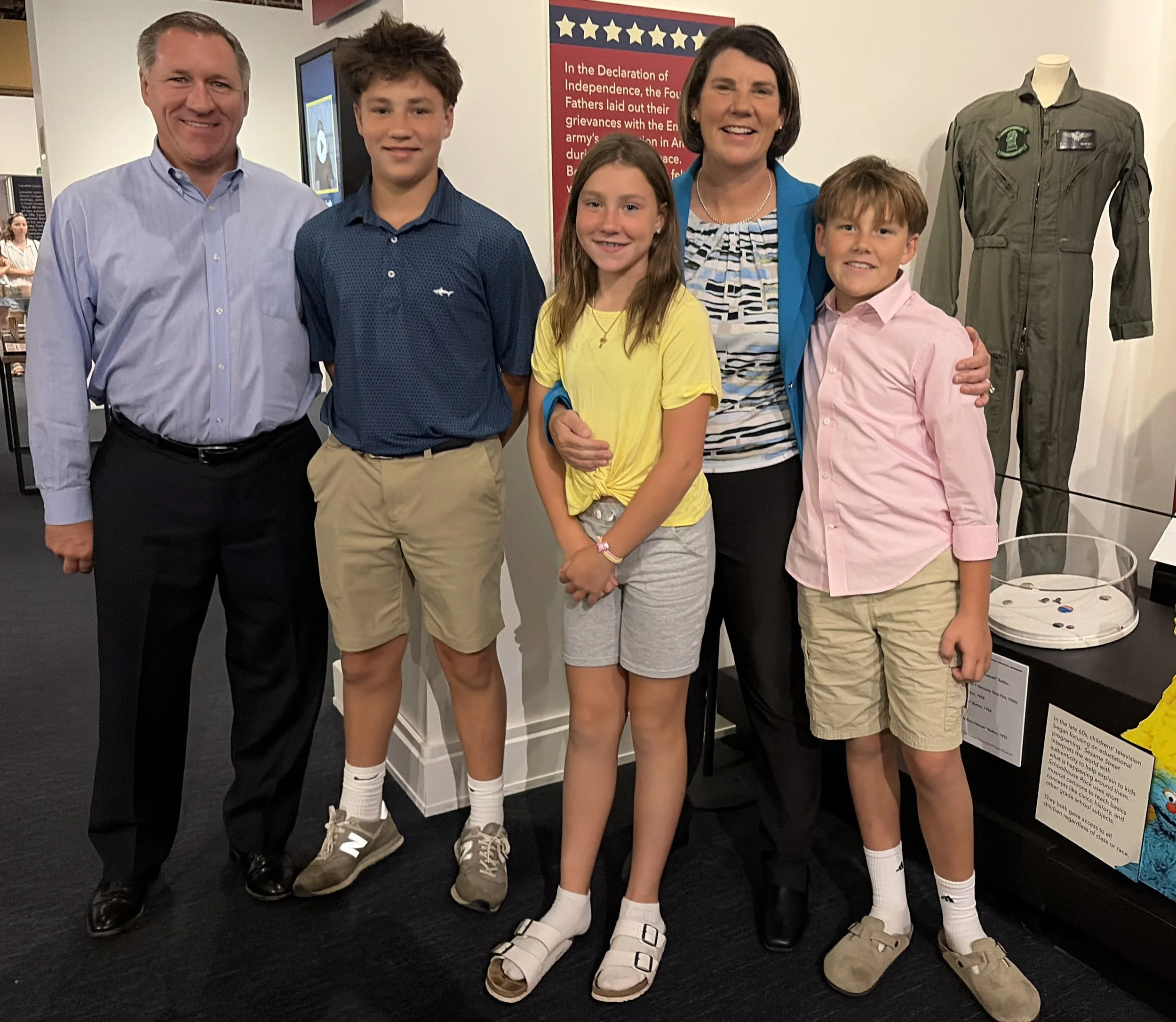
Amy McGrath
Guest Contributor
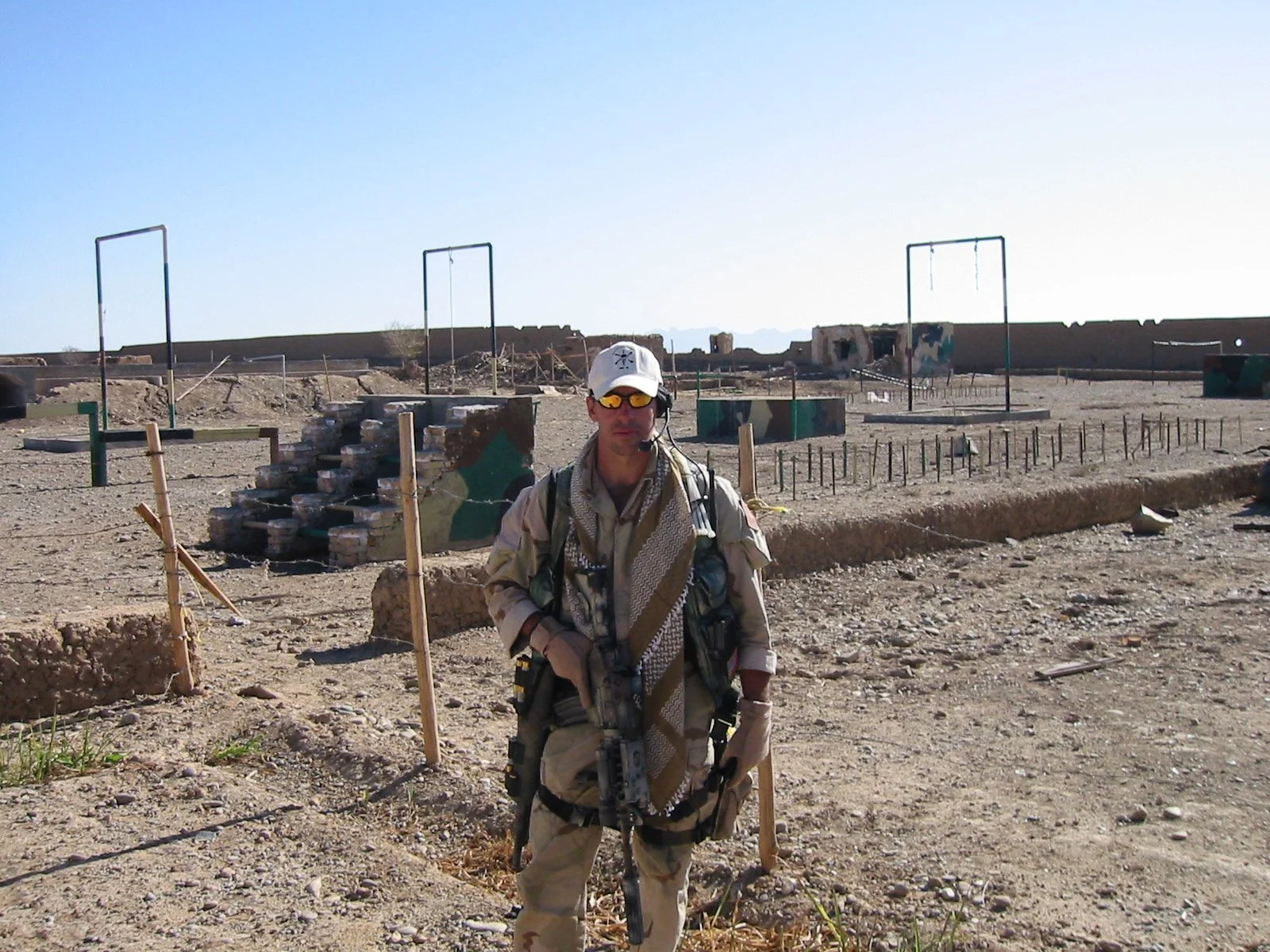
US Army Special Forces veteran Scott Neil, who served in Afghanistan after 9/11.
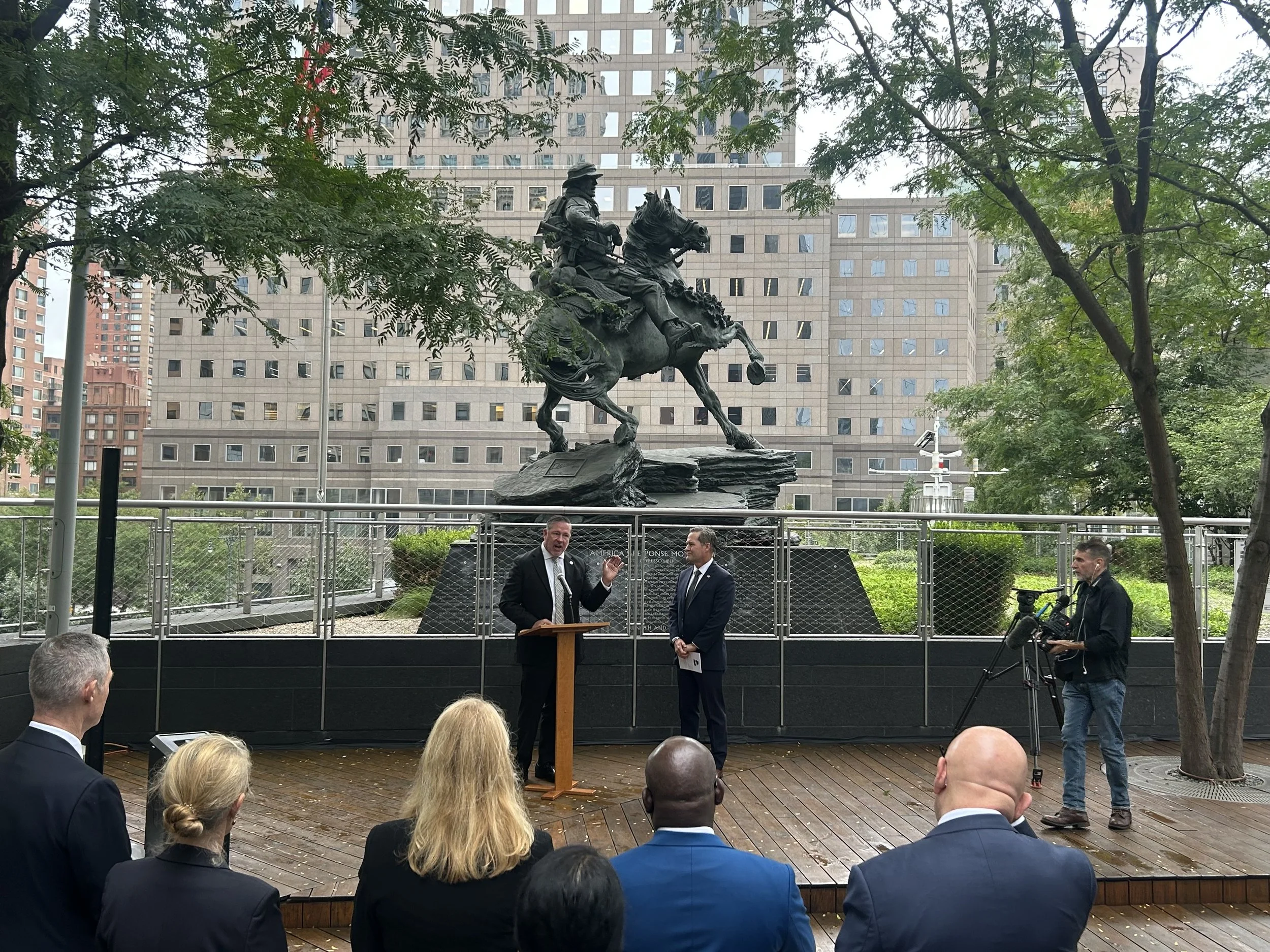
Scott Neil speaks in front of America’s Response Monument.
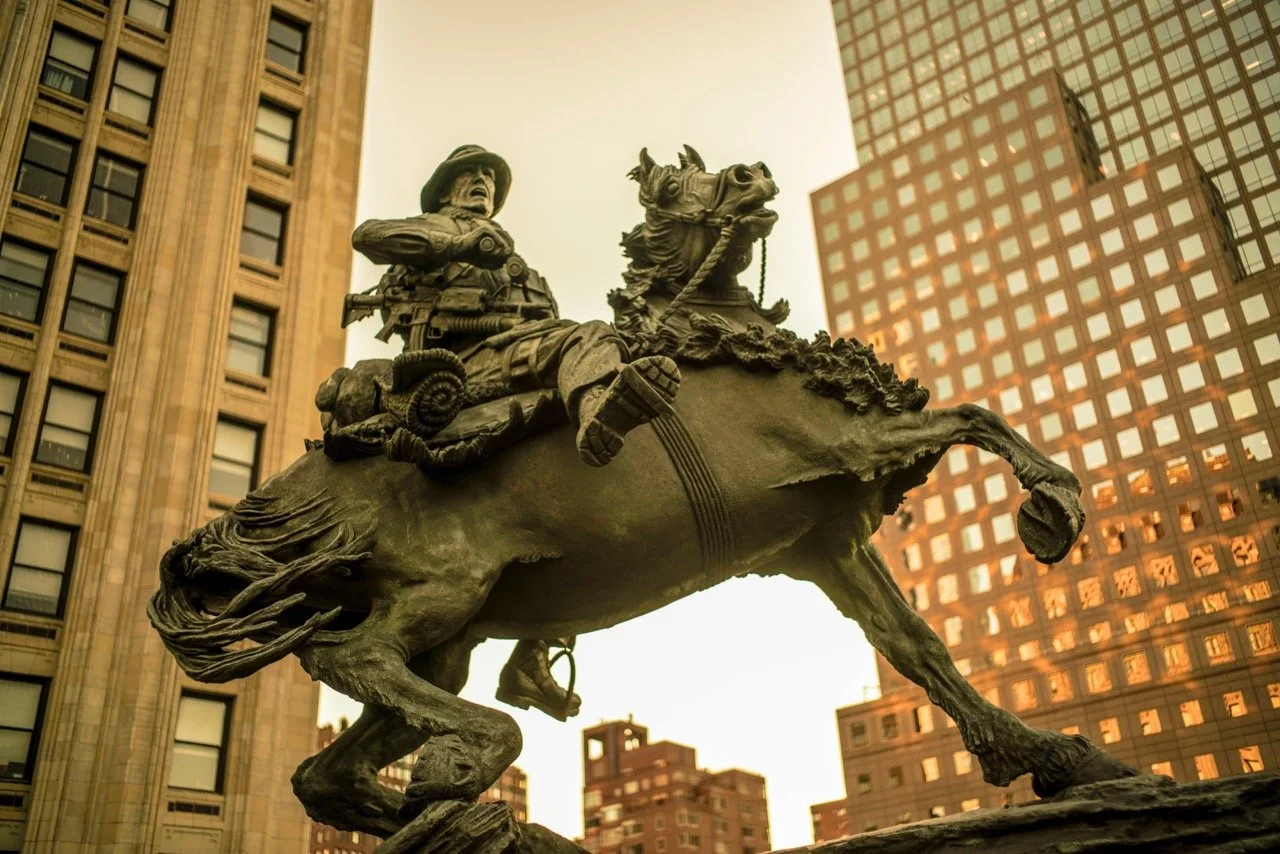
America’s Response Monument at Ground Zero in New York.
Scott Neil is not only the President and Co-Founder of Horse Soldier Bourbon. He is also a Special Forces veteran, an American hero, and a Director on the Frazier Kentucky History Museum board. Neil was on one of the first military teams inserted into Afghanistan after 9/11. In honor of that service and because of that connection, I asked Scott to share some thoughts about his experiences, now twenty-five years after America was attacked in 2001. Thank you, Scott, for the powerful and inspiring words below.—Andy Treinen, President & CEO
On the morning of Tuesday, September 11, 2001, I was participating in a military exercise as a member of the Commander’s In-Extremis Force. We were preparing for a deployment to the Middle East scheduled for October 1.
When word first reached our planning room that an aircraft had struck the World Trade Center, we thought it was part of the exercise.
We did not have televisions or radios in the room, and military exercises are designed to test you by introducing new intelligence and unexpected events. Then, about an hour later, an intelligence specialist came into the room and told us that a second aircraft had struck the other tower.
Again, we assumed the exercise scenario was escalating.
Then Colonel John Mulholland walked into the planning area.
“Stop the exercise. This is real.”
Everything changed.
We went to the mess hall, where there was a television, and for the first time saw what much of America had already been watching unfold—the World Trade Center burning, the devastation in New York, and the realization that our country was under attack.
Like every American who watched those images that morning, we were trying to comprehend what had happened. But in our small group at Fort Campbell, there was another realization.
We knew almost immediately who had attacked us. And we knew we were going to be called.
Fort Campbell, Kentucky, was home to the 5th Special Forces Group, and in the weeks that followed it would become one of the epicenters of America’s military response to September 11. Green Berets, working alongside the CIA, Air Force Special Operations, Army aviation, and our Afghan partners, would soon enter Afghanistan.
The world would eventually come to know some of those men as the “Horse Soldiers.”
I was fortunate to serve among them.
There is a tendency today to remember September 11 and the wars that followed as separate chapters of American history. For those of us who lived it, they are inseparable.
September 11 is remembered for what was done to America. I also remember what America chose to do next.
America’s initial response was remarkably small. Special Forces teams and CIA officers entered an extraordinarily difficult country, linked up with Afghan forces, and began fighting the Taliban and al-Qaeda. Some traveled across the mountains of northern Afghanistan on horseback while coordinating devastating American airpower.
Within weeks, the Taliban regime had fallen.
But what appeared to be a remarkably rapid victory became the beginning of a war whose consequences would be measured not in weeks, but in decades.
That distinction matters to me more today than it did then.
We should remember the courage and ingenuity of the Americans who responded after 9/11, but we must also remember the cost. Thousands of American service members gave their lives. Many more returned home carrying wounds, both visible and invisible. Families sacrificed alongside them.
Today, Americans are serving in our military who were not even alive when the Twin Towers fell.
That passage of time creates a responsibility for those of us who were there.
We have to tell the story.
Years after Afghanistan, several of us who served together began another unlikely journey. We became entrepreneurs and eventually founded Horse Soldier Bourbon.
The distance between a Special Forces team operating in Afghanistan and building a Bourbon company in Kentucky might seem enormous. To us, the connection has always been clear.
Horse Soldier was built around many of the same principles that carried us through our military careers: trust, perseverance, shared sacrifice, accountability, and, above all, the understanding that the person beside you matters more than you do.
We have also deliberately carried the physical history of September 11 with us.
Steel recovered from the World Trade Center was used to create the molds associated with our Horse Soldier bottles. Today, at the entrance to Horse Soldier Farms in Somerset, Kentucky, stands a massive piece of World Trade Center steel—one of the last pieces removed from Ground Zero.
It isn't there as decoration.
It is there so we remember.
That same responsibility is represented by America’s Response Monument, which overlooks the World Trade Center site in New York City. The monument depicts a Special Forces soldier on horseback in Afghanistan. To me, it represents something much larger than any individual soldier or Special Forces team. It represents the Americans—military, intelligence, diplomatic, and civilian—who answered when their country called.
There is something particularly meaningful about the Kentucky connection to this story.
Twenty-five years ago, soldiers from the 5th Special Forces Group left Fort Campbell to become part of America’s response. Today, Horse Soldier Farms in Somerset gives us another way to preserve that history, tell its story to future generations, and build something together in the country we were privileged to serve.
In a sense, the story has come home to Kentucky.
For me, September 11 will always be a day of remembrance. I think about the people who went to work that morning and never came home. I think about the firefighters, police officers, and ordinary Americans who ran toward danger. I think about the men with whom I served, those we lost, and the families who carried the burden alongside us.
But remembrance cannot simply be about looking backward.
Twenty-five years later, an entire generation of Americans has no personal memory of September 11.
That makes our responsibility greater, not smaller.
We owe it to those who were lost, those who responded, and those who will inherit this country to preserve the history accurately and tell these stories honestly.
For those of us who lived it, September 11 is not simply something that happened.
It is something we carry.
And we have a responsibility to remember.
Scott Neil
Co-Founder & President, Horse Soldier Bourbon
Guest Contributor
Faith Shoulders and Rob Seng Join Frazier’s Stories in Mind Team
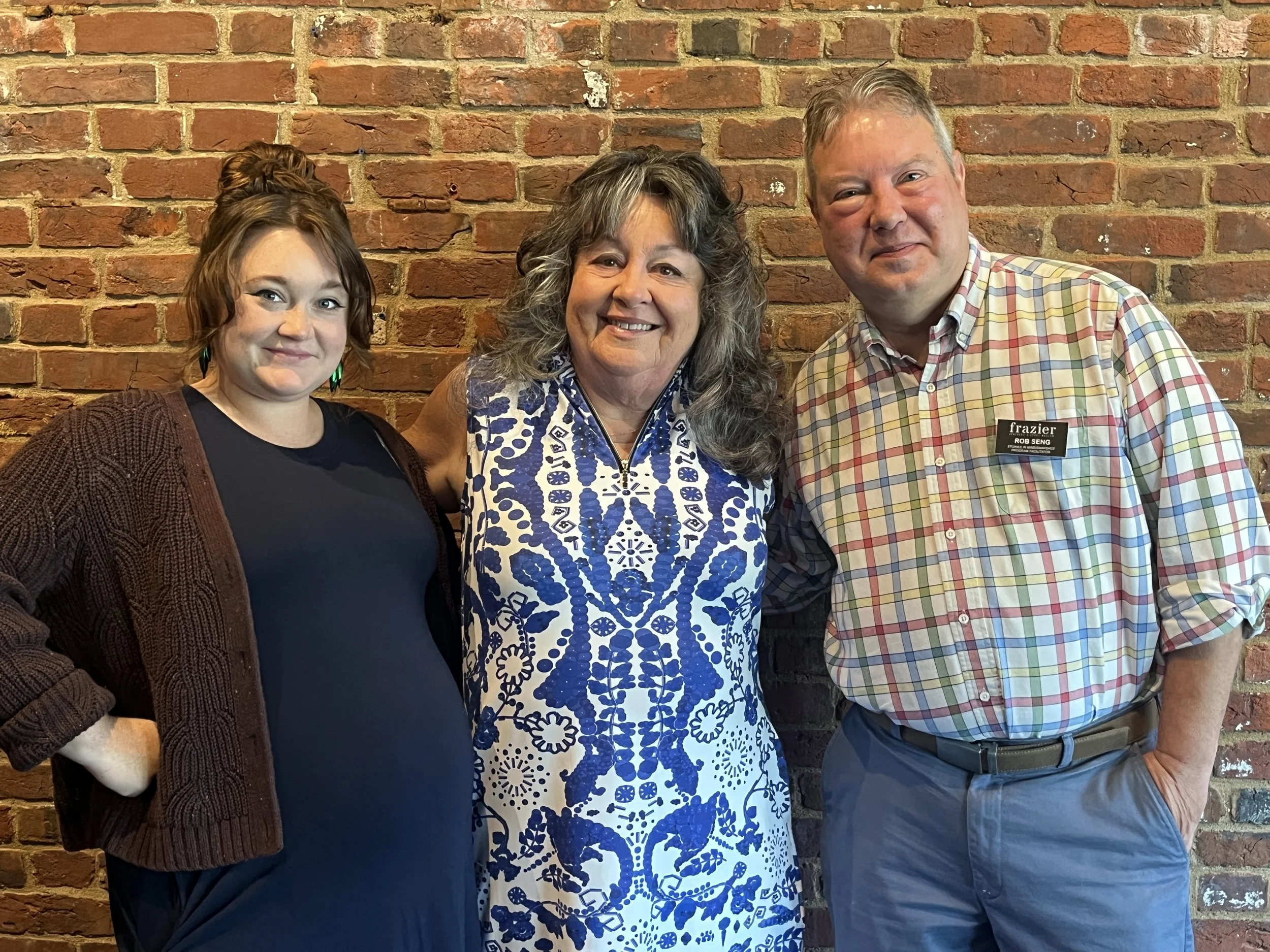
From left, Stories in Mind team members Faith Shoulders, Susan Reed, and Rob Seng, September 1.
The Frazier welcomes Faith Shoulders and Rob Seng to the Stories in Mind team! Both Faith and Rob have backgrounds in education, and both are natural storytellers. We look forward to sharing the passion and curiosity that they both have for telling Kentucky’s history as we move into our fourth year.
Stories in Mind has always been about more than history. It is about connection, belonging, memory, and the stories that help us understand each other. Not just the stories that we tell, but also the stories that our residents share with us. And because we believe that the stories we hear are very important, we are expanding our program with our Kentucky Snapshot Program. The team will interview and video residents from our facilities, capturing our collective histories.
“I have always been a “grandma’s girl,” and I could always be found sitting with the older adults and listening fervently to their stories as a kid,” Faith says. “Now I get to share my love of Kentucky with the older adults of Louisville and provide continued education and enrichment for them!”
“I feel like my position is a culmination of my life experiences,” Rob adds. “I started adult life as a journalism major, but ignored the calling to be a high school English teacher for years until I answered it in 2002. In the past year, I worked with seniors with developmental disabilities. I love to talk so all of these qualities should help to make me a great facilitator for the Frazier’s mission.”
By inviting more residents to share their own experiences, we are reminded that history is not only found in books—it lives in the memories and voices of the people who share their story. The Frazier is now partnering with twenty assisted living facilities where Faith and Rob will help to continue our work of listening, learning, and sharing. We are excited to see the stories that they discover and the connections they create.
At the heart of Stories in Mind is a simple belief that everyone has a story worth telling, and stories have the power to bring us closer together.
Susan Reed
Stories in Mind / Snapshot Sr. Program Facilitator
Special Program to Honor Underground Railroad Month at Frazier

Visitors look at the clock face from the Town Clock Church on display in the Frazier’s Commonwealth exhibition, May 2022. Credit: Mary Helen Nunn.
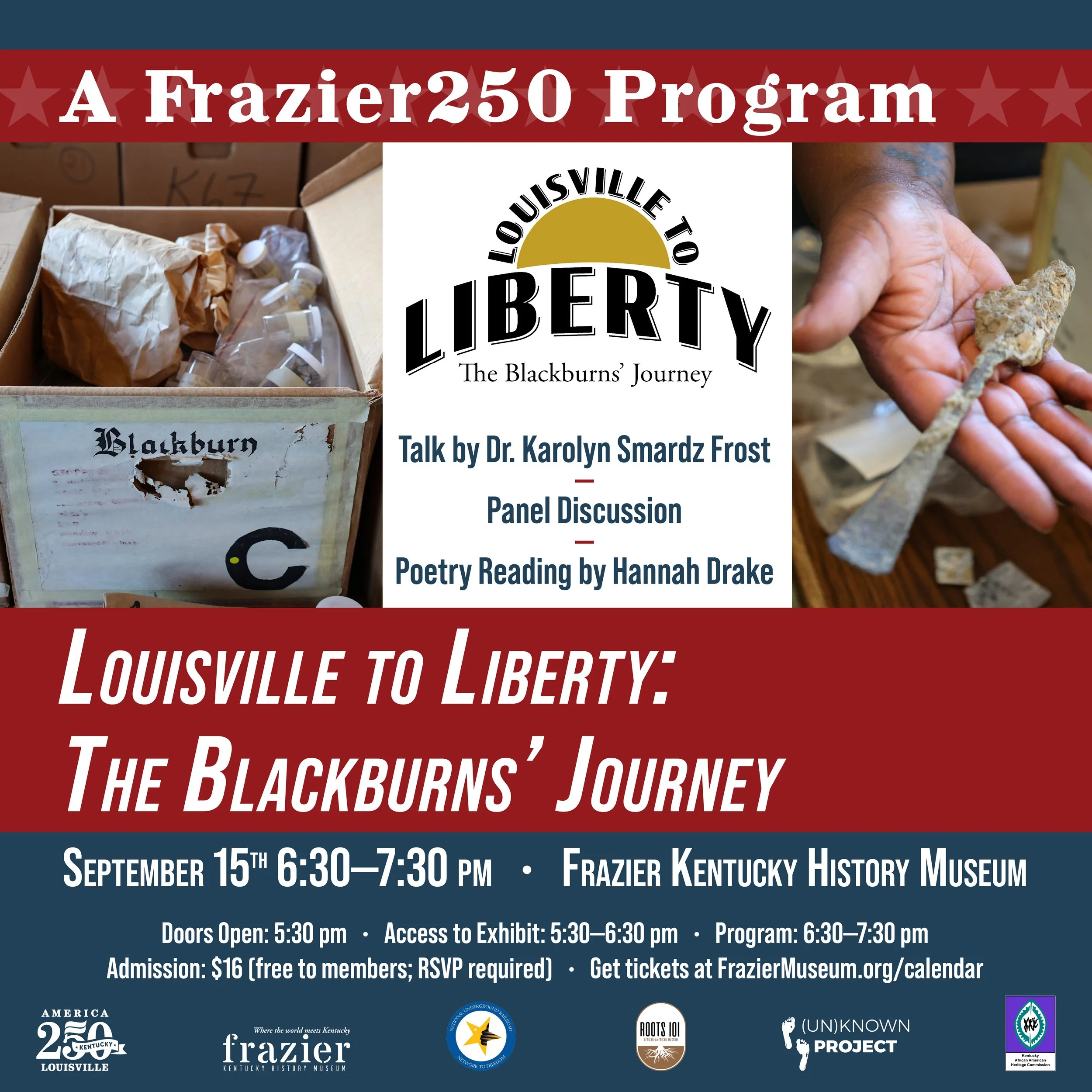
September is officially recognized as International Underground Railroad Month. We have a special program coming up on September 15 that recognizes the courage of freedom seekers and the abolitionists who helped them.
The program focuses on Thornton and Lucie Blackburn who made a daring escape from Louisville eventually finding freedom in Canada.
You’ll hear from the archaeologist who uncovered their story in 1985, with the first excavation of an Underground Railroad site in Canada. Karolyn Smardz Frost wrote a book about the couple called I’ve Got a Home in Glory Land.
You can click here to get tickets to this special evening that includes other partners from the (Un)Known Project and Roots 101. And if you come, make sure to give yourself time to look through our exhibit on Thornton and Lucie sharing the name of our program, Louisville to Liberty: The Blackburns’ Journey.
And don’t forget we have the Underground Railroad represented in our Commonwealth exhibition, too. The Frazier displays an original clock face and columns from the historic Town Clock church in New Albany dating back to the mid-1800s. Before and after the Civil War, the church with its towering steeple was a beacon of hope for freedom seekers across the Ohio River. The Frazier also has a free audio tour called The Journey that visits sites around area featuring many of these stories.
One other note: once Thornton and Lucie escaped to freedom, they helped others do the same. Thornton risked everything and returned to Kentucky to bring his mother to Canada. The couple also helped others settle into a new life of freedom by renting them homes at a nominal cost.

Rachel Platt
VP of Mission