Cool Kentucky Exhibition Updates, Top 10 Kentuckians, Melissa Swan on Alpha-gal Syndrome, and More
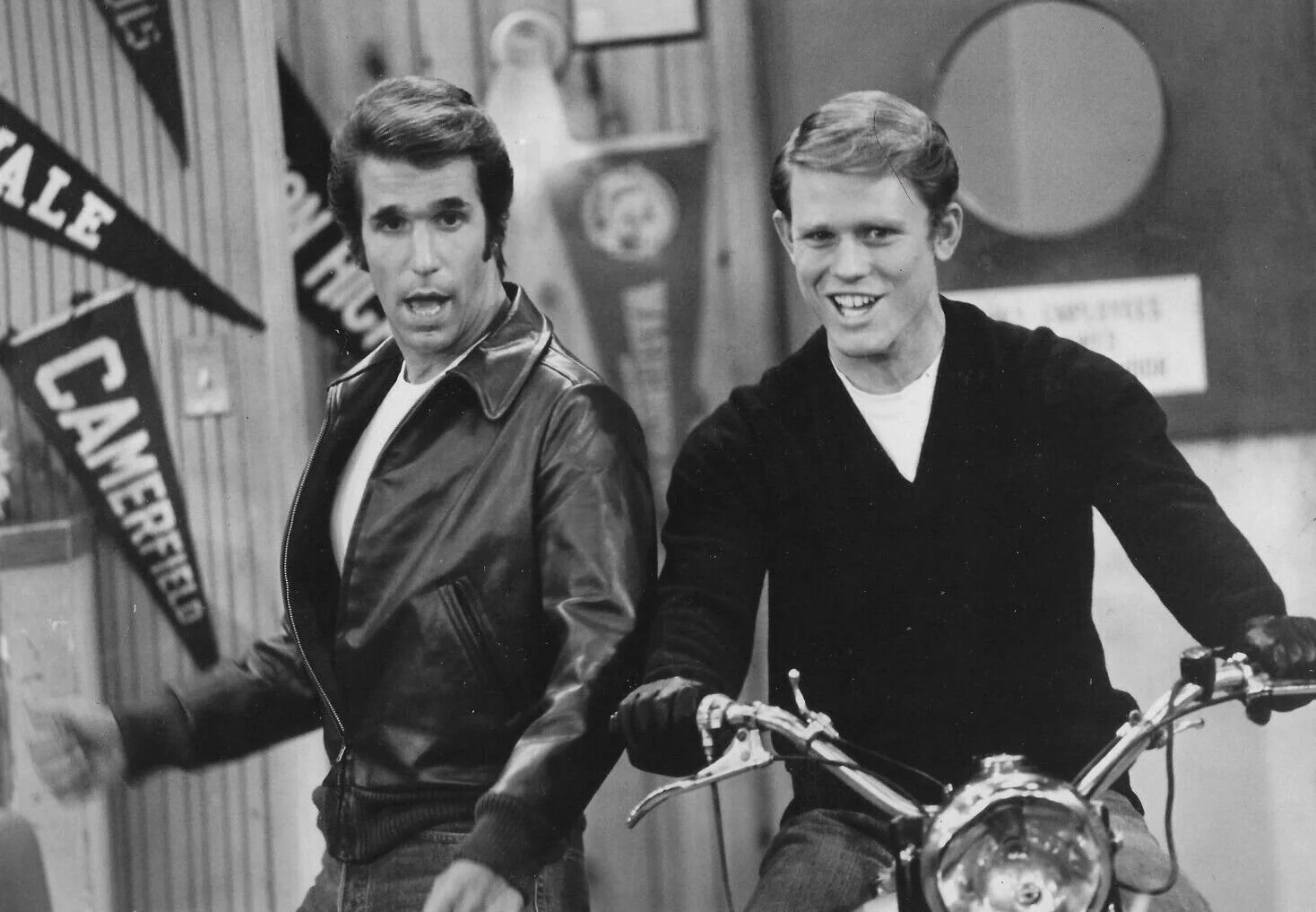
Fonzie and Richie of Happy Days, 1977.
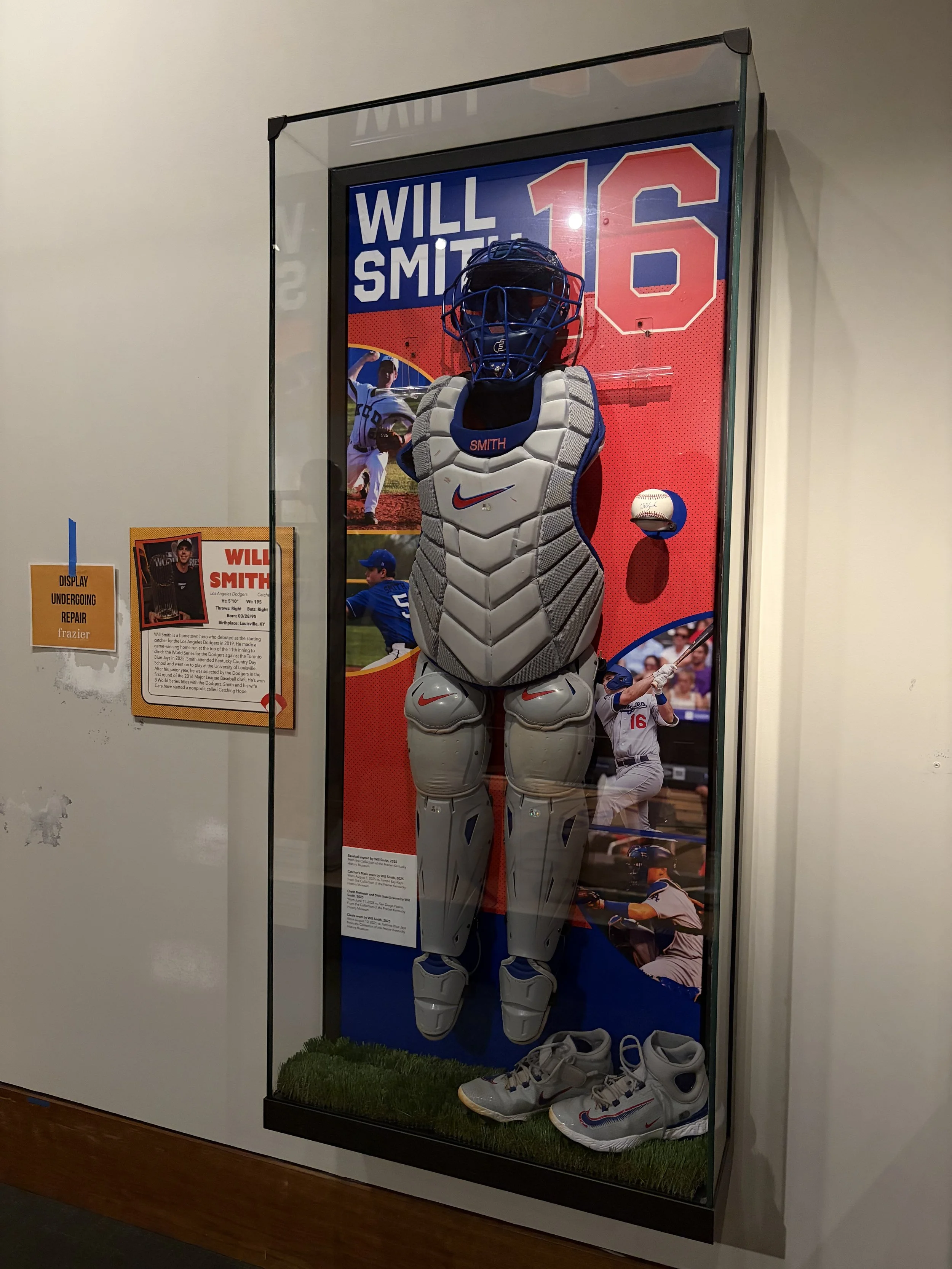
Will Smith case being installed in the Frazier’s Cool Kentucky exhibition, September 24, 2026.
Perhaps I’m dating myself, but my first connection to cool came through a guy named Arthur Fonzarelli. Fonzie was a character mastered by Henry Winkler in the wildly popular ABC sitcom Happy Days from 1974 to 1984.
The Fonz rode a motorcycle, fired up the jukebox with a fist bump, and could get a date with a simple “aaaaayy.” Clearly, my bar for cool is sky-high.
That’s why I’m offering two thumbs up to our exhibits team for adding three incredible and timely stories to our Cool Kentucky exhibition this week.
From a Kentucky author who inspired an unreleased Dolly Parton album to a World Series MVP and a world record holder, these Kentucky connections are something for all of us to be proud of.
New this week, we’ve got images and books from Kim Michele Richardson who wrote The Book Woman of Troublesome Creek. Kim Michele’s novel inspired Dolly Parton to write and record an unreleased album about the book’s characters—an album she then gifted to Richardson.
We’ve also added catcher’s gear and images from Los Angeles Dodger and World Series MVP Will Smith, the latest addition to Louisville’s Hometown Hero series.
And finally, we’ve installed running spikes from duPont Manual graduate and Olympian Yared Nuguse, who for five days in 2025 was the fastest man in the world. I sure hope you stop by to celebrate these cool Kentuckians very soon.
In today’s issue of Frazier Weekly, Rachel Platt begins the great debate and asks for you to weigh in: Who are the top ten Kentuckians of all time? Our collections manager Marcy Werner presents a 1954 Kentucky Derby chair, 120: Cool KY Counties on the Road heads to the Lincoln Festival, and guest contributor Melissa Swan writes about the night dinner nearly killed her.
Thank you for reading!
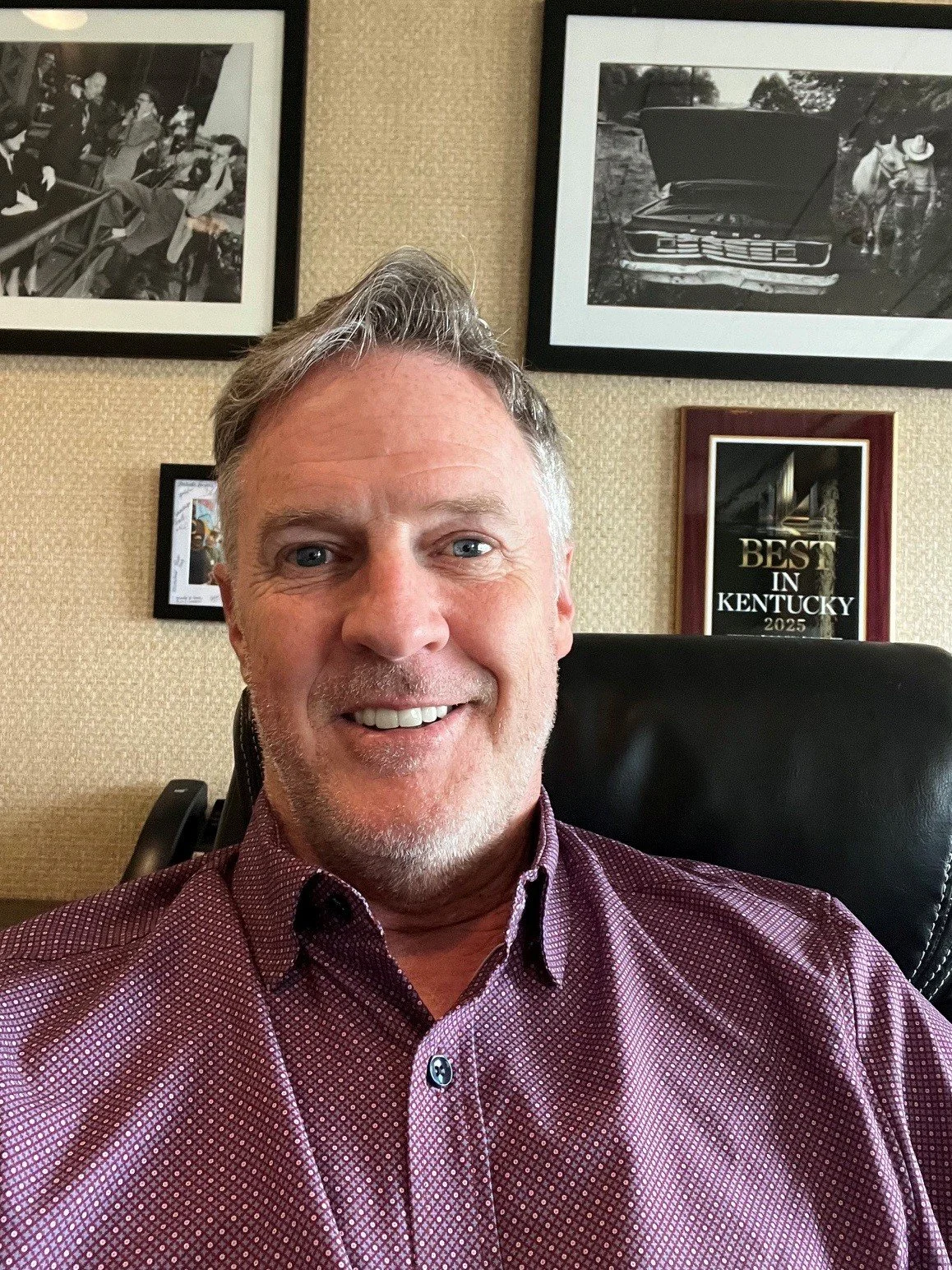
Andy Treinen
President & CEO
Frazier Kentucky History Museum
This Week in the Museum
We Need your Input on our Top 10 Kentuckians List!
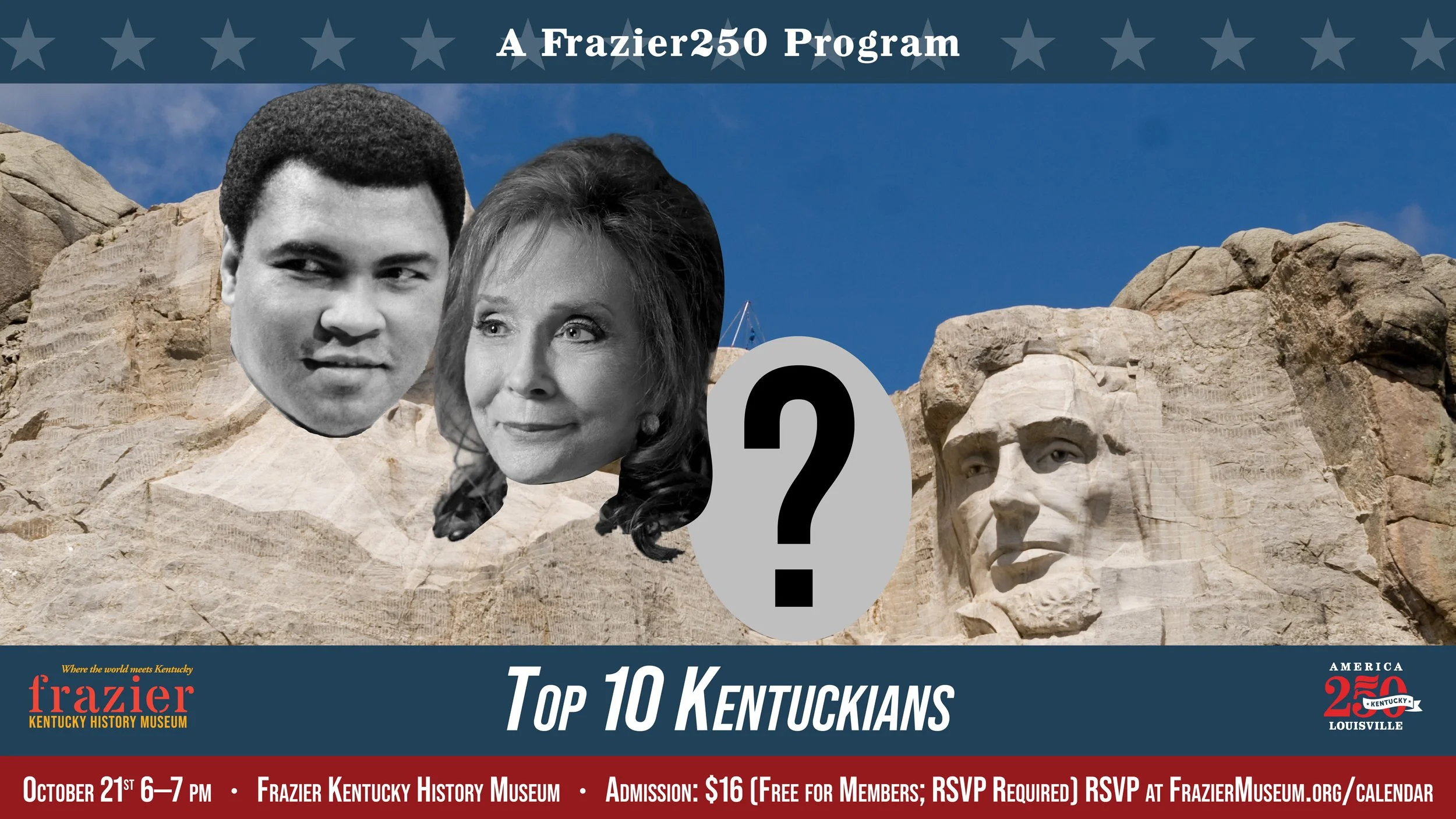
Here’s the question: Who would be on your Mt. Rushmore of impactful Kentuckians?
Join us here at the Frazier Kentucky History Museum on October 21 for what is going to be a fast-paced, fun, and educational program where the audience is going to help us decide our top ten Kentuckians.
Andy Treinen and I are ready for action as you shout out your names and we haggle about who makes the cut! Also adding to the list of names will be our group of esteemed panelists representing different categories:
· History with Historian Tom Owen
· Law with Judge Denise Clayton
· Music with ear-X tacy Founder John Timmons
· Sports with WDRB Journalist Eric Crawford
· Literature with Best-Selling Author Kim Michele Richardson
Can we narrow a list to just ten?
Does it begin with Abraham Lincoln?
Two of my colleagues who will join us that night are already throwing names into the hat. Mick Sullivan is pitching musician Sylvester Weaver, a pioneer of country blues. Simon Meiners says how about American astronomer Edwin Hubble?
This is going to be tough.
Click here for some of the names the Frazier staff is recommending.
Get your ticket now as we carve our own Mt. Rushmore of Kentuckians!

Rachel Platt
VP of Mission
From the Collections: What’s the Deal with this 1954 Derby Chair?
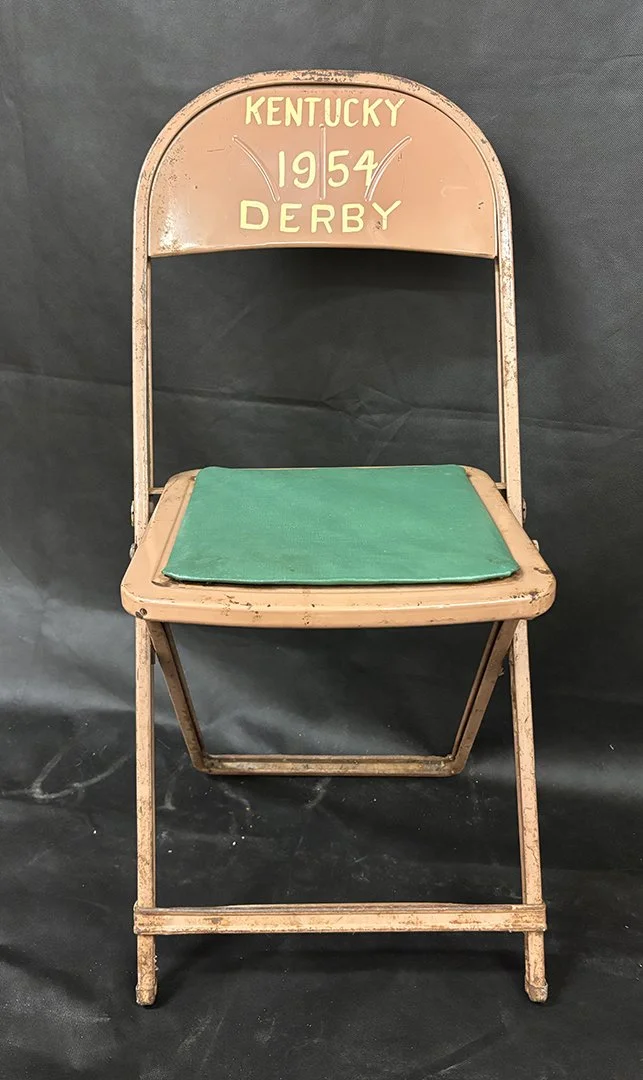
A folding chair on which “1954 Kentucky Derby” is inscribed. Part of the Frazier Kentucky History Museum collections.
The rest of the world might be surprised to know it’s horse racing season in Kentucky. We’ve got more than just one exciting race in May! Keeneland is running horses in October and Churchill Downs will be hopping all through November. The weather is cool and the crowds are manageable. It’s a might bit cheaper, too.
But the question is always: Have you ever been to Derby? The next question: Have you been to the infield on Derby? The tales can be wild! Especially during the “crazy” 1970s which were ushered in, in 1970, by two men attempting to parachute into the infield. Climbing the flagpole was a thing one year (it was immediately moved to prevent further shenanigans), blanket tosses were all the rage, and streaking was a hot fad.
I spent several years working for Churchill Downs, scanning their historic photos. I thought I’d seen just about everything. Homemade periscopes, bookies in the infield, pitched tents, volleyball games, mud sliding, spectators on barn roofs, telephone poles, perched in trees and sitting on the brick wall running down Central Ave. But I never ran across a photo of this, pictured above.
The donor received this from her uncle who said, “If you wanted to sit in the infield, you had to buy a chair.” This sounds unusual but we are talking about the infield at Derby.
Sometimes we don’t know the entire story behind an object when it's accepted into the museum; we know bits and bobs and research the rest. What we do know, and have faith in, is that the object can help us tell bigger and better story when exhibited with other items in our collections. Even if we don’t get the full story behind this chair, we have information in some capacity. It’s in great shape and could be an example of a souvenir.
Was it sold by a budding entrepreneur, allowed to bring a rack of chairs in through the gates?
Was this an official chair sold by Churchill Downs?
Was it someone’s personal handy work, carried in and brought back home?
Does anyone out there know more about this chair?
If you have a story about this chair, or any clues, please let us know! You can email me at mwerner@fraziermuseum.org.
Those men that tried to parachute into the infield? One landed on Southern Parkway and was arrested. The other man hit his target and was carried off on the shoulders of the infield crowd, like a hero, and evaded capture! At least, that’s the story I heard.
Marcy Werner
Collections Manager & Registrar
Remembering Joseph Seamon Cotter Sr. with a Headstone
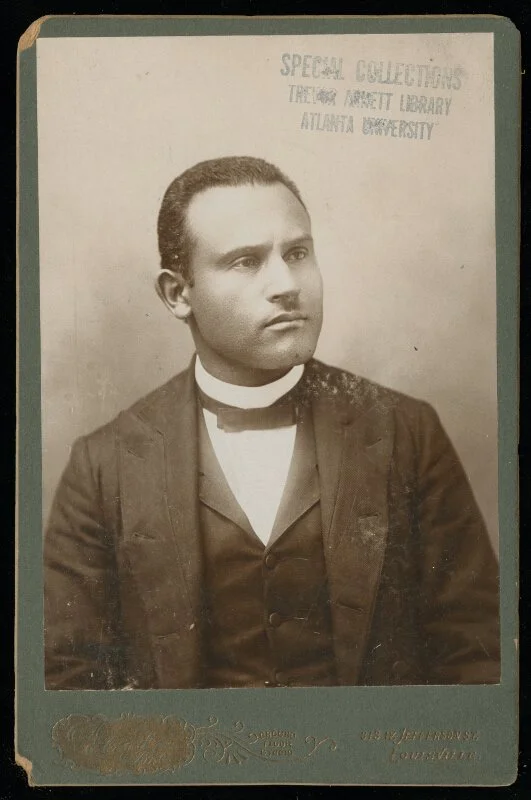
Joseph Seamon Cotter Sr., c. 1862/1923. Photograph held by Robert W. Woodruff Library, Atlanta University Center, Atlanta University Photographs.
On October 3 at 10:30 a.m., you’re invited to a special ceremony in Eastern Cemetery to remember Joseph Seamon Cotter Sr. and his family.
Cotter was an American poet, writer, playwright, and education leader who was born in Nelson County, Kentucky, but raised right here in Louisville.
The Frazier Kentucky History Museum, the Louisville Free Public Library, and Friends of Eastern Cemetery have worked together forming a program called Monumental Lives, lifting the voices of those who often go without markers and headstones.
Cotter is buried in Greenwood Cemetery although exactly where isn’t known. We know his wife and three children are buried in Eastern in an unmarked grave. On Saturday, we will celebrate the family together at Eastern with a memorial headstone for Cotter and a marker at the gravesite of his family.
We thank the Library Foundation for their generous financial support.
The program will include several special speakers. including Bernard Clay, a Louisville native poet who is a descendant of Cotter. He will read some of Cotter’s poetry.
In 1913, Cotter created a storytelling contest for kids at the Western Library that became known as the Cotter Cup. It is a contest that continues today for children in our area.
We hope to see you Saturday as we commemorate another “monumental life.” Friends of Eastern Cemetery will be on site at 641 Baxter Avenue to direct you to the location.
Rachel Platt
VP of Mission
Frazier’s 120 on the Road Heads to LaRue County’s Lincoln Days this Weekend!
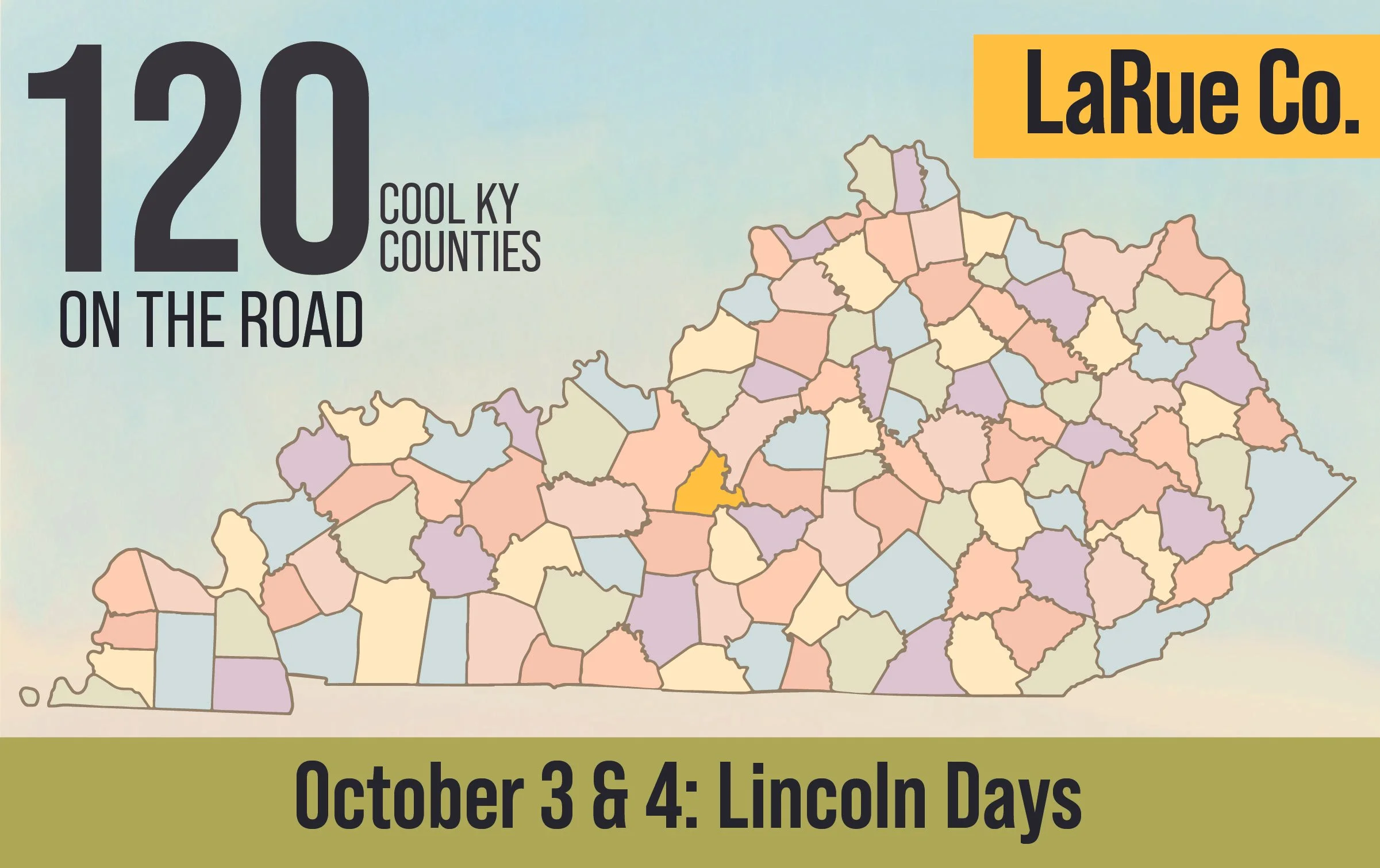
Find us as we hit the road visiting all 120 counties in our Commonwealth! Our next stop will be:
· Lincoln Days. Lincoln Museum Community Room. Hodgenville, LaRue County, Kentucky. Saturday, October 3, 10 a.m.–4 p.m. (Eastern). Sunday, October 4, 1–4 p.m. Activities include 120 exhibit and What the What? game.
Look for our 120: Cool KY Counties on the Road exhibit as we share stories and songs from each county—and listen to your stories, too! Come greet 120 on the Road managers Jason and Megan.
Murder on the Mississippi Author Dr. Saladin Ambar to Speak at Farmington October 15
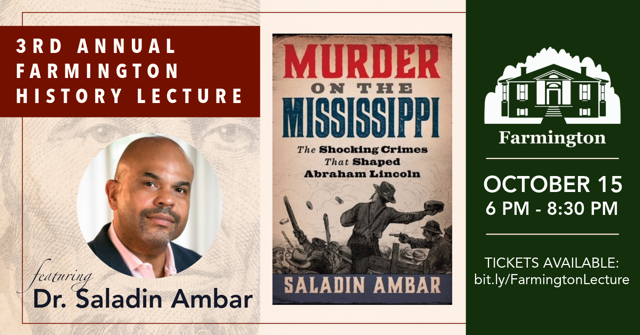
Flyer for Dr. Saladin Ambar’s talk at Farmington.
In 1841, future president Abraham Lincoln spent several weeks at Farmington—his friend Joshua Speed’s family plantation near Bardstown Road in Louisville. Next week, Dr. Saladin Ambar will come to town to speak at Farmington. Dr. Ambar’s topic is a chapter of Lincoln’s life that influenced his views on slavery. Spots are limited, so secure your ticket now! We’ve asked Michael Aldridge, the managing director at Farmington, to preview this talk for Frazier Weekly readers.—Simon Meiners, Communications & Research Specialist
Spend an evening at historic Farmington as Dr. Saladin Ambar explores a lesser-known chapter of Lincoln’s life and the events that helped shape his evolving views on slavery, law, and American democracy. Dr. Ambar’s latest book, Murder on the Mississippi: The Shocking Crimes that Shaped Abraham Lincoln is a fresh investigation of antebellum politics and the era’s foremost champion of equality before the law.
On April 28, 1836, a young free Black man, ashore in St. Louis from the riverboat on which he worked as a steward, was falsely arrested. On the way to jail, Francis McIntosh, told that his fate was prison or death, tried to escape, killing a sheriff’s deputy in his failed attempt. A crowd lynched him, chaining him to a tree and burning him alive. In Dr. Ambar’s telling, the incident directly inspired Lincoln’s first major political address, in which the future president spoke of the fracturing of civic order on the frontier and, in that “growing lawlessness,” the threat to democracy.
The audience for Lincoln’s 1838 Lyceum Address would have heard echoes of Jacksonian populism, but also his increasing advocacy of federalism and his growing sympathy for the rising abolitionist movement. Ambar convincingly explains that by then Lincoln “simply abhorred” slavery, even while being careful to frame it as a matter of “bad policy.” The mob violence would grow to civil war, of course, and its legacy haunts us today; as the author meaningfully writes, “We are still trying to make peace with racism’s incompatibility with democratic life, a fusion of values Lincoln thought to be essential from the very start of his political career.”
Join Dr. Ambar for a private dinner at the Frazier Kentucky History Museum on October 14 or at Farmington for a public lecture and barbeque by Kingsley’s on October 15. Tickets are available at visitfarmington.org.
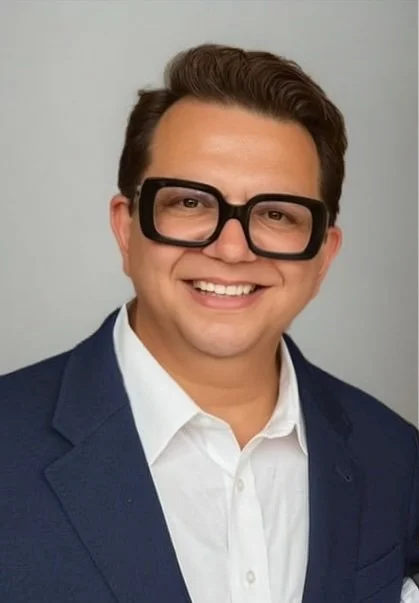
Michael Aldridge
Managing Director, Farmington
Guest Contributor
Membership Spotlight: Andrew Spendlove
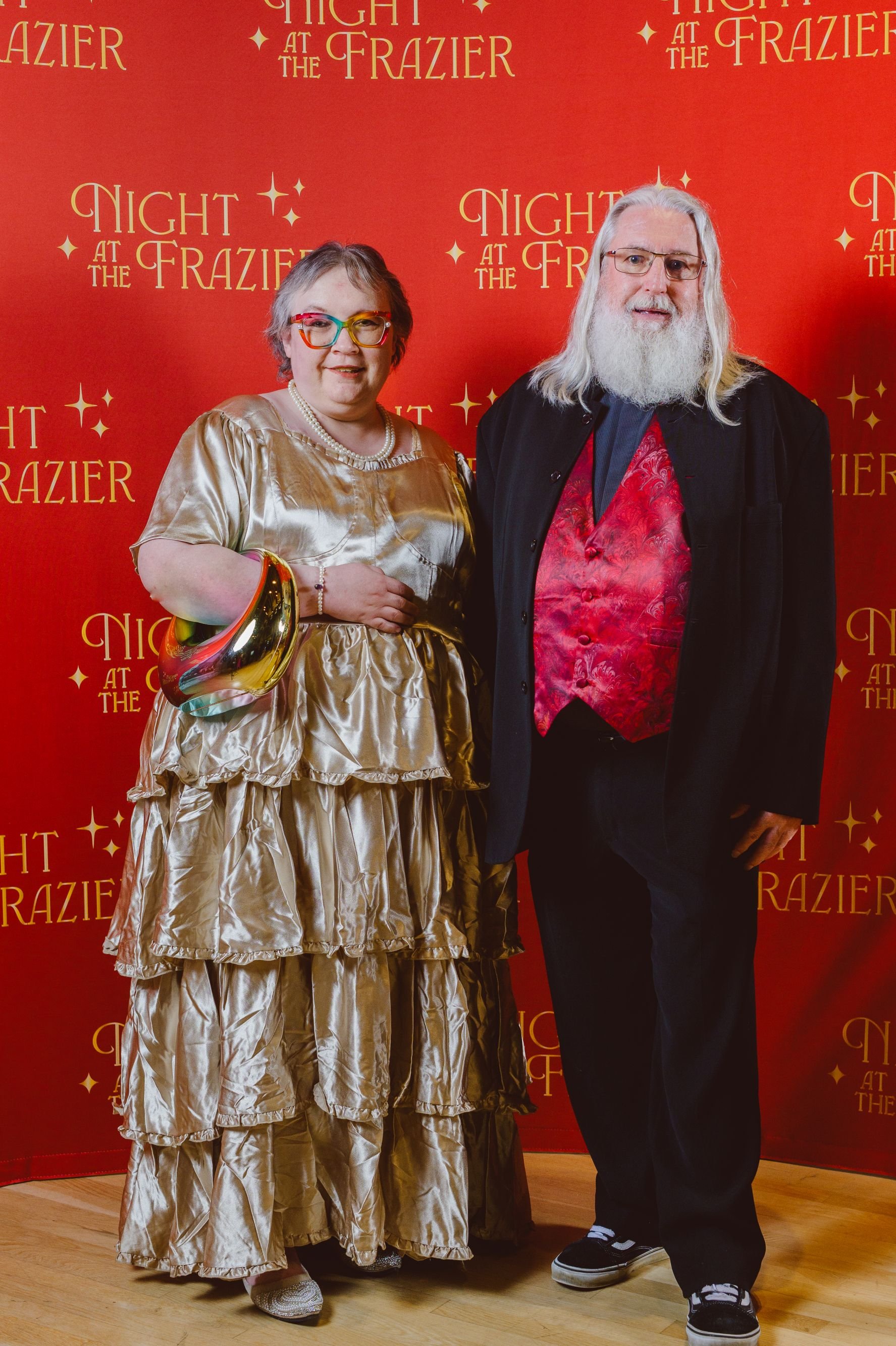
Nelle and Andrew Spendlove pose at the 2025 Night at the Frazier gala, April 5, 2025. Credit: the Voice-Tribune.
I recently had the opportunity to speak to Andrew Spendlove, one of our members who has been a part of the Frazier family for almost ten years with his wife, Nelle.
Andrew is from Australia, and like many of us, sang the “Happy Birthday” song throughout his life. After moving to the United States and becoming a member at the Frazier, he learned at one of our programs last summer the song he was so familiar with was created right here in Kentucky by Mildred and Patty Hill.
Programs are, in fact, one of the reasons why Andrew is a member. From attending our annual Night at the Frazier and dancing the night away to our exclusive members-only experiences, you can almost always find Andrew and Nelle at the Frazier’s events. When I spoke to Andrew, he said the Frazier Summer Beer Fest is something they look forward to every year, marking their calendar as soon as the date is announced. As members, they get first access to buying tickets before they are available to the general public.
After a member-exclusive program last year, Andrew told one of our staff members that, “the Frazier does everything so well I would attend the opening of an envelope if it happened at the Frazier.” Members like Andrew support the Frazier’s work of inspiring and creating lifelong learning, all while getting exclusive access to programs and exhibits. Become a member and experience the Frazier like Andrew does.
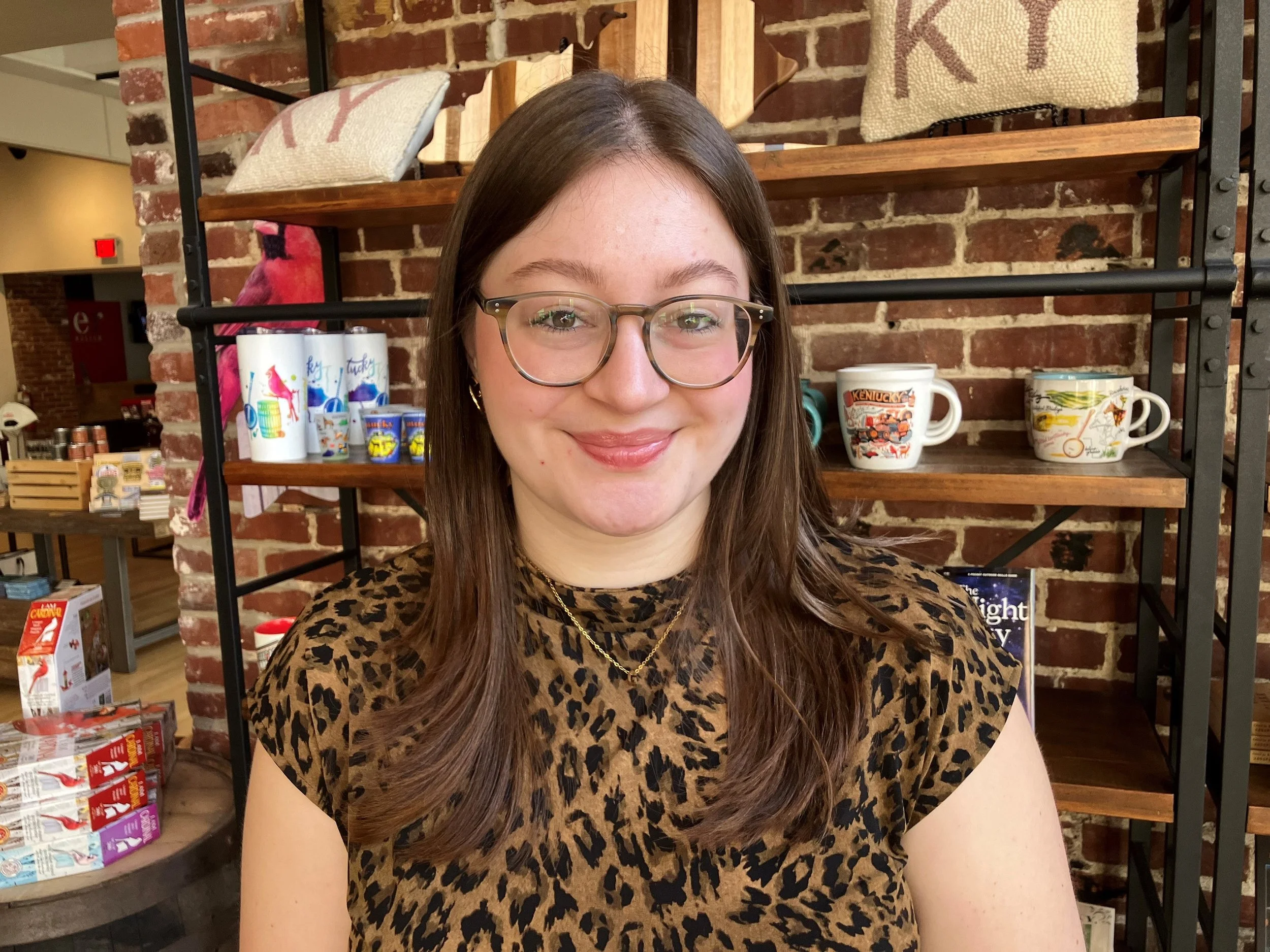
Gwendolyn Gray
Membership Coordinator
On the Trail with Abby: Michter’s Distillery in Downtown Louisville

Bourbon tourism is booming—and the Kentucky Bourbon Trail® is growing faster than ever! Each week, the Frazier’s Abby Stanton takes readers on a digital stop-by-stop tour of this expanding adventure, spotlighting the distilleries, stories, and expressions behind America’s native spirit. Ready to hit the trail in real life? Start your journey at the Frazier Kentucky History Museum, home of the Kentucky Bourbon Trail® Welcome Center.
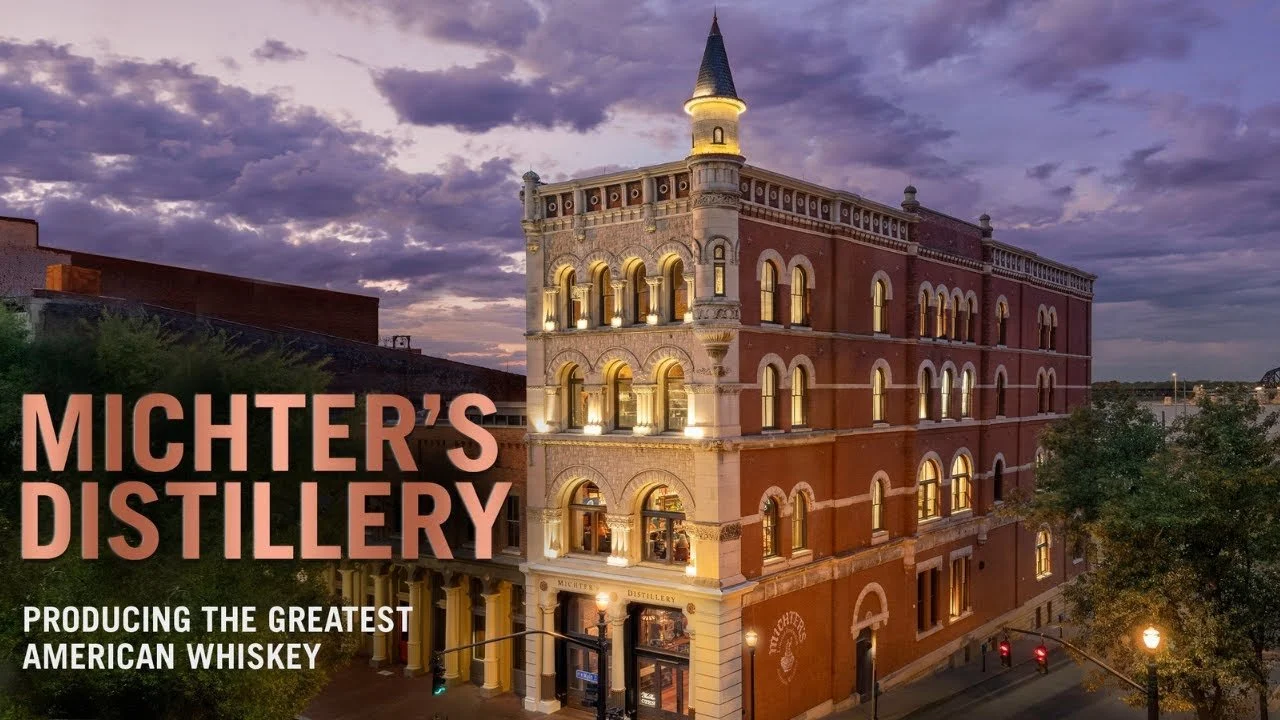
Exterior of Michter’s Distillery in Louisville.
Voted the “World’s Most Admired Whiskey” for the fourth year running, Michter’s Distillery is a gem on the Bourbon Trail. Their approach to crafting the best Bourbons and whiskeys is “Cost Be Damned,” and it pays off! Visit their distillery, located in the renovated 1890 Fort Nelson building in Downtown Louisville, for tastings and tours. Pro tip: be sure to snag a reservation so as not to miss cocktails at their spectacular bar!
Being neighbors on Main Street, the Frazier and Michter’s share a special bond. We are even fortunate enough to have Michter’s President and Bourbon Hall of Famer Joe Magliocco on our Board of Directors. Every year, our two brands join forces to produce the 1920s-themed Michter’s Speakeasy event—this year with a Halloween twist! Join us on October 29 for dancing, sips, bites, and exclusive opportunities to purchase allocated Michter’s bottles.

Abby Stanton
Administrative Chief of Engagement
Bridging the Divide
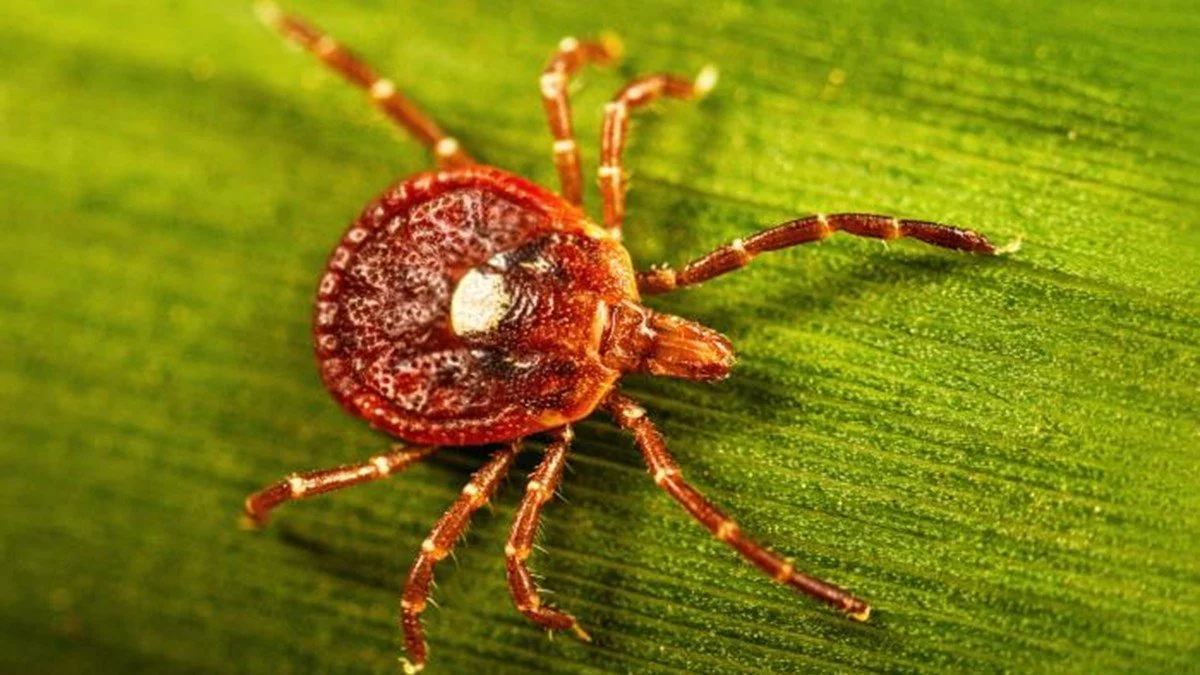
A lone star tick. Credit: CDC.
It’s a condition I hadn’t heard about until a friend of mine was diagnosed with it after struggling for months and nearly dying from it. It’s called Alpha-gal syndrome and it’s caused by a tick bite. And since lone star ticks are expanding their habitats, more people are being diagnosed. It’s now getting more national attention, but perhaps not enough. I asked my former colleague at WHAS-TV, Melissa Swan, to share her personal story and struggle with Alpha-gal.—Rachel Platt, VP of Mission
Nearly five years ago, in November 2021, I cooked the best pot roast of my life. It was rich, tender, and comforting—the kind of meal you remember. I ate a generous portion and went about my evening, completely unaware that my life was about to change.
Around 10:30 p.m., I noticed large hives spreading across my stomach, thighs, and buttocks. I wasn’t overly alarmed at first. I applied a topical ointment. Nothing changed. I took Benadryl and waited. Still nothing.
Then something shifted.
For reasons I still can’t explain, I knew I needed to get to an emergency room. It was only hives—people get hives all the time and survive—but deep down, instinct took over. I knew this was different.
I woke my husband, and he jumped into action. But my body had begun to fail me. I put on a pair of pants and had to lie down. I put on a shirt and had to lie down again. I had no strength. When I tried to put on my shoes, I said, “I think we need to call an ambulance.”
My husband replied, “No, I can get you there faster.”
Outside the emergency room, I sat down on the pavement and couldn’t get up. My husband pulled me to my feet and guided me toward the doors. As soon as we got inside, I passed out.
A nurse looked at my husband and asked, “Has she been drinking?”
I had not had a single drink.
Suddenly, I was surrounded by doctors and nurses inserting IV lines and ordering tests. I remember asking, “Am I having a stroke?”
“No,” a doctor said.
“Is it COVID?”
“No.”
Then I asked the question I was truly afraid to hear the answer to:
“Am I going to die?”
The doctor paused before answering. Then he said, “Everybody dies—but not tonight.”
When I arrived at the emergency room, my blood pressure had plummeted to 60/40. At that level, the body cannot properly circulate blood to vital organs. Organs begin to shut down. That is why I passed out.
Much of what followed is a blur. I remember chest X-rays, heart tests, and injections of epinephrine. Slowly, my blood pressure began to rise. Still, no one could explain what had happened. I was admitted to the ICU, where my blood pressure was monitored every thirty minutes.
I was discharged the next day—without answers.
Later, my primary care physician called. He told me he had consulted with an allergist who said under no circumstances was I to eat what I had eaten the night before.
So much for the leftover pot roast.
A few days later, I had a blood test. Shortly after that, I received a diagnosis that would change my life: alpha-gal syndrome—an allergy to meat from mammals.
When the doctor told me, I laughed. “You’ve got to be kidding,” I said. “I’ve never heard of anything like that.”
“Well,” he replied, “it exists.”
I was told alpha-gal is relatively rare and not widely understood. It’s often triggered by tick bites. Many patients are told it lasts three to five years, and that dairy is usually tolerated.
That has not been my experience.
Looking back, I believe alpha-gal has existed far longer than we realize—it has simply gone undiagnosed. For two years before my diagnosis, I suffered debilitating gastrointestinal pain and uncontrollable diarrhea. At one point, my husband and I lay in bed planning my funeral. I could not imagine how a person could be in that much pain and not be dying.
Now, there’s evidence that alpha-gal is becoming more common. A Centers for Disease Control and Prevention study found that 24% of blood donors in five states (Arkansas, Kentucky, Missouri, Tennessee, and Virginia) carry alpha-gal IgE antibodies.
Arkansas recorded the highest rate at 31.2%, followed by Missouri at 26.0%.
Rates are higher among adults aged 55 to 64, men, and people who live in rural areas.
Today, my life looks very different. I never eat meat from a mammal. I avoid dairy and gelatin. I read every food label carefully. My husband and I cook using separate pots and pans. We even maintain two outdoor grills.
It has taken years for my digestive system to feel even remotely normal again.
I’ve learned a great deal during this journey. Unfortunately, I don’t believe the medical community has learned nearly enough.
For the thousands of people who don’t know what is happening to their bodies—if you have unexplained gastrointestinal pain, ask for an alpha-gal blood test. It is a simple blood draw.
Recently, after another tick bite, I learned my alpha-gal levels have risen again. This doesn’t mean starting over—but it does mean it will take longer for the allergen to leave my system.
There are still many mysteries surrounding alpha-gal syndrome. But there are two truths I want to leave you with:
First, ask for the blood test.
Second, doctors should be offering it routinely to patients with unexplained symptoms.
An estimated 450,000 people have already been diagnosed. It’s the people who haven’t been diagnosed who are suffering the most. Yet, awareness among doctors and patients remains dangerously low.
If my story encourages even one person to seek answers—and avoid the pain I endured—then telling it is worth it.
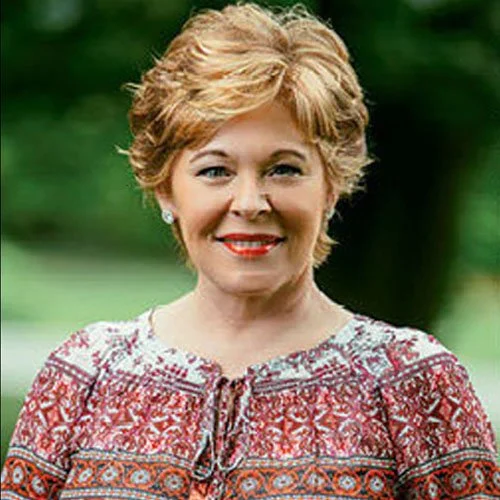
Melissa Swan
Former Journalist, WHAS-TV
Guest Contributor