4-for-$150 Beer Fest Tickets, Declaration of Independence at Fort Knox, Louisville Can Opener T-shirt, and More

Good Monday morning all!
Frazier Summer Beer Fest has a way of bringing people together, and this year we’re raising a red, white, and brew glass to 250 years of American spirit. On Saturday, August 1, Frazier Summer Beer Fest returns with commemorative 250-themed t-shirts, 250 craft beers, live street-level entertainment, and plenty of reasons to celebrate history one sip at a time.
This morning, we’re rolling out a Yankee Doodle deal. Gathering your crew has never been easier than with a one-week promotion starting this morning—offering the chance to buy three GA tickets and get a fourth free. That’s right: we’re offering four tickets to the coolest beer fest in Kentucky for just $150. VIP tickets are also available in limited quantities and are guaranteed to sell out.
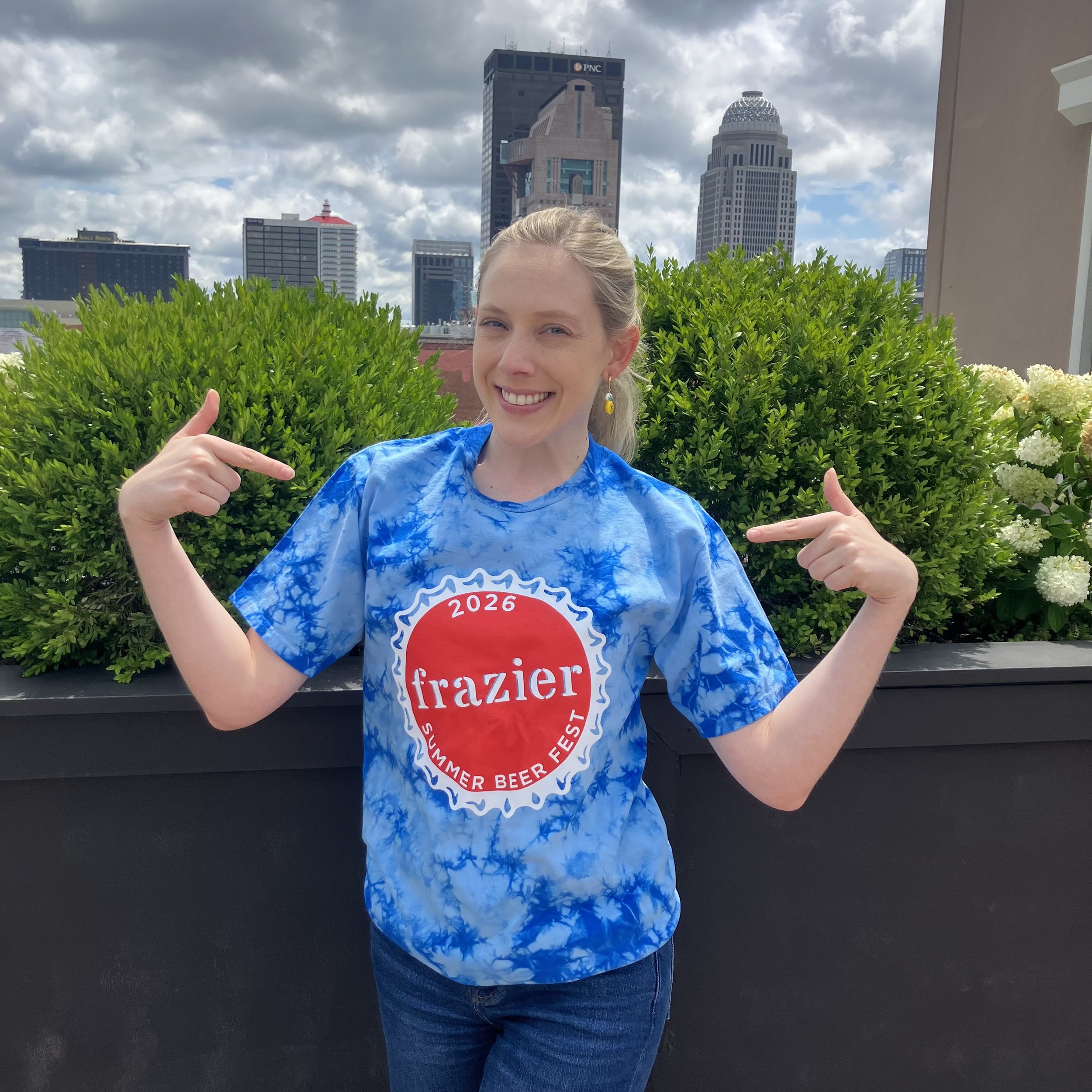
Hayley Harlow models this year’s t-shirt!
Also, for the first time, our beer fest t-shirts are available for purchase when you buy your festival tickets at check out. The tie dyed 250-themed tees are both hipster and proudly patriotic.
In today’s issue of Frazier Weekly, our collections manager Marcy Werner takes a historic look at Lincoln Logs, one of the objects featured in our new I Too Am a Kentuckian exhibition. Mick Sullivan debuts the latest Kentucky Wide podcast, which ties the Declaration of Independence to Fort Knox.
We have three guest contributions this week, including one on the Louisville Can Opener t-shirt, a modern translation of the Declaration, and a new playground dedicated to African American history at Chickasaw Park.
I sure do hope you enjoy!
And don’t forget: the Frazier will be closed Saturday, August 1, for our beer fest!
Andy Treinen
President & CEO
Frazier Kentucky History Museum
This Week in the Museum
Re-collections: Lincoln Logs and Creative Play
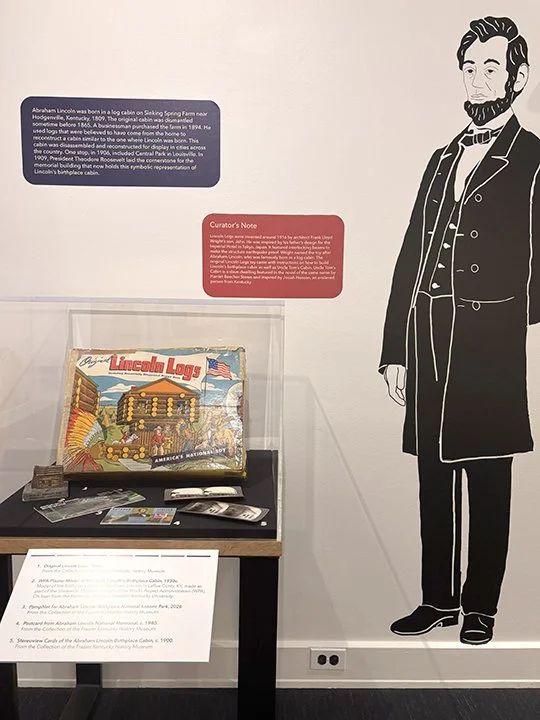
Lincoln Logs on display in the Frazier’s new exhibition I Too Am a Kentuckian.
Lincoln Logs are an invitation to creative play. Introduced in 1916, these simple interlocking logs became one of America’s most beloved toys. One can build cabins, forts, imaginary frontier towns, and even a rustic-looking skyscraper if you have a couple sets to combine, which is possible as their design has not changed much in over 100 years. Yet, beyond encouraging imagination and problem-solving, Lincoln Logs subtly introduced children to one of the nation’s most admired presidents—Abraham Lincoln.
Many first encountered Lincoln’s name not in a history book, but on the box that held their first building set. As children made miniature cabins of their own, they unknowingly connected with a piece of American history. They may not have understood why the toy was called “Lincoln Logs,” but soon enough, through early history lessons at school, the pieces would click. I remember that “aha” moment after learning that Abraham Lincoln was born in a humble log cabin in Kentucky. Now the toy and its name made sense!
In an age before electronic entertainment dominated childhood, Lincoln Logs provided a bridge between generations. Many kids from the 1950s and on played with sets that belonged to their parents or grandparents. Both sets of my grandparents had a box and slowly, over the course of several visits, I squirreled away the pieces in my pockets until they were all at my own house. My cabin expanded into a village! (I am just now realizing I should apologize to my cousins who were met with empty Lincoln Log boxes on their visits to the grandparents.)
Lincoln Logs are still around! They remain a nostalgic reminder that education does not always happen in classrooms, that sometimes lessons come hidden inside a favorite toy. By inspiring imagination while quietly introducing the story of Abraham Lincoln, these iconic wooden logs helped generations of children appreciate history without even realizing it. Our new exhibition I Too Am a Kentuckian is even more complete for a donation of an early set of Lincoln Logs that we proudly display. And President Lincoln stands at the entrance, his namesake toy next to him, and his famous quote as the exhibition’s title, reminding all that even to this day he continues to permeate our lives on so many levels.

Marcy Werner
Collections Manager & Registrar
Kentucky Wide Explores how the Declaration, Constitution, and Magna Carta Came to Fort Knox
During World War II, a host of important historic documents were snuck into Kentucky for safekeeping at the new gold and bullion depository at Fort Knox. Included were the original copies of the Declaration of Independence, the United States Constitution, and one of the four surviving original copies of Magna Carta. Why was one of England’s greatest treasures here, and how did it get to Kentucky? Well, you’ll have to find out on the newest episode of Kentucky Wide!

Mick Sullivan
Co-host and Producer, Kentucky Wide
Frazier’s Pursuit of Happiness Offers Declaration of Independence in Modern Translation
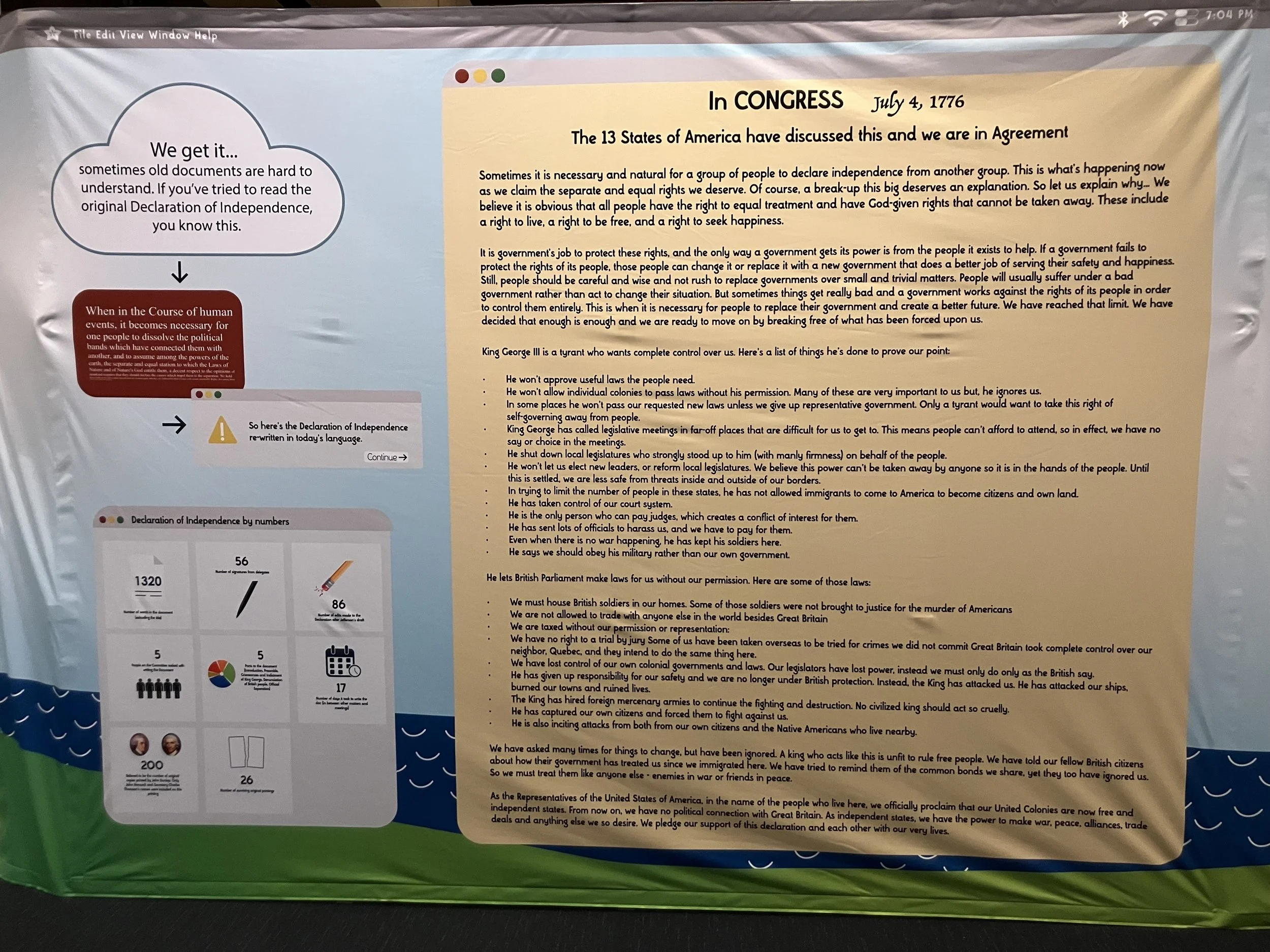
Declaration of Independence installation in the Frazier’s Pursuit of Happiness exhibition, July 9, 2026.
When was the last time you tried reading the Declaration of Independence? For America’s 250th, we figured some folks may be giving it a try, so we wanted to make sure adults and young people would be able to tackle our country’s founding document and understand it. Our Curator of Guest Experience Mick Sullivan along with the help of the best editor I know, Pam Platt (my sister), translated it into easy-to-digest language. You can find it in our Pursuit of Happiness exhibition. I asked Pam to weigh in on why we need to rediscover it.—Rachel Platt, VP of Mission
Translations are bridges between different points of reference, even when those points are drawn from the same basics. For instance:
We don’t dress the way we did in 1776—powdered wigs and knee breeches; or corsets and bum rolls, anybody?
We don’t weigh whether to sacrifice one of our hens for its eggs or for its meat when deciding what to have for dinner, as the less financially endowed of us did in 1776.
We don’t opt for a damp cloth and a quick dab here and there, instead of a bath or shower, as most of us did in 1776; one of the surviving lines from that time is “not having been wett all over at once, for 28 years past,” from a colonial woman upon her first outdoor shower.
So, why would we use the same structures of language for one of our now 250-year-old nation’s two most important, foundational documents in making the connection between our beginning as Americans, and where we are now?
This is why the Frazier Kentucky History Museum’s adaptation of our foundational Declaration of Independence from the use of 1776 language to more current expressions is such an inspired idea made real.
If this wonderful place is where the world meets Kentucky, thanks to this part of the Pursuit of Happiness exhibition, it also is where today’s Americans can meet the aspirations and commitments of our forebears in relevant and relatable words and expressions.
Again, the Frazier helps our ancestors meet us where we are, even in the Declaration of Independence.
The ideas are the same, the modern translation bridging any gaps, removing any barriers, that might have been felt in the document’s original language and sentence structure. The Frazier retired the wigs, the breeches, the corsets, the damp cloths in words, for today’s Americans.
The understanding facilitated by a faithful translation from past to present is needed now more than ever.
We still seek to find our way to the more perfect union that always was the goal of this still-new nation.
And tyrants and tyranny are always a threat to a country and citizens intent on self-government.
The Frazier is committed to the vivid, thorough, fair presentation of the struggles and victories of the past that educate us about who we were, inviting us to take this gift of knowledge about liberty and use it for a better present and future for every American as we are and wish to be.
Or, as the Frazier’s translation says for its audience today, “We pledge our support of this declaration and each other with our very lives.”
Still sacred.
Pam Platt
Writer
Guest Contributor
Frazier250 Program to Explore Revolutionary Threads and I Too Exhibits

The commemoration of America250 is well underway at the Frazier Kentucky History Museum. On August 16, we are rolling out yet another exhibit, Revolutionary Threads. That’s in addition to I Too Am a Kentuckian and Pursuit of Happiness. More details to come next week, but make sure to purchase your ticket now to our special program on August 16 at 1 p.m. Seating is limited, so act quickly.

Rachel Platt
VP of Mission
Frazier to Debut Monthly Segment on WDRB Mornings Today
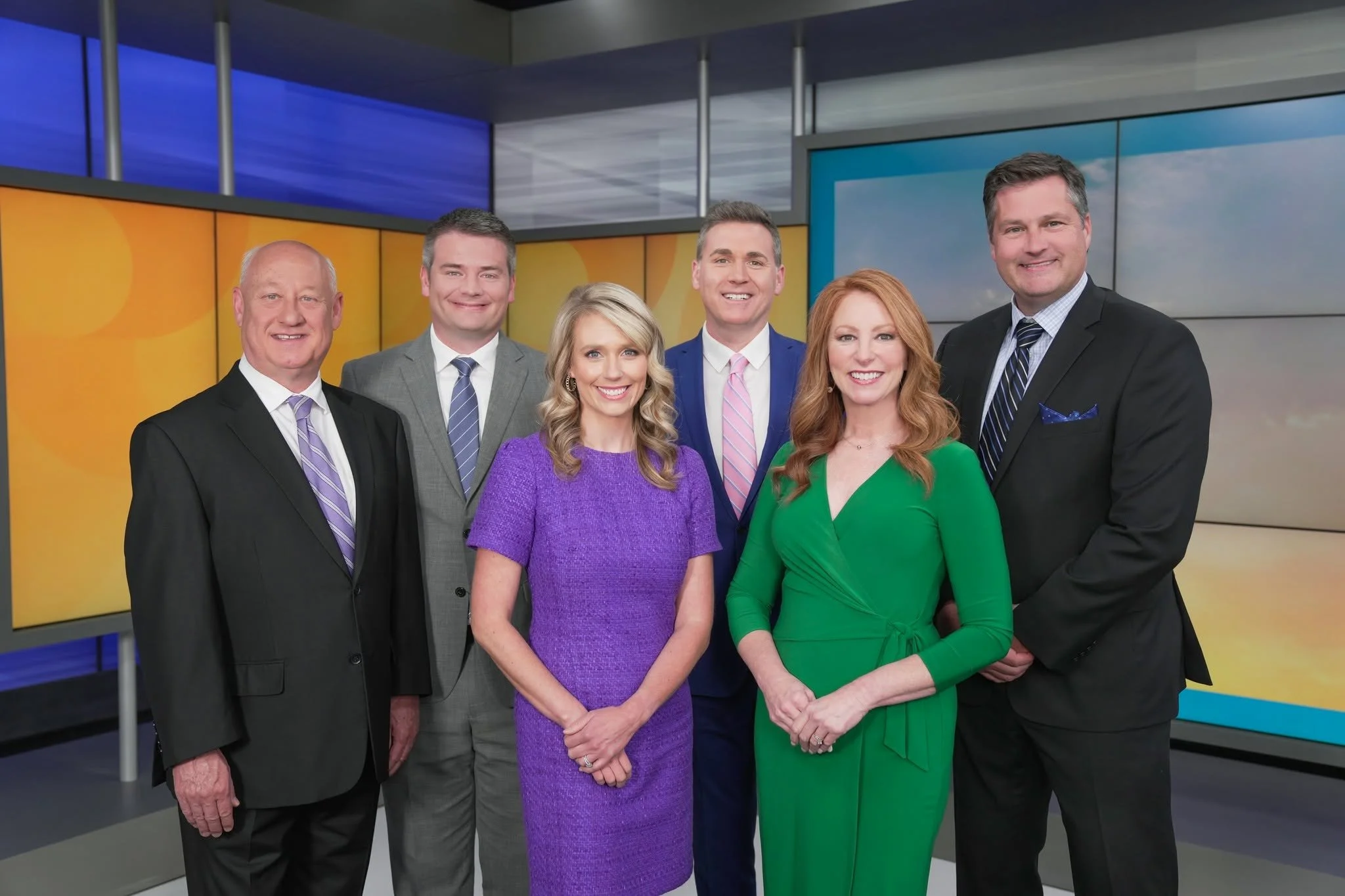
WDRB Mornings crew.
If you wake up with WDRB Mornings, you’re familiar with TV personalities Candyce Clifft, Lindsay Allen, Chris Sutter, Mike Marshall, Jude Redfield, and Keith Kaiser.
Now, starting later this morning, you’ll also see some of the folks who write this newsletter Frazier Weekly!
Starting Monday, July 13, a Frazier Museum staff member will appear in a WDRB Mornings segment once a month. In each segment, we will share stories and objects from the museum, pertinent to any exhibitions, programs, or activities we’ve got on the calendar.
Today, Frazier President and CEO Andy Treinen will discuss our just-opened exhibition I Too Am a Kentuckian. He’ll shed light on some of the notable Kentuckians who’ve lent their voices to the audio installation in the gallery.
Catch him in the nine-o’clock hour!
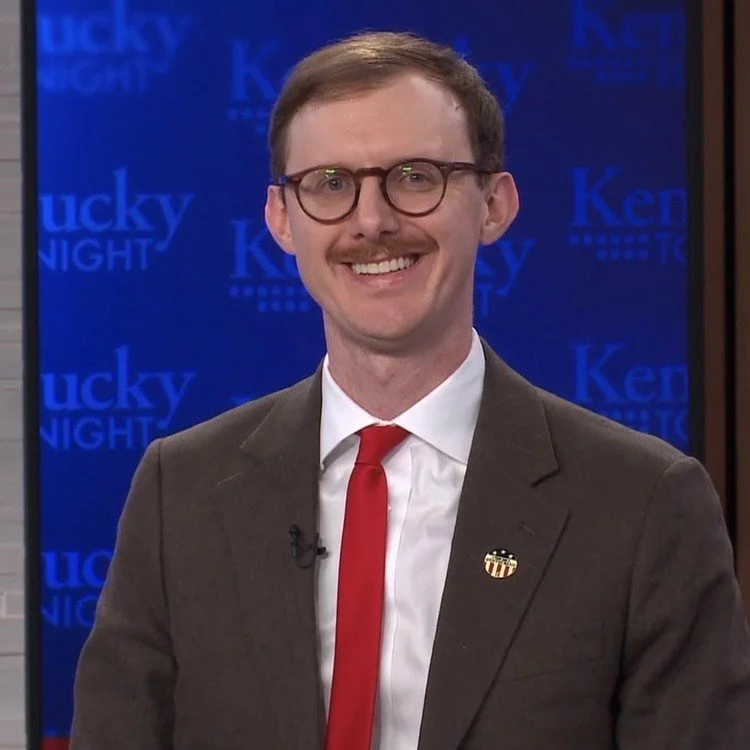
Simon Meiners
Communications & Research Specialist
Cool Kentucky Shop: Louisville Can Opener T-shirt
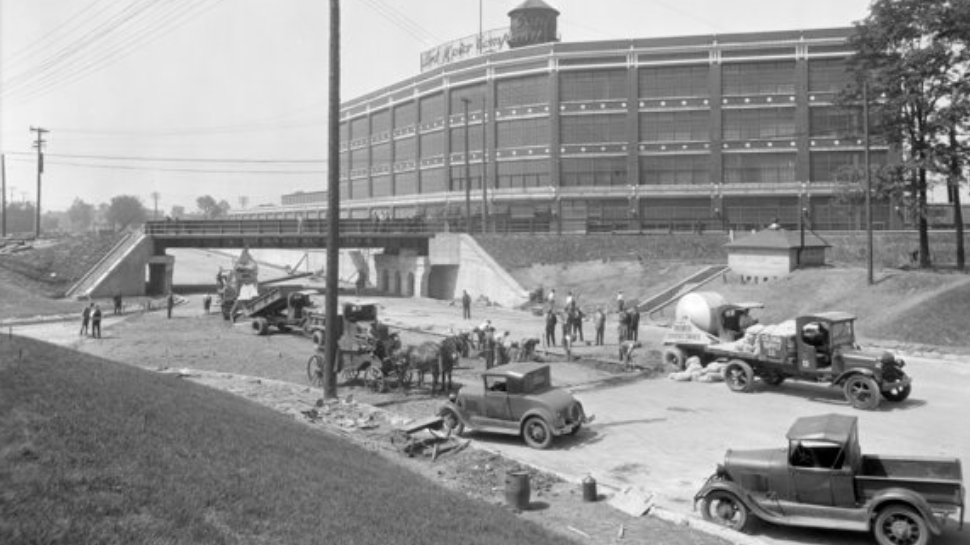
Construction of the railway bridge at Third and Winkler, now nicknamed “the Louisville Can Opener,” c. 1930. Credit: Caufield & Shook Collection, U of L Archives & Special Collections.
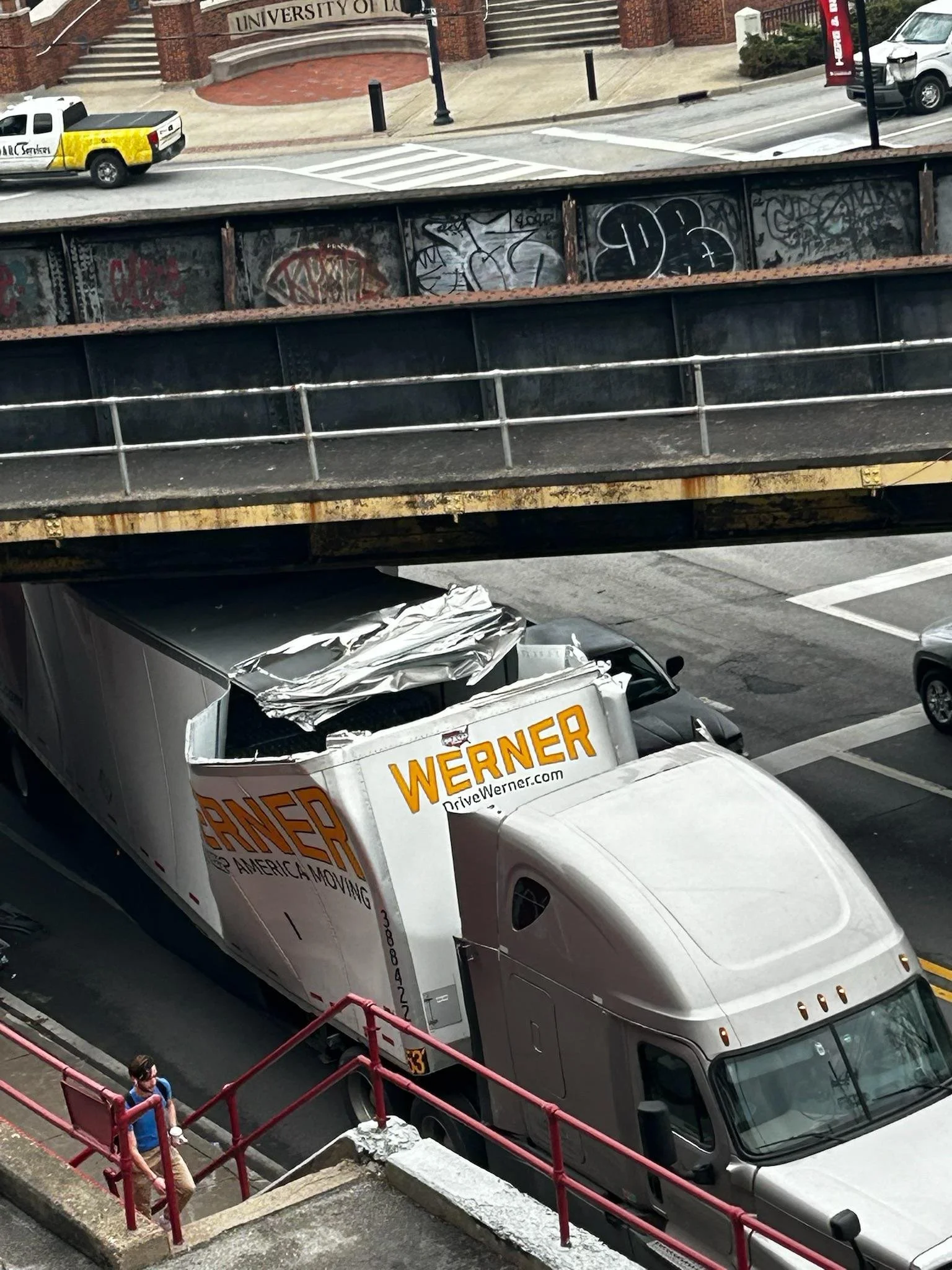
A semi-truck “feeds” the Louisville Can Opener, February 27, 2024. Credit: Lonewolf1357, Reddit.
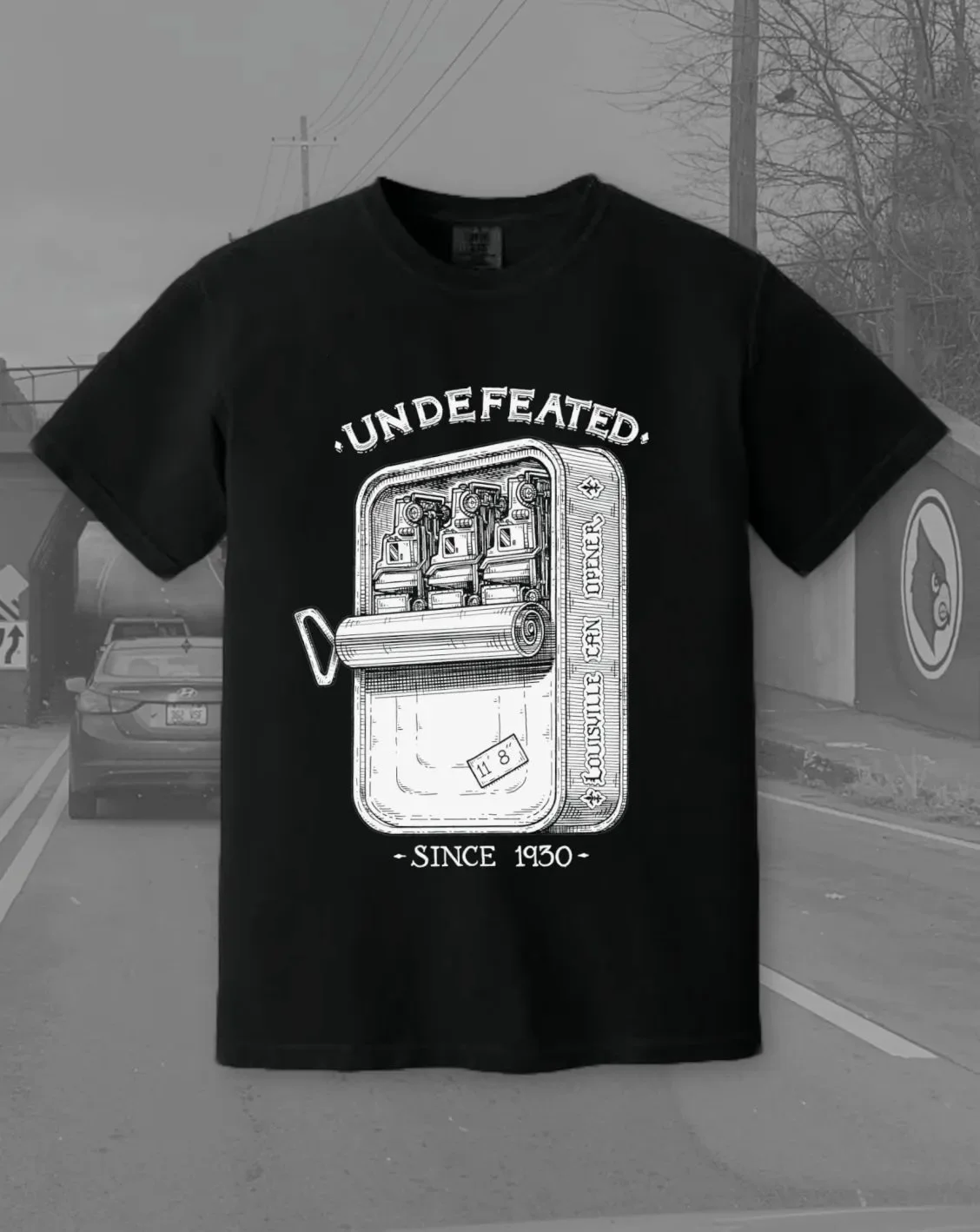
Louisville Can Opener t-shirt sold in the Frazier’s Cool Kentucky Shop.
On June 1, 2026, I-65 in Louisville shut down for the summer. Traffic patterns flexed, and many drivers opted to instead take Third Street south of U of L’s campus. That requires passing under the notoriously low-clearance railway bridge dubbed “the Louisville Can Opener.” That day alone, three semi-trucks and one box truck “fed” the Can Opener. In the six weeks since, feedings have continued at an historic rate—leading to increased attention, news reports, a website, and a t-shirt by artist John Embry. The Frazier now stocks the t-shirt in our Cool Kentucky Shop! We’ve asked Embry to shed light on what inspired him.—Simon Meiners, Communications & Research Specialist
The Golden Gate, London, and Brooklyn bridges . . . all are great architectural marvels in their own right, yet none are so brilliant a force in our cultural zeitgeist as the railway crossing at Third and Eastern Parkway—the Louisville Can Opener. The raw power of our beloved, eleven-foot-eight-inch, insatiable beast has been challenged to the ruin of innumerable semi-trucks since its inception.
Like that of Arthurian legend, the history of the Louisville Can Opener is murky and veiled in mystery. But we do know for certain that it was constructed as part of JP Morgan’s Southern Railway System around 1930. Its clearance was twelve feet six inches as recently as 1949, which was adequate for the semi-trailers of the time despite a lack of codified height regulations here in Kentucky. But as the trucks morphed into towering behemoths, the clearance of the underpass evaporated due to the continued repaving of the roadway beneath it. Thus, the convergence of these oppositional heights created decades of vehicular carnage.
Time-warp to the shutdown of I-65 in the summer of 2026 and the Louisville Can Opener has been on an absolute feeding frenzy. On the first day alone, June 1, it claimed four trucks. At the time this article was submitted [July 7] it has taken a total of thirty-four trucks.
The fervor around its gluttony on social media, numerous news reports, and some banter about sardine cans with my friend “Flurb” who runs the Instagram page RiverCityRules led to an artistic epiphany. I drafted a quick sketch to propose a public art installation near the underpass of a giant sardine can with its top peeled back, revealing three semi-trucks in place of fish. People loved the sketch so much that I got to work inking a tedious, wood-cut-inspired design by hand to make a shirt for the community. That shirt is now available for purchase at the Frazier Museum’s own Cool Kentucky Shop.
While the poor souls who’ve met their doom upon the Can Opener’s unyielding frame may sing the lament of a “Cruel Summer,” the people of Louisville respect and celebrate its legacy in the local lore. Though our own Muhammed Ali may have been “the Greatest,” only the Louisville Can Opener is truly undefeated.

John Embry
Owner/Artist, Muse & Myth
Guest Contributor
On the Trail with Abby: New Riff Distilling in Campbell County

Bourbon tourism is booming—and the Kentucky Bourbon Trail® is growing faster than ever! Each week, the Frazier’s Abby Stanton takes readers on a digital stop-by-stop tour of this expanding adventure, spotlighting the distilleries, stories, and expressions behind America’s native spirit. Ready to hit the trail in real life? Start your journey at the Frazier Kentucky History Museum, home of the Kentucky Bourbon Trail® Welcome Center.
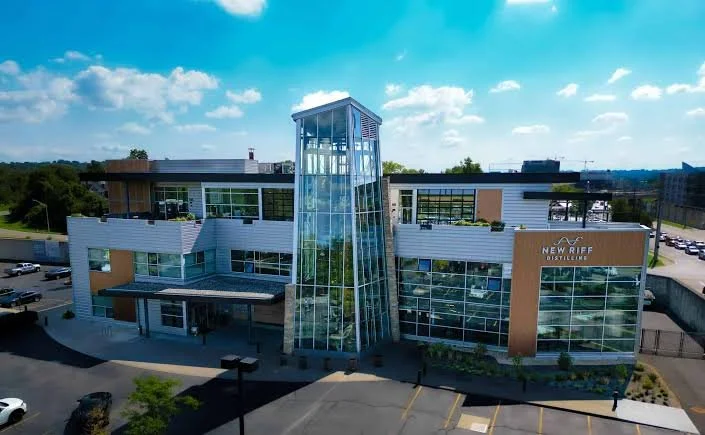
Exterior of New Riff Distilling in Newport, Campbell County, Kentucky.
New Riff Distilling is, as they say, a new riff on an old tradition. Located in Newport, Kentucky, just across the river from Ohio, the distillery sits at the Northern Kentucky Gateway to the Bourbon Trail®.
Since being founded in 2014 by Kentucky Bourbon Hall of Famer Ken Lewis, the distillery has remained independently owned and is now sold in all fifty states and across the world. This year, they took World’s Best Bourbon at the World Whiskies Awards for their flagship—and only $40—New Riff Bottled-in-Bond Straight Bourbon Whiskey.
You can join a variety of unique tastings and tours onsite in Newport, from the Art of Batched Cocktails to a blending experience. Check out the Aquifer tasting room for cocktails and bites, named for the limestone-rich aquifer that supplies water for New Riff’s delicious products.
Cheers!

Abby Stanton
Administrative Chief of Engagement
Bridging the Divide
African American History Playground Sankofa Sanctuary Opens in Chickasaw Park
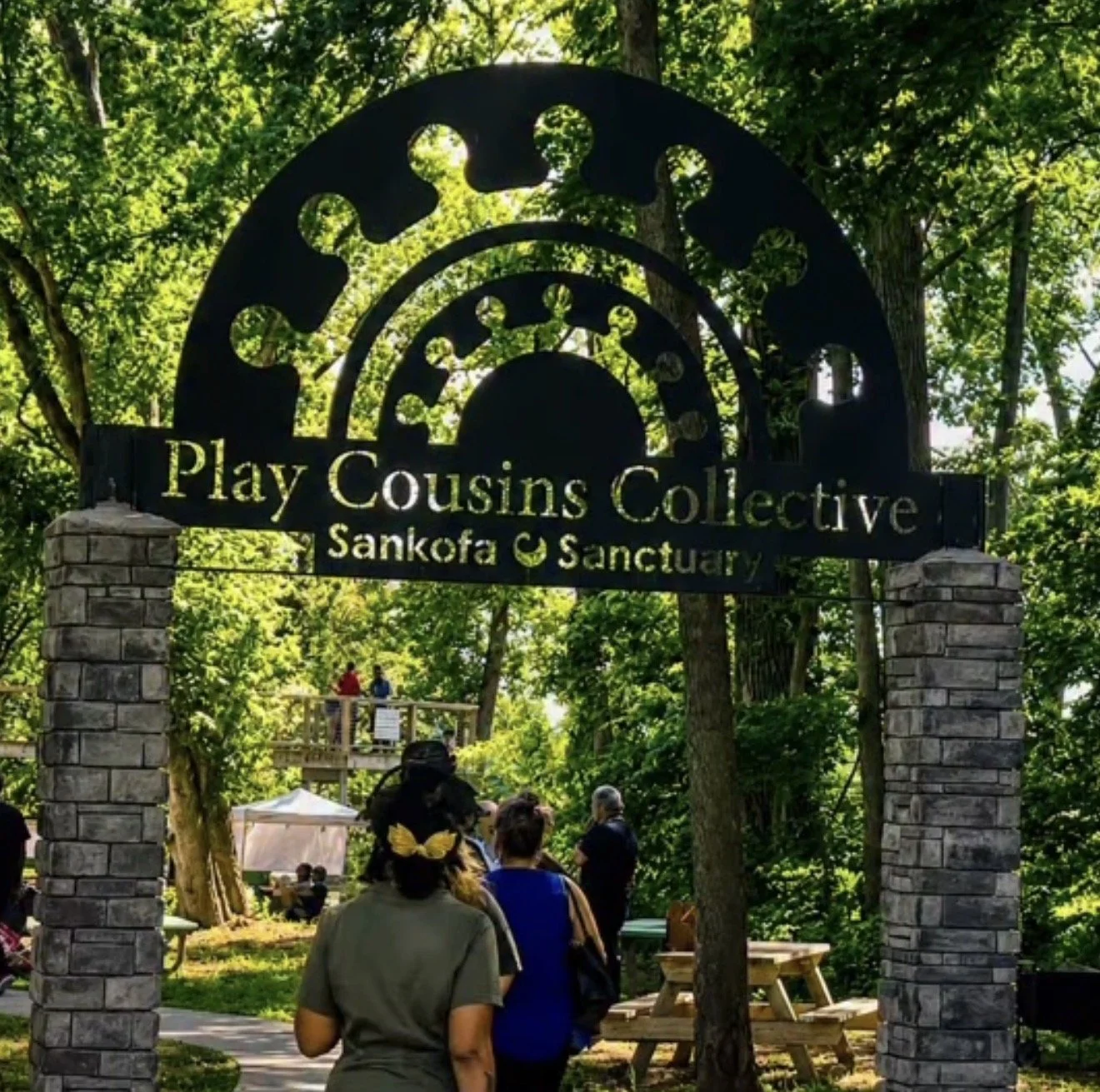
Sign at Sankofa Sanctuary in Louisville’s Chickasaw Park, 2026. Credit: Play Cousins Collective.
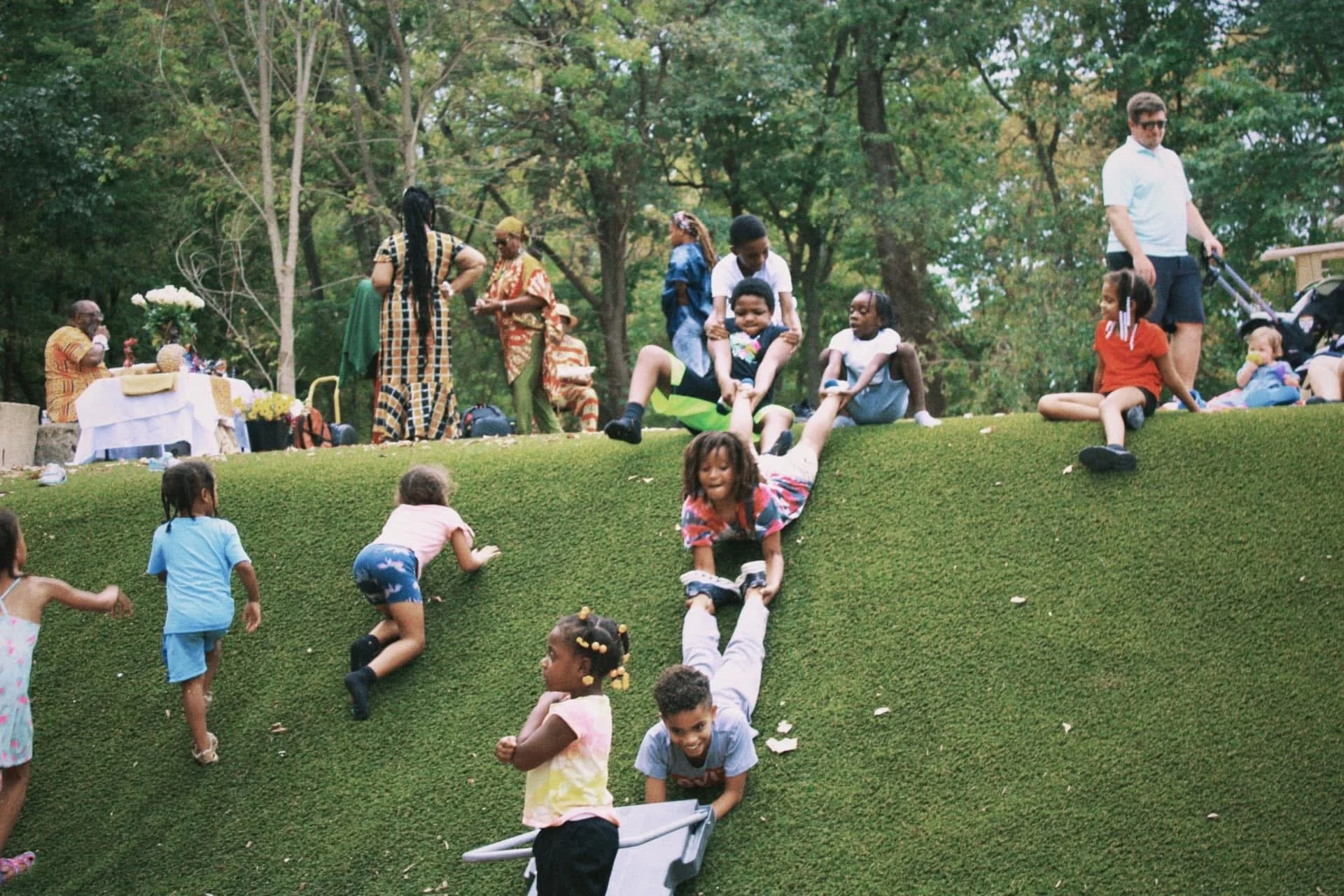
Children play at Sankofa Sanctuary in Louisville’s Chickasaw Park, 2026. Credit: Play Cousins Collective.
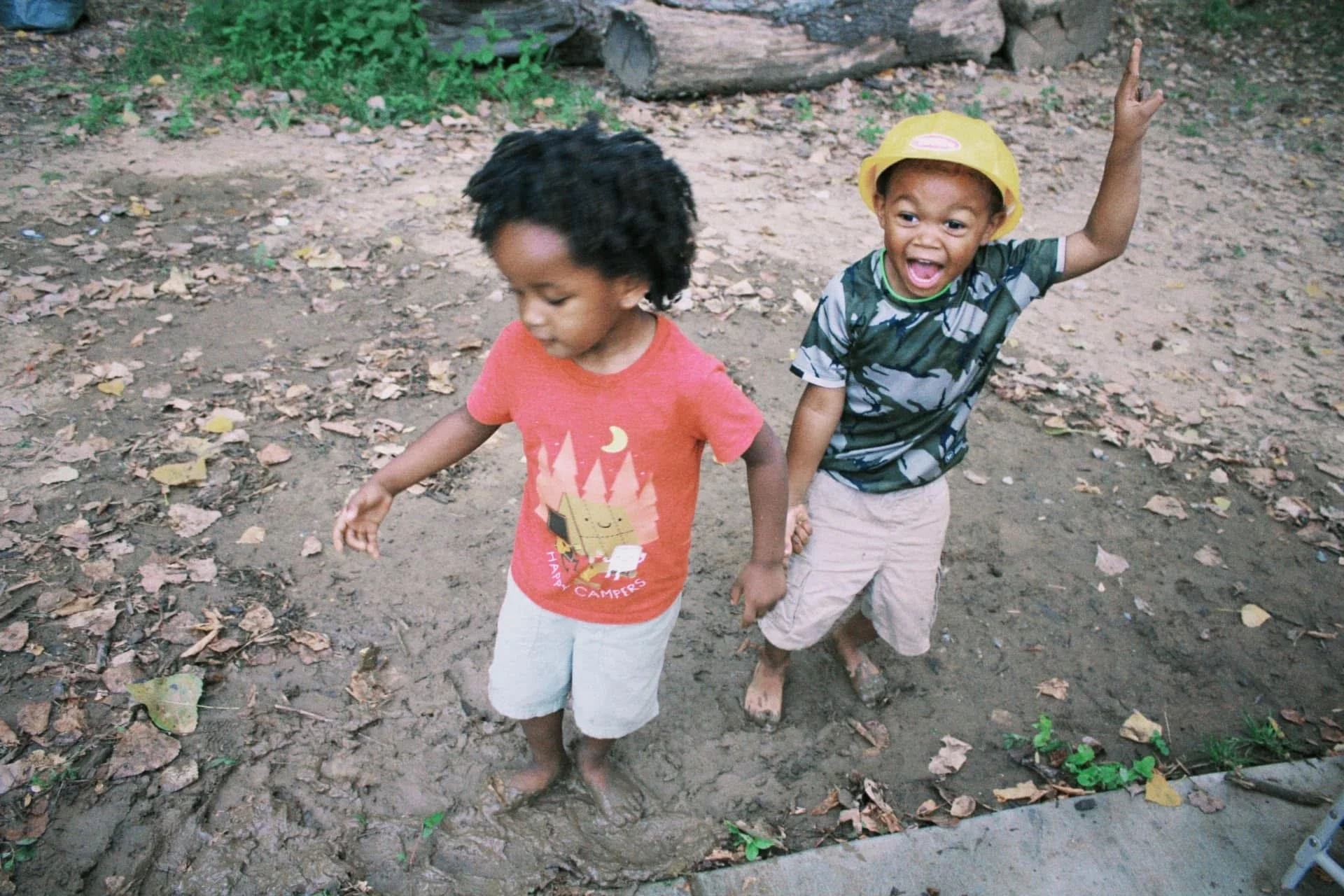
Children play at Sankofa Sanctuary in Louisville’s Chickasaw Park, 2026. Credit: Play Cousins Collective.
Congratulations to Play Cousins Collective for the new addition at Chickasaw Park on Southwestern Parkway. The new nature play area was recently unveiled. When you get to the entrance of Chickasaw Park, signs point you to the playground next to the lodge. According to the executive director, Kristen Williams, the area is a space children can live, play, and prosper while connecting with their heritage. Keep reading to learn more and stop by Chickasaw Park to pay a visit.—Rachel Platt, VP of Mission
Sankofa Sanctuary is a very unique and intentional space tucked into a corner of Chickasaw Park. It is a place that holds memory, joy, play, and care. Every visit is an invitation to slow down, connect with one another, and experience history in a way that feels alive. This is not simply a playground. It is a place where culture, community, and nature come together.
As an African American history playground, Sankofa Sanctuary features nature-based play elements that each represent a different communal value. Every element honors the people who came before us and recognizes the strength, wisdom, and resilience they passed on to future generations. Their stories remind us that the paths we walk today were made possible by those who had the courage to dream, build, and persevere.
Surrounded by trees, open skies, and the rhythms of the natural world, Sankofa Sanctuary also invites us to reconnect with the land. Nature has always been a place of refuge, restoration, and renewal. Here, we remember that healing is not something we do alone. It happens in community, through shared meals, shared stories, children’s laughter, quiet conversations, and time spent together outdoors. As we care for this space, we also care for one another.
This Juneteenth, we gathered for a special Homecoming celebration that reflected everything Sankofa Sanctuary was created to be. Families, neighbors, elders, and children came together to celebrate freedom, reconnect with one another, and create new memories. There was laughter, conversation, music, and play. It felt like coming home in every sense of the word.
Our Juneteenth Homecoming is the beginning of many gatherings to come. We envision Sankofa Sanctuary as a place where community continues to grow through shared experiences and meaningful connection. From family reunions and birthday celebrations to yoga, music, storytelling, educational programs, and everyday moments of play, this space welcomes people of all ages. Every gathering adds another layer to the story of this sanctuary and strengthens the relationships that make our community whole.
Sankofa Sanctuary reminds us that history is something we carry with us. It lives in our stories, our traditions, our families, and our time together. It also lives in the land beneath our feet, reminding us that we belong to something much larger than ourselves. As children explore, elders share their wisdom, and neighbors gather in celebration, this space continues to fulfill its purpose as a place where everyone can feel seen, valued, connected, and supported.
To learn more about Sankofa Sanctuary and contemporary builders in the city, visit playcousinscollective.org/sankofa.
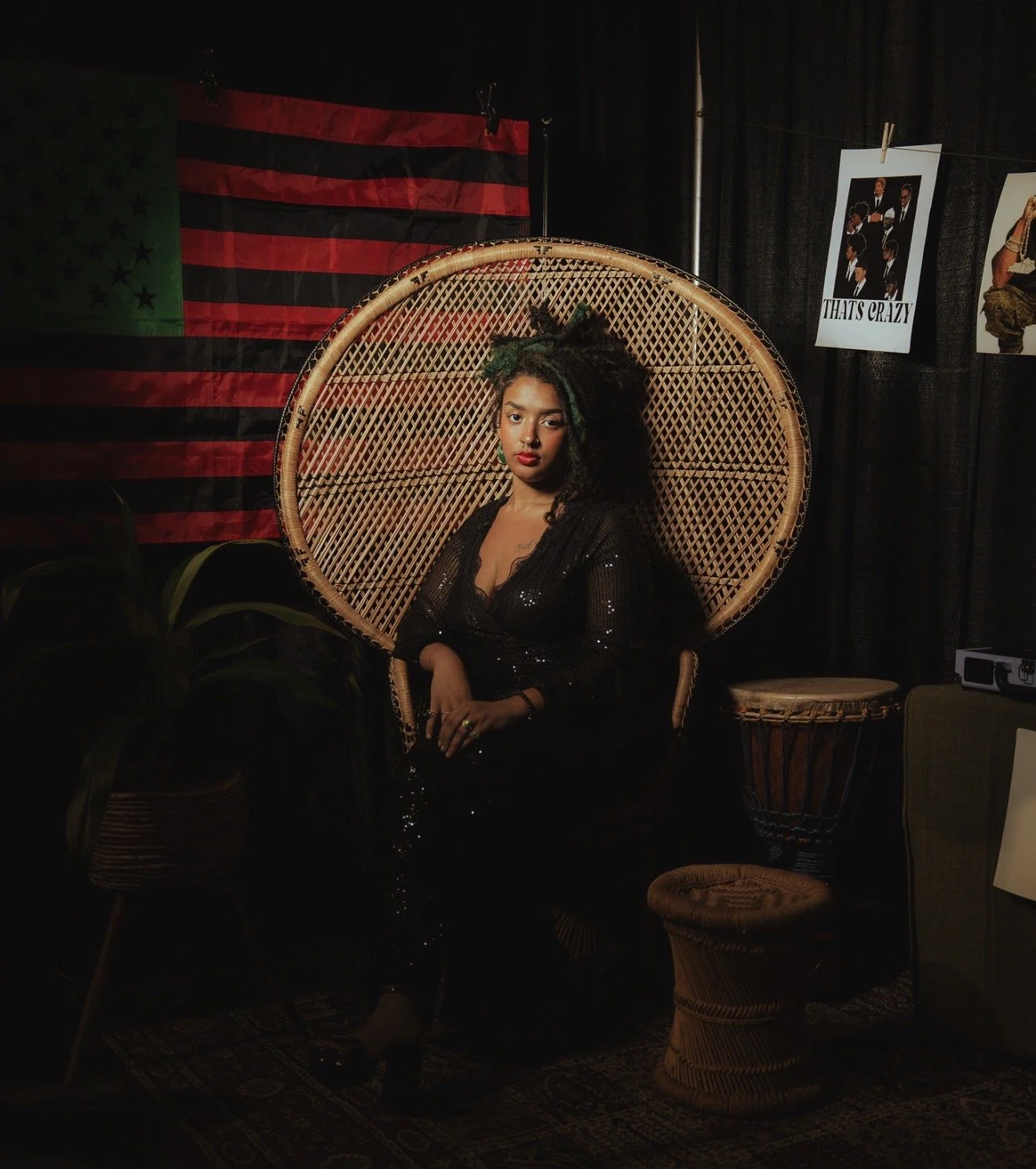
Zakia Holland
Director of Community Healing, Play Cousins Collective
Guest Contributor