A Heartfelt Message from our President, 120: Cool KY Counties on the Road, Remnants with Tom Owen, and More
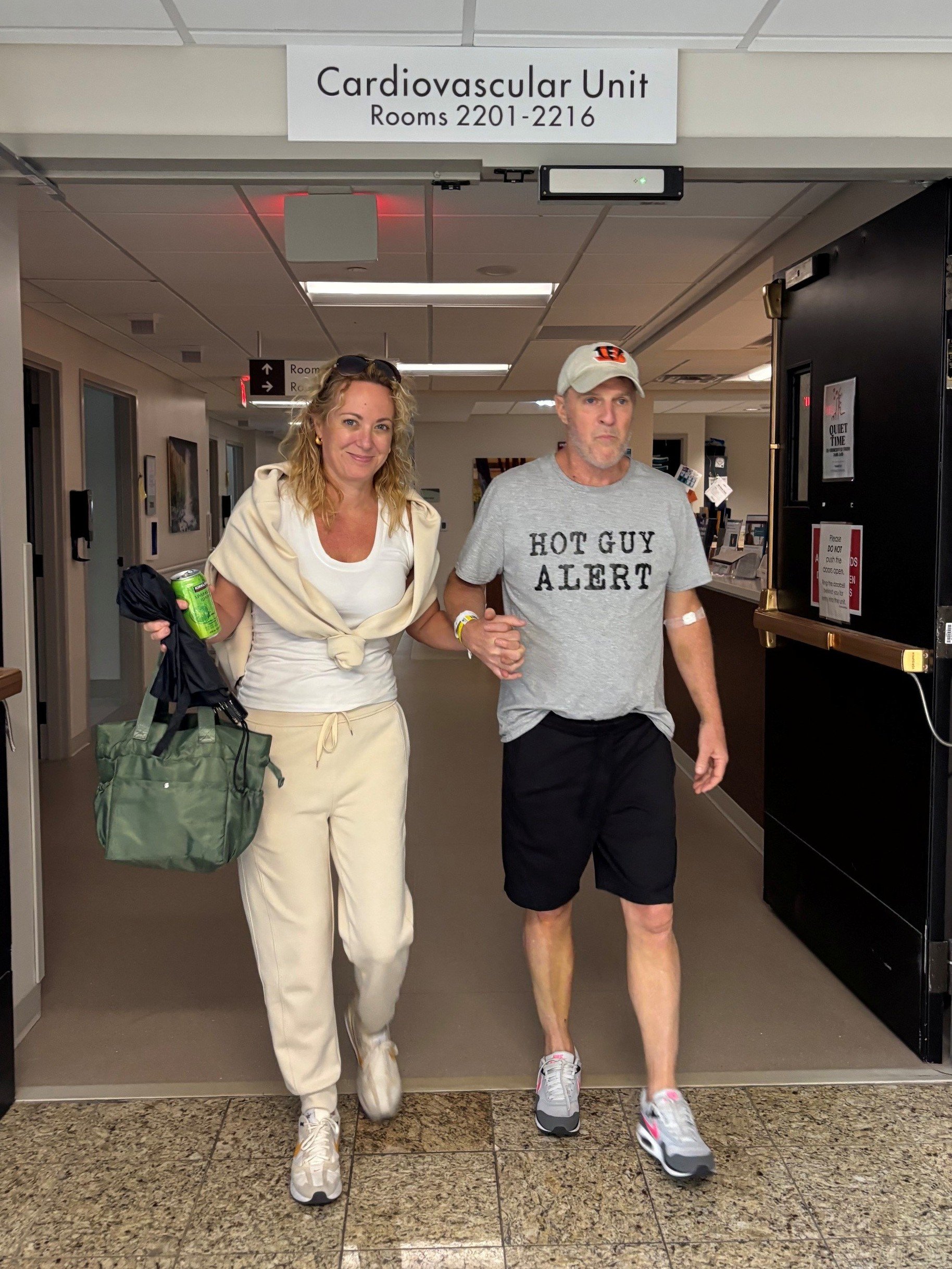
Frazier President and CEO Andy Treinen exits the hospital with his wife Wendy after undergoing an extremely rare septuple bypass, 2026.
Please forgive my deviation from museum business this week to thank our amazing team, my family, and the many people I have the honor of calling friends. A good number of you regularly read this Frazier Weekly.
I am now fully back in action here at the Frazier after doctors opened my chest, split my ribcage, and performed a septuple bypass surgery. Yes, that is seven bypasses.
More common are single, triple, and even quadruple bypasses. A septuple bypass is extremely rare. I never heard the term before doctors decided it was the best path to save my life, but neither had my cardiac recovery nurse, my general practitioner, or my eventual cardio rehab manager. If you try to look up an image of a septuple bypass on the internet, you won’t find it.
And the crazy thing was, I didn’t feel sick.
My body had sent me essentially no warning signs considering I was about ninety-five percent blocked in the artery known as the widow maker. I also had major blockage through several points in the other two heart arteries. Heck, I played pickleball the evening before a coronary angiogram diagnosed my problem. I ran on the treadmill the morning of the test. Finding and diagnosing the ticking time bomb in my chest was just the latest remarkably good fortune that I am blessed to have experienced in my fifty-seven years.
I am, and always have been, a lucky dude!
So as you might imagine, today I am incredibly humbled and perhaps a bit more emotional after being flooded with a level of love and support that no one person deserves. Having said that, I wish every person could experience it.
Undoubtedly, the forced focus on my mortality has changed me in ways I’m just starting to understand. Most of all I hope it has improved my ability to be present, right here and right now, in every encounter and every conversation.
It turns out the Frazier Museum, my family, my friends, and the world at large have the ability to run just fine without me. I’m grateful that they won’t have to for a while. Thank you!
Today’s Frazier Weekly brings our 120: Cool KY Counties crew back on the road to Glasgow, Elizabethtown, and Shelbyville with Louisville Orchestra’s In Harmony tour. Our Beer Fest BOGO deals ends tonight, Louisville historian Tom Owen digs into our building at 829 West Main Street, and curator Amanda Briede highlights an historic Pride Month object featured in our soon-to-open I Too Am a Kentuckian exhibition.
I can’t wait to see you soon!
Andy Treinen
President & CEO
Frazier Kentucky History Museum
This Week in the Museum
120 on the Road Heads to Glasgow, E-Town, and Shelbyville this Week
120: Cool KY Counties on the Road graphic.
Many of our readers are already familiar with the Frazier’s 120: Cool KY Counties exhibit, a multi-year labor of love that has brought stories and songs from all over Kentucky into our museum. Stories gathered in collaboration with community partners of all stripes! That was Phase 1.
Phase 2, 120: Cool KY Counties on the Road, is now kicking into gear and coming to a community near you! We’re purchasing a van and decking it out to travel the state in the days ahead. But in the meantime, we’re hauling the interactive exhibit and other objects of interest in our cars to celebrate the culture, heritage, and traditions that make your communities so special!
Our next three visits continue our partnership with the Louisville Orchestra for their In Harmony tour that gives free performances to communities throughout the Commonwealth.
On Thursday, June 25, the Frazier and the Louisville Orchestra will be in Barren County. Folks from the Frazier will have a special meet and greet to show off 120: Cool KY Counties on the Road at the South-Central Kentucky Cultural Center in Glasgow from 1 to 4 p.m. (CST). Then you’ll find the Frazier and Louisville Orchestra at Glasgow Town Square for the free concert at 7:30 p.m. (CST). The Frazier will be there early.
The following day, Friday, June 26, we’re heading to Hardin County. The Frazier will be at the Brown-Pusey House in Elizabethtown with our exhibit from 1 to 4 p.m., then again before the free concert at 8:30 p.m. with the Louisville Orchestra at the Bandstand in Freeman Lake Park in Elizabethtown.
And don’t forget to join us on Saturday, June 27, at the Shelby County Fairgrounds. The Frazier will join the family activities starting at 6 p.m. leading up to the Louisville Orchestra concert at 8:30 p.m. And if you watch WDRB, our own Casey Harden will be live on their morning show tomorrow, June 23, with details about 120: Cool KY Counties on the Road.
We are just getting rolling. Our future lineup may bring us to a place or festival near you! If you or someone you know helps organize a local fair, please contact me at jberkowitz@fraziermuseum.org to discuss bringing this exhibit to your town!

Jason Berkowitz
Engagement Specialist
Re-collections: WPA Models of Cross Keys Tavern in Shelbyville
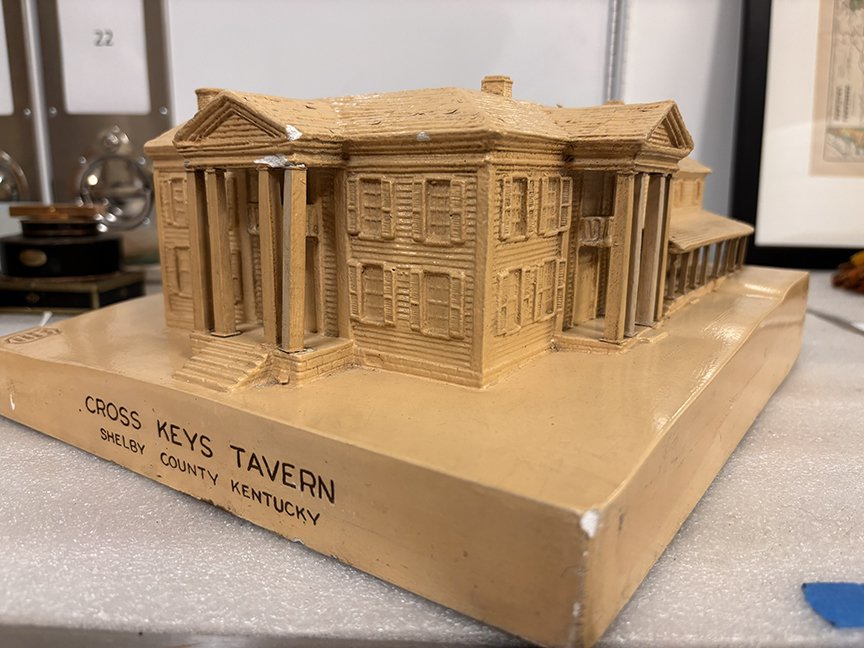
WPA models of Cross Keys Tavern in Shelbyville, Kentucky. Part of the Frazier Kentucky History Museum’s collections.
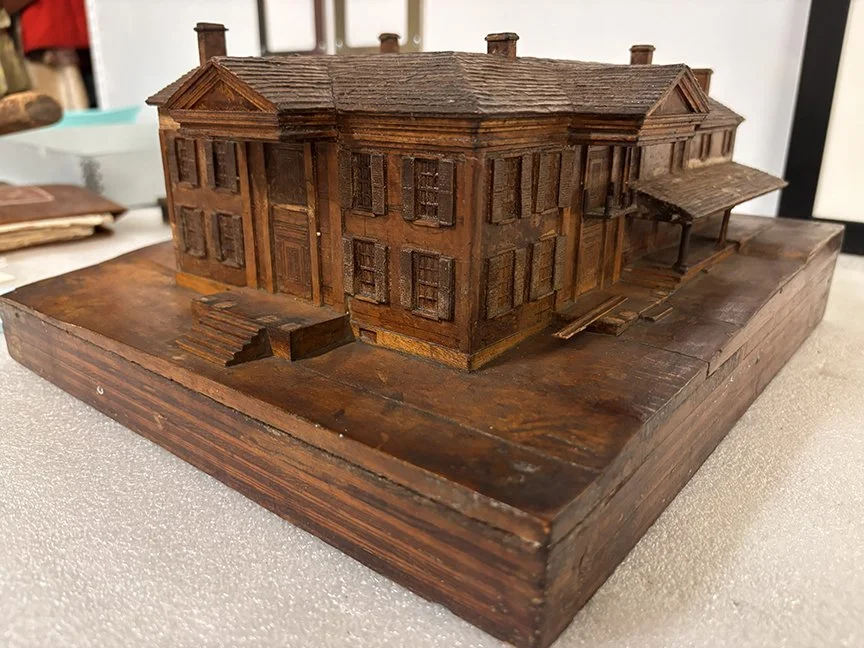
WPA models of Cross Keys Tavern in Shelbyville, Kentucky. Part of the Frazier Kentucky History Museum’s collections.
As you know, the 120: Cool KY Counties exhibit heads out into the state later this week as 120: Cool KY Counties on the Road! In connection, I’ll take this opportunity to show you what we have in our collections from Shelby County, the last of the three stops this week.
We recently acquired these models of Cross Keys Tavern on US 60 in Shelbyville. They were created as part of the Federal Art Project of the Works Progress Administration. One is made of wood, while the other is plaster. These models were likely made by different artists in the program. They came to us by a generous gift from the Kentucky Science Center.
In 1800, Adam and Mary Middleton moved to Shelbyville. They soon bought the log structure across the street from where they had settled, an inn and blacksmith shop called Cross Keys Kitchen and Quarters. After hearing several people’s desire for a tavern, the Middletons expanded their enterprise and built the Cross Keys Tavern, in the Greek Revival style, on the site. It has been estimated that Cross Keys Tavern sheltered 10,000 travelers, from every state east of the Mississippi, between 1800 and 1825. It was used as a main stopping point between Louisville and Lexington, Harrodsburg, and Frankfort. It boasts a guest list that includes Henry Clay, Andrew Jackson, and General LaFayette.
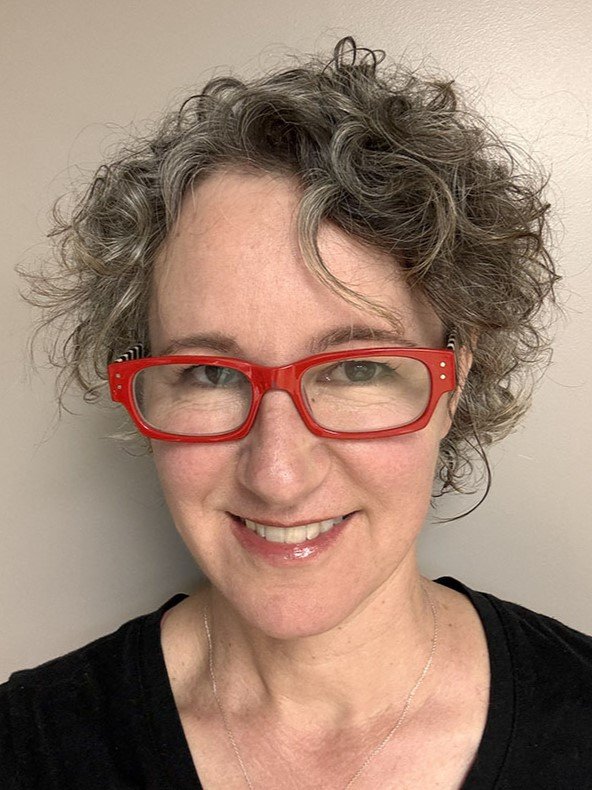
Marcy Werner
Collections Manager & Registrar
Remnants with Tom Owen: History of 829 West Main Street
Tom Owen is a community treasure. Simply put, no one has the knowledge, excitement, and goodwill Tom Owen has when it comes to the stories of Louisville and the surrounding area.
We’re excited to partner with Tom and the University of Louisville Libraries on Remnants with Tom Owen. Co-produced by the Frazier and the U of L Libraries’ Archives and Special Collections, each installment of Remnants will look into the past through local sites thanks to the knowledge of Louisville’s historian Tom Owen.
For the first installment, we’re diving deep into the history of 829 West Main Street, the building now occupied by the Frazier Kentucky History Museum. Learn the fascinating history, which includes tornados, a workers’ strike, a terrible factory fire, and even an artist’s colony of sorts.

Mick Sullivan
Curator of Guest Experience
Curator’s Corner: Pride in I Too Am a Kentuckian
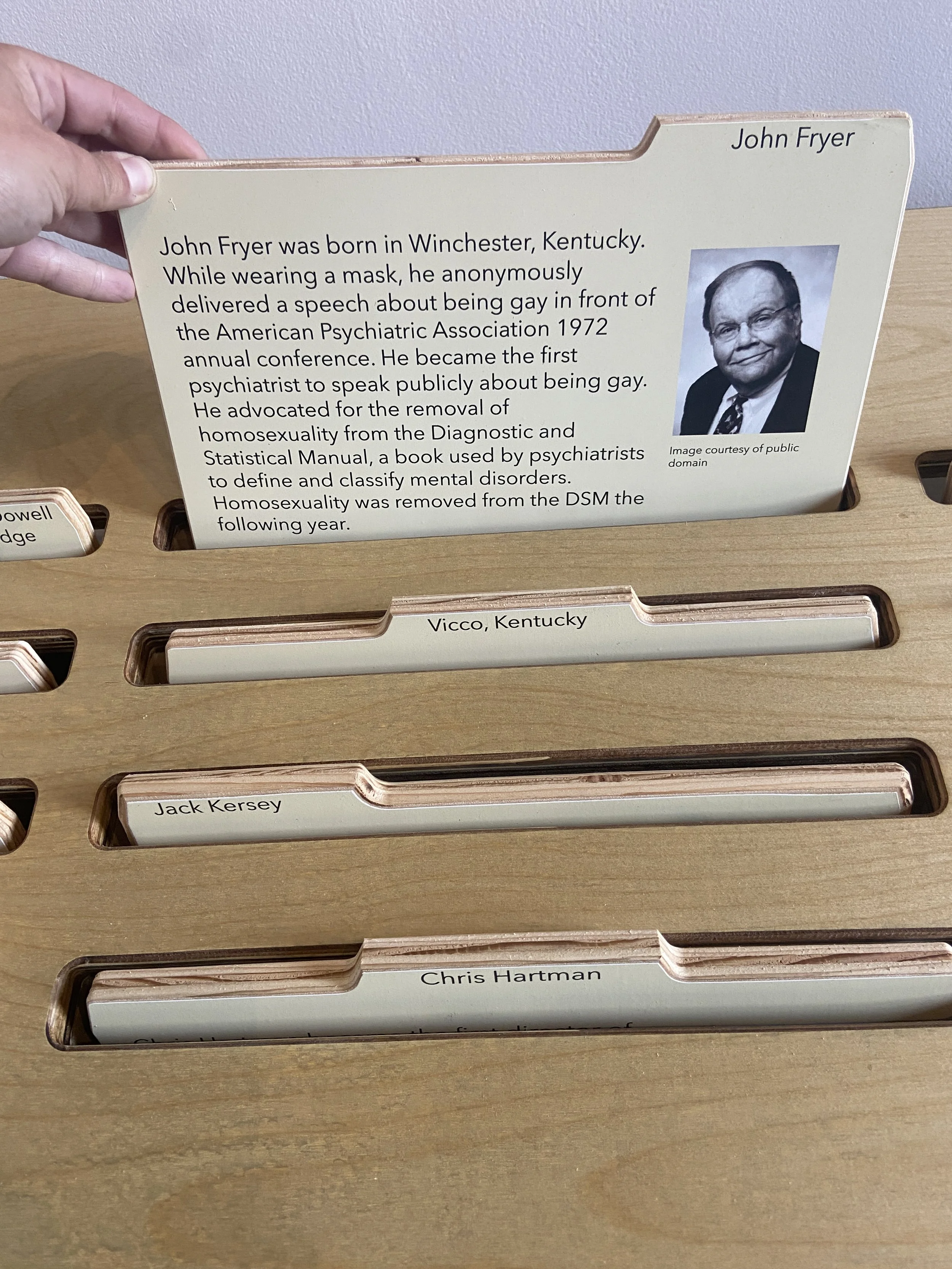
Panels on John Fryer and Vicco in the Frazier’s I Too Am a Kentuckian exhibition, which opens July 4.
June is Pride Month, a time to celebrate LGBTQ+ pride and recognize the contributions of the LGBTQ+ community. In truth, stories about LGBTQ+ Kentuckians can be found on the walls of the Frazier all year long in both of our permanent exhibitions Cool Kentucky and The Commonwealth: Divided we Fall. I include LGBTQ+ stories in many of our temporary exhibitions, too, including Davis Jewlers’ Love & Marriage, which just closed, and our newest exhibition, I Too Am a Kentuckian, which opens on July 4. I wanted to take this opportunity during Pride Month to highlight a few of the LGBTQ+ Kentuckians who will be featured in the new exhibition—specifically, Kentuckians and communities featured in the Equality section who have worked for the rights of others based on sexual orientation and gender identity as guaranteed by the Civil Rights Act of 1964.
· John Fryer was born in Winchester, Kentucky. While wearing a mask, he anonymously delivered a speech about being gay in front of the American Psychiatric Association 1972 annual conference. He became the first psychiatrist to speak publicly about being gay. He advocated for the removal of homosexuality from the Diagnostic and Statistical Manual, a book used by psychiatrists to define and classify mental disorders. Homosexuality was removed from the DSM the following year.
· Vicco, Kentucky, was a coal mining town in Perry and Knott Counties. Its name comes from the coal company that operated there, the Virginia Iron Coal and Coke Company. In 2013, Vicco became the smallest city in the United States to pass a fairness ordinance banning discrimination based on sexual orientation. Vicco had a population of just 334 residents. At the time, Lexington, Louisville, and Covington were the only other cities in the state that had passed fairness laws.
When you come to see the new exhibition, I hope that you will take some time to learn more about the contributions of these and other LGTBQ+ Kentuckians.

Amanda Briede
Sr. Curator of Exhibitions
Cool Kentucky Shop: Spilling the Tea Tote
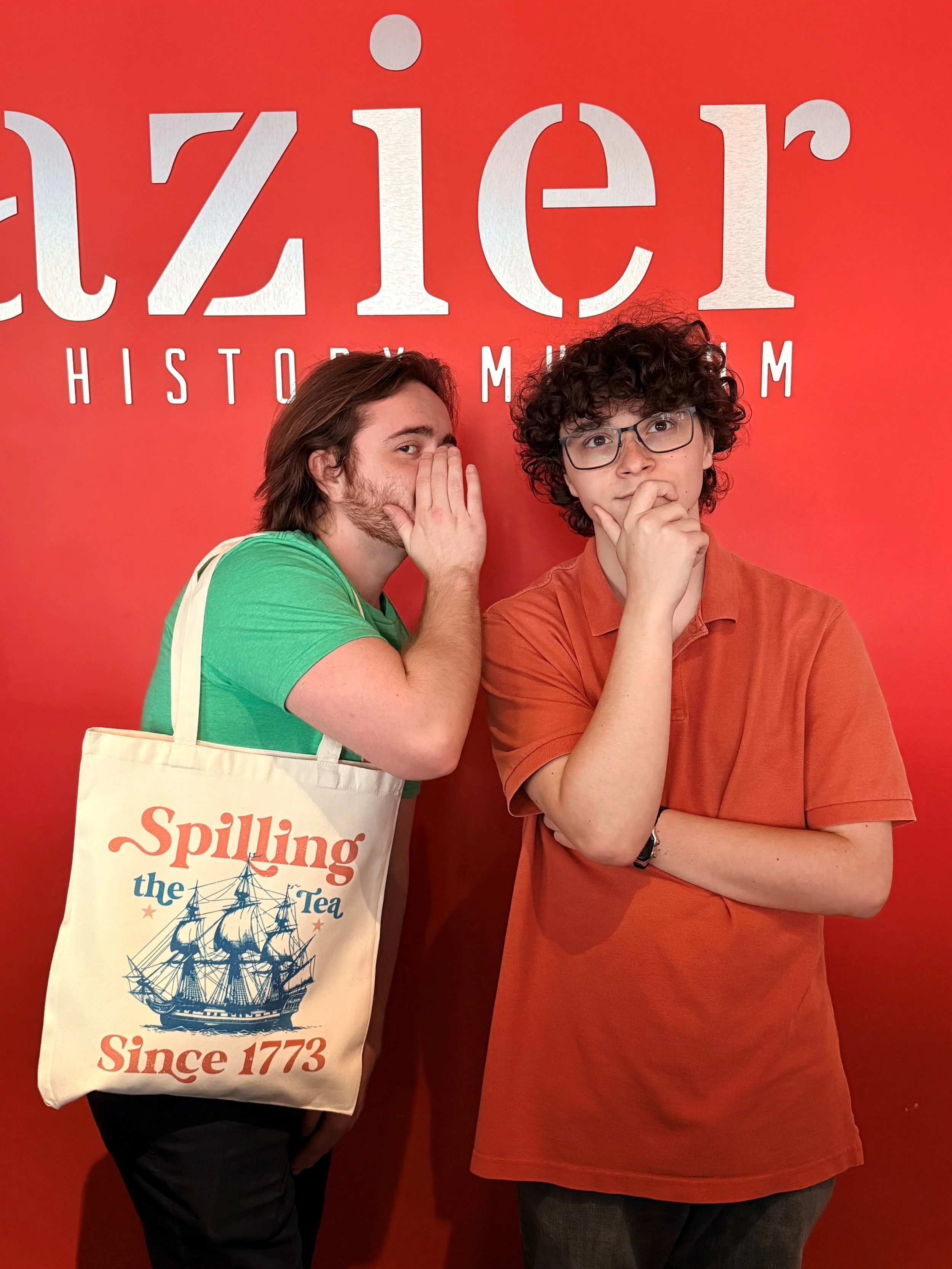
Nick and Lincoln model a “spilling the tea” tote sold in the Frazier’s Cool Kentucky Shop, June 18, 2026.
Spilling the tea back then started a revolution; these days, it can start drama. No matter your tea preference, this tote is your wingman for the farmers market, school, birthday parties, or tête-à-têtes with pals. Find it in the Cool Kentucky Shop.
BOGO Deal on GA Tickets to Beer Fest ends at Midnight!
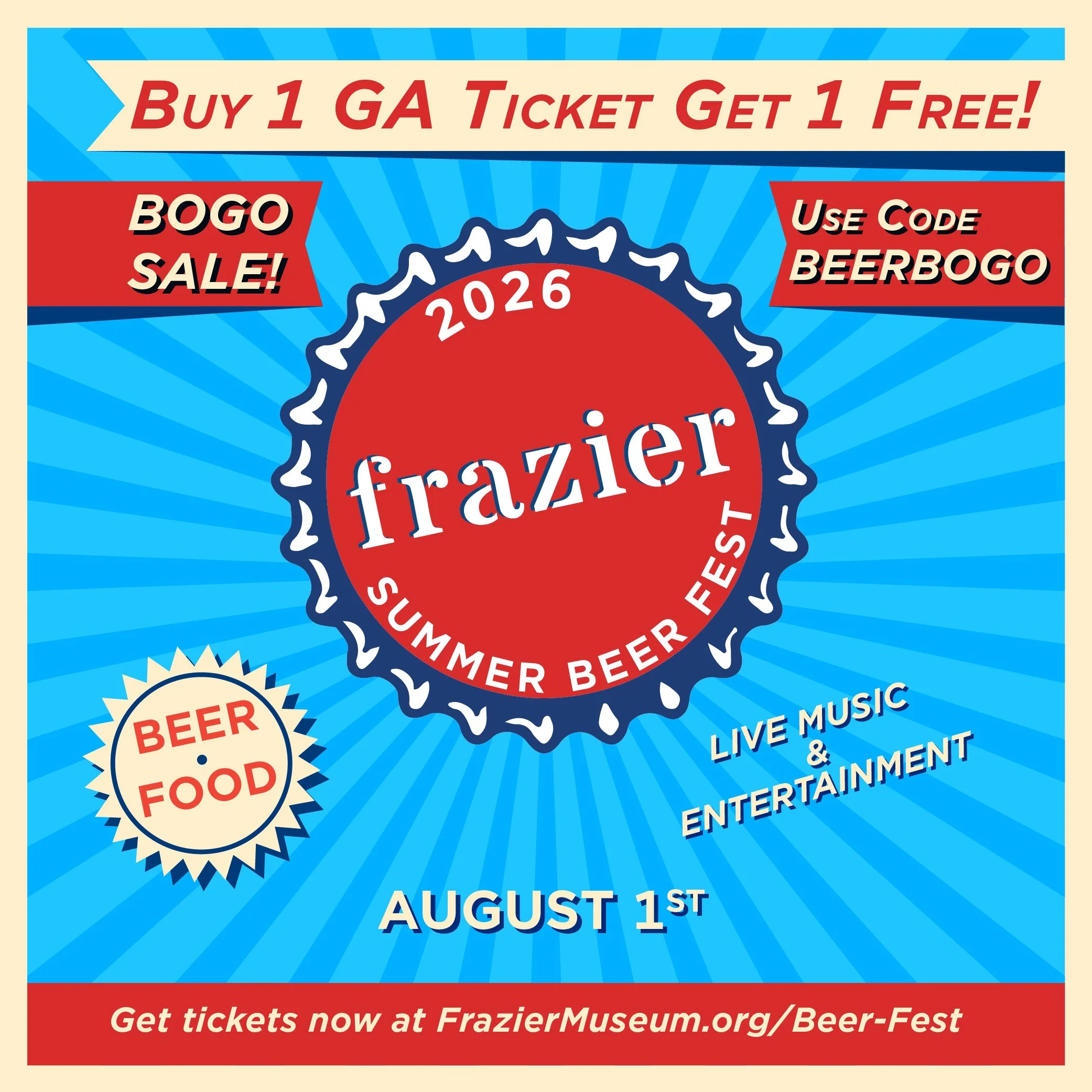
We’ve got a great deal running on Frazier Summer Beer Fest tickets. Buy 1 GA ticket and get 1 FREE when using code BEERBOGO during checkout!
Explore from a vast selection of 250 beers on August 1 to celebrate America’s 250th anniversary with friends, family, live music, food, and more.
The deal ends tonight at midnight, so act fast.
Cheers!

Greg Schoenbaechler
Sr. Marketing Manager
A Crowd Came to Learn About York
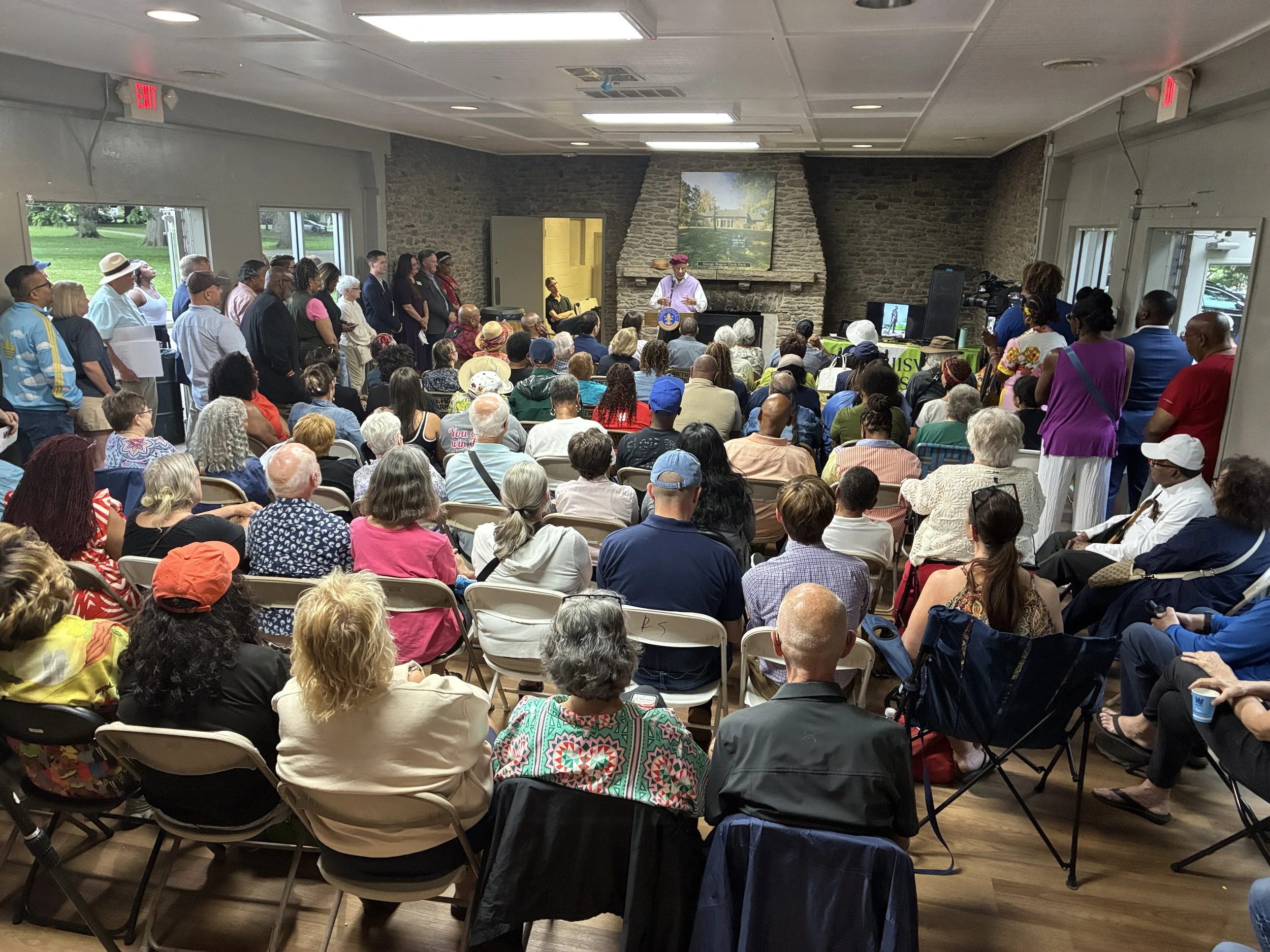
Community members gather for the Frazier’s Legacy of York program at George Rogers Clark Park, June 16, 2026. Credit: Steve Wiser.
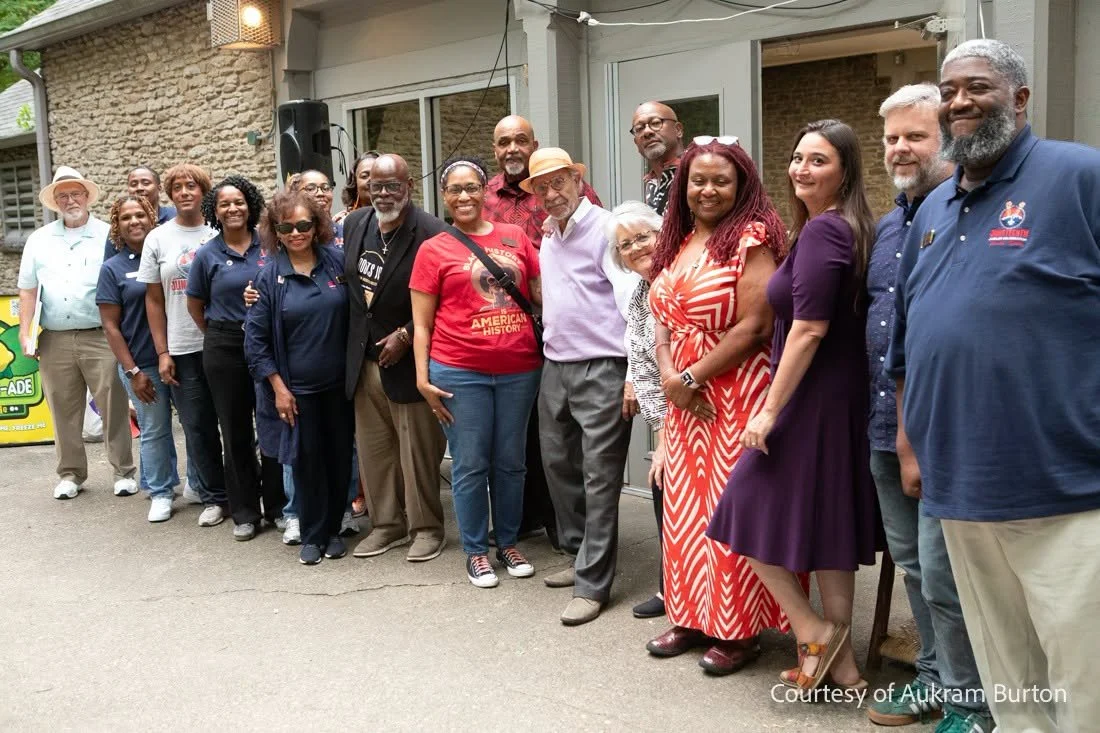
Community partners gather for the Frazier’s Legacy of York program at George Rogers Clark Park, June 16, 2026. Credit: Aukram Burton.
It started with a conversation between me and Dr. Jacqueline Hudson of the Filson Historical Society about a mutual interest to do a program on York more than a year ago.
And last week we saw it come to fruition at George Rogers Clark Park with huge crowds who wanted to know more about the man, the explorer, who was often just a footnote in history, if mentioned at all.
York was the enslaved servant of William Clark, of the Lewis and Clark expedition. York was also a crucial part of that expedition and became the first documented African American to reach the Pacific.
A colleague of mine, Mick Sullivan, suggested having the program at the park. It was the boyhood home of William Clark, and of course where York spent a lot of his time as his enslaved servant. York walked that land. It proved to be a powerful place—for tours by Jim Holmberg of the Filson, a talk by Ed Hamilton who has sculpted York, and a poetry reading from Frank X Walker who has written about him.
Thanks to everyone who came, partnered, and connected to give York his due.
It was community in the truest sense of the word.
You never know where a conversation will lead.
One of our partners, Louisville Public Media, captured the essence of the program with this recording.

Rachel Platt
VP of Mission
Fifth-Grade Historians of Versailles Write a Book of Community Stories
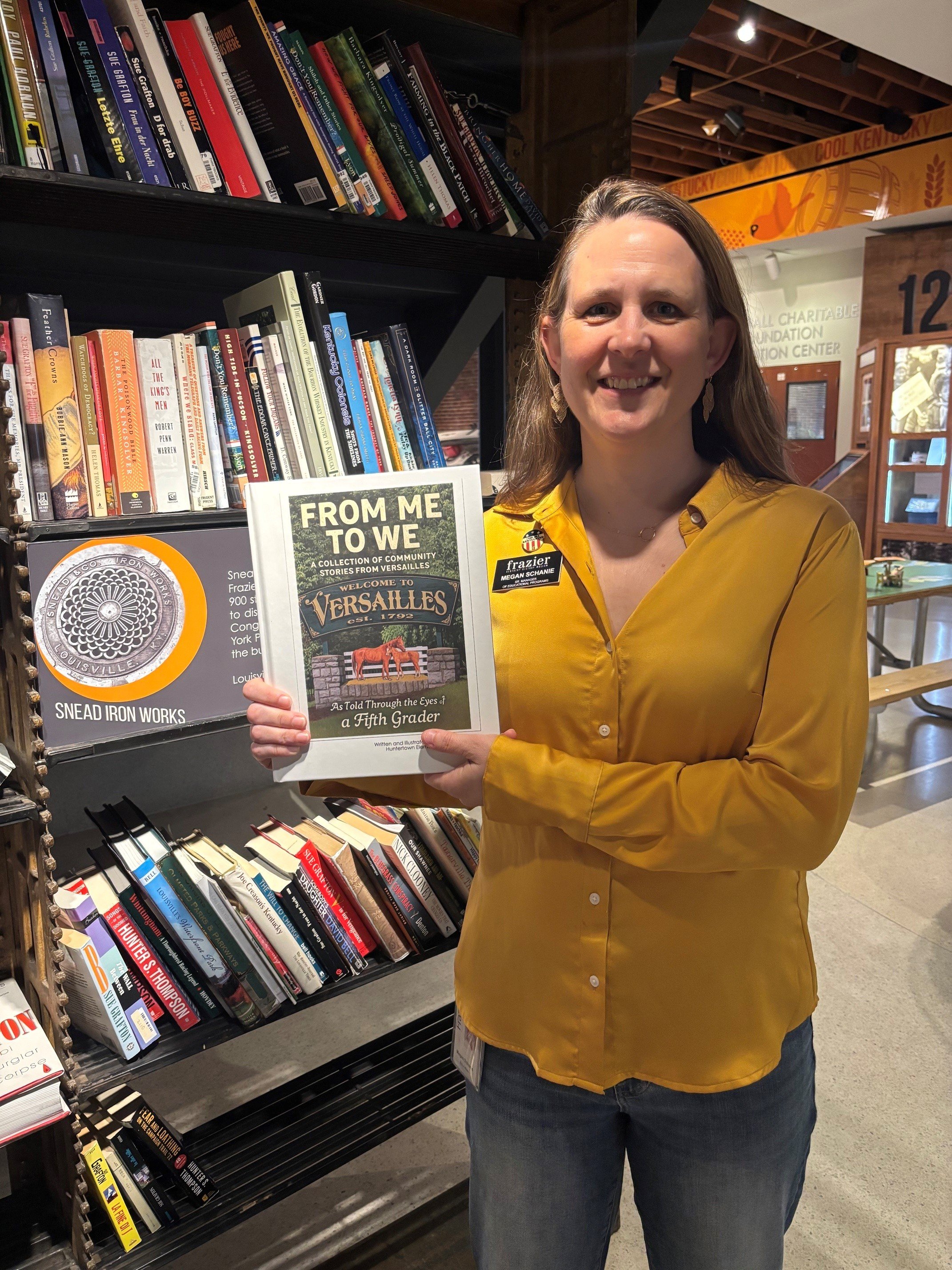
Megan Schanie poses with From Me to We: A Collection of Community Stories from Versailles in the Frazier’s Book Nook, June 18, 2026.
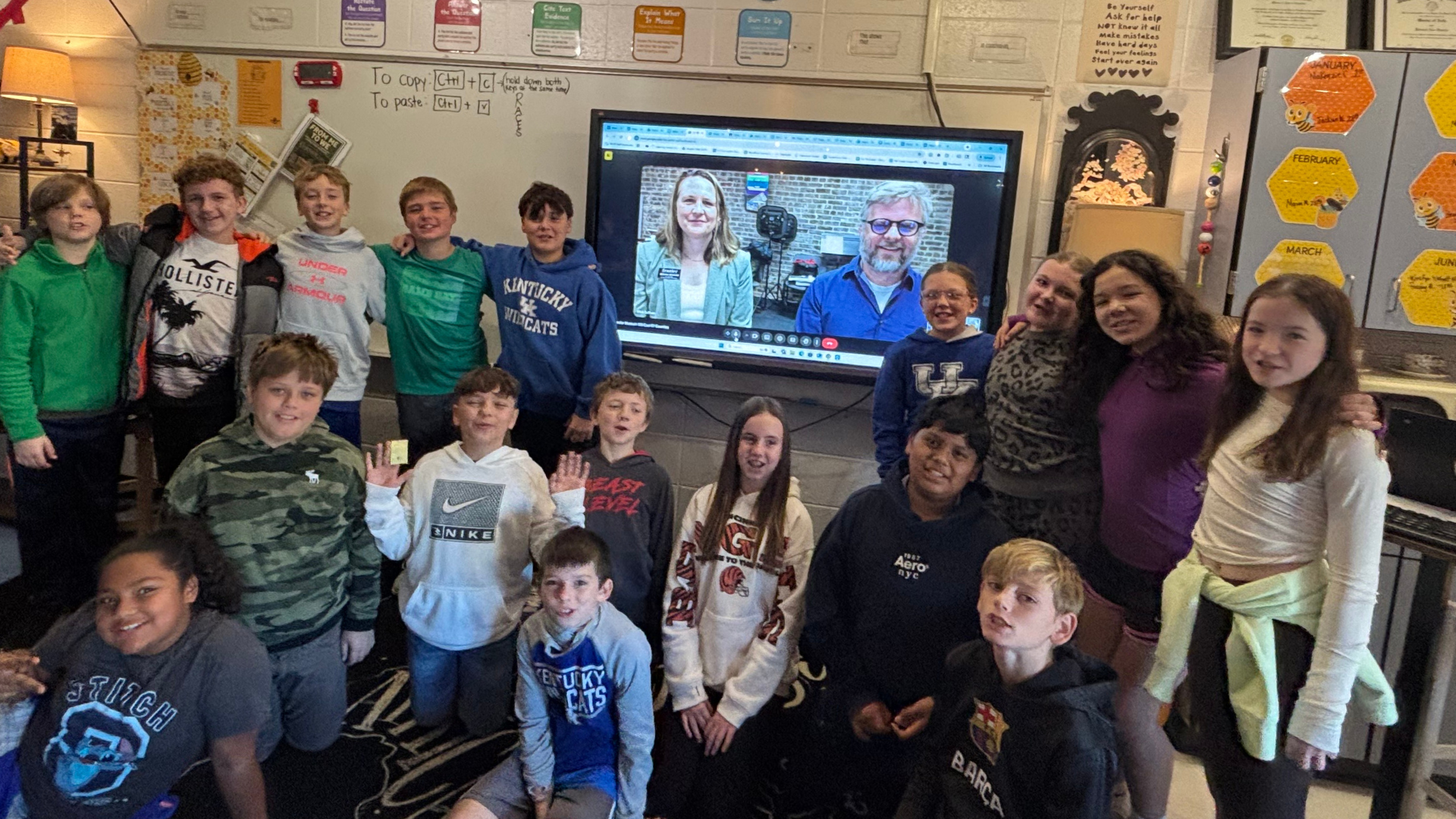
Students in Dr. Rebekah Gooslin’s fifth-grade class at Huntertown Elementary School in Woodford County.
The Frazier Museum education team loves nothing better than supporting the work, agency, and voice of Kentucky kids from throughout the state. When Dr. Rebekah Gooslin, a fifth-grade teacher from Huntertown Elementary school in Woodford County, reached out to us about her student project, we were all in. We met with the students virtually to talk about the power of Kentucky stories and were excited to follow their work throughout the year, interviewing and writing about interesting people in their area. Now the book is complete and will be added to the Kentucky authors bookshelf in our Cool Kentucky exhibition. Stop by and check it out next time you are at the Frazier!—Megan Schanie, Sr. Manager of Educational Programs
What if the stories that shape a community were never told? What if the voices, memories, struggles, and triumphs of everyday people quietly disappeared over time? This year, Huntertown Elementary fifth graders stepped beyond the classroom walls to ensure that did not happen.
Through an authentic Project Based Learning experience titled From Me to We: A Collection of Community Stories from Versailles, students partnered with the Frazier Kentucky History Museum’s 120: Cool KY Counties initiative, the Woodford County Public Library, and local bookstores to uncover and preserve the powerful stories living within our community.
Through interviews with family members, neighbors, and community leaders, students discovered that everyone carries a story worth preserving and telling. The project created meaningful opportunities for students, families, and community members to connect through conversation, reflection, and shared experiences. Students listened deeply, asked thoughtful questions, and transformed authentic interviews into published literary works that captured the heart and spirit of Versailles.
This process was challenging and advanced for fifth graders, requiring perseverance, critical thinking, communication, revision, and courage. Yet our students rose to the challenge in extraordinary ways. Together, we created one collective book made up of sixty-three stories and literary pieces that now belong to all of us as a shared collection of community voices.
I am incredibly proud to say that all sixty-two students are now published authors. Their book will be displayed at the Frazier Kentucky History Museum and the Woodford County Public Library, preserving these stories for future generations.

Dr. Rebekah Gooslin
Fifth Grade ELA Teacher in Versailles, Kentucky
Guest Contributor
Bridging the Divide
Louisville Story Program Preserving and Sharing Photos to Foster Reconnection
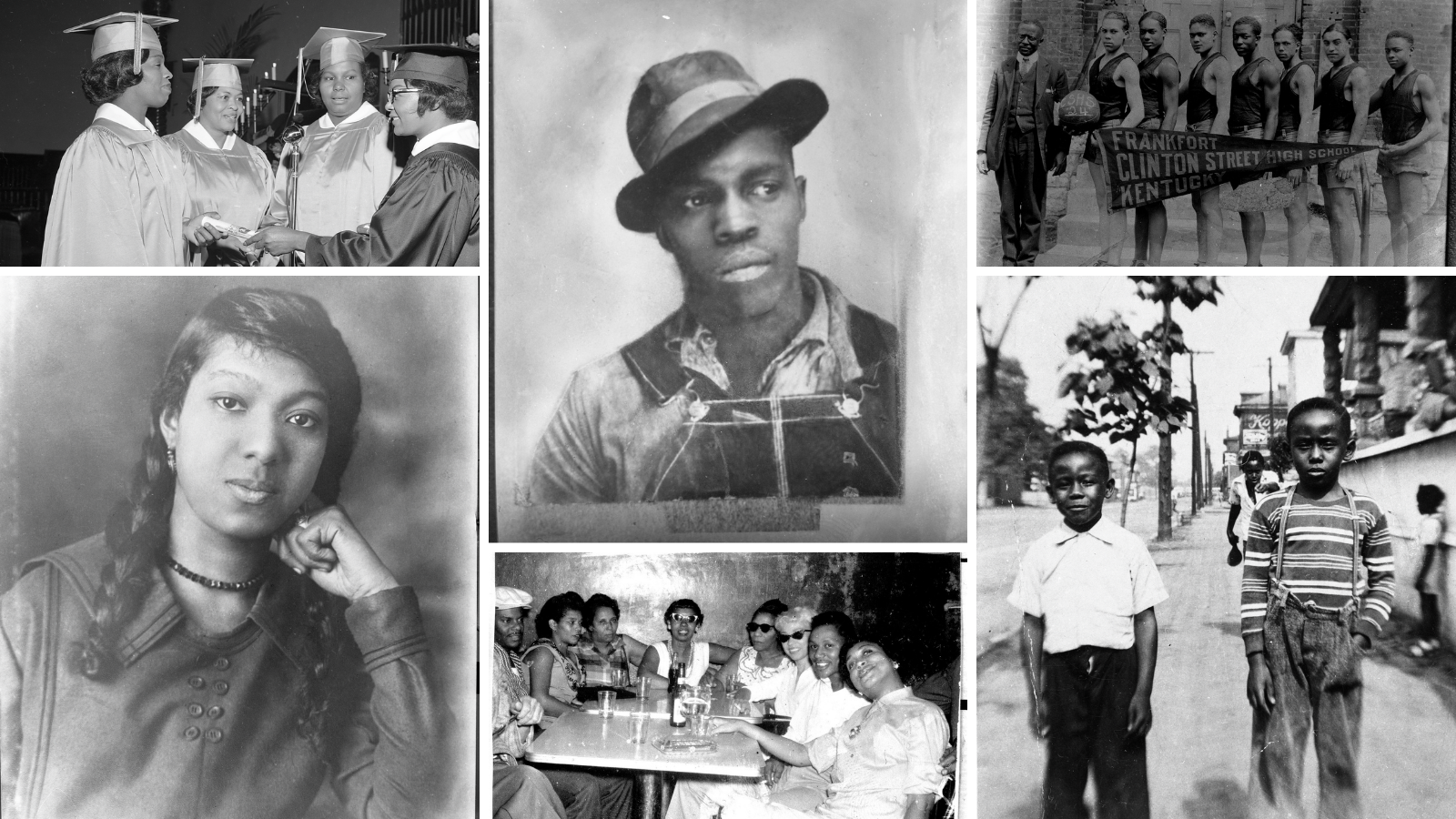
Louisville Story Program collage.
This next story is a family affair, a beloved Black studio photographer who helped preserve and freshen up family portraits in our area. His daughter is now part of an effort with Louisville Story Program to reconnect some of these photos with the families or their descendants. Keep reading to learn more.—Rachel Platt, VP of Mission
Before filters and photoshopping, Nat Brown Sr. was scratching on photo prints entrusted to him by families in Louisville who wanted their pictures retouched. As he was a beloved Black studio photographer, families trusted him to freshen up their portraits. In partnership with his daughter Natalie Barkley Jones and mentee Jeff Hancox, the Louisville Story Program has been digitizing the archive of his photographs and the images countless families have left with him. In an effort to share these powerful glimpses into historic Black Louisville, we have been posting these “copy jobs” online. While doing so, we would also love to reunite these images with any of the families’ descendants. Some of the prints have text—names, dates, or addresses—written on the back. If we can decipher the handwriting, we’ve been including those details with the images.
You can see the shared photos by visiting Louisville Story Program on Facebook and Instagram. If you have any information connected to the images, please comment on the post or message us at hello@louisvillestoryprogram.org. We’d love to hear from you!
Since 2013, Louisville Story Program has been collaborating with historically under-supported communities in their efforts to document and preserve their stories and heritage. Projects have culminated in books, magazines, radio programs, digital archives, and exhibits.
On Saturday, October 10, we are hosting a first-ever Save our Stories Festival in partnership with Roots 101 African American Museum. Join us for a joyous, interactive day celebrating and catalyzing community-led preservation and storytelling. There will be opportunities to learn about photographers and artists like Nat Brown Sr. and hear from your own neighbors who are leading projects to memorialize and celebrate their stories.
You can learn more and RSVP for this free event at louisvillestoryprogram.org.
Christine Gosney
Director of Operations, Louisville Story Program
Guest Contributor
History All Around Us
More than Infrastructure: USACE has been Building the Nation for 251 Years
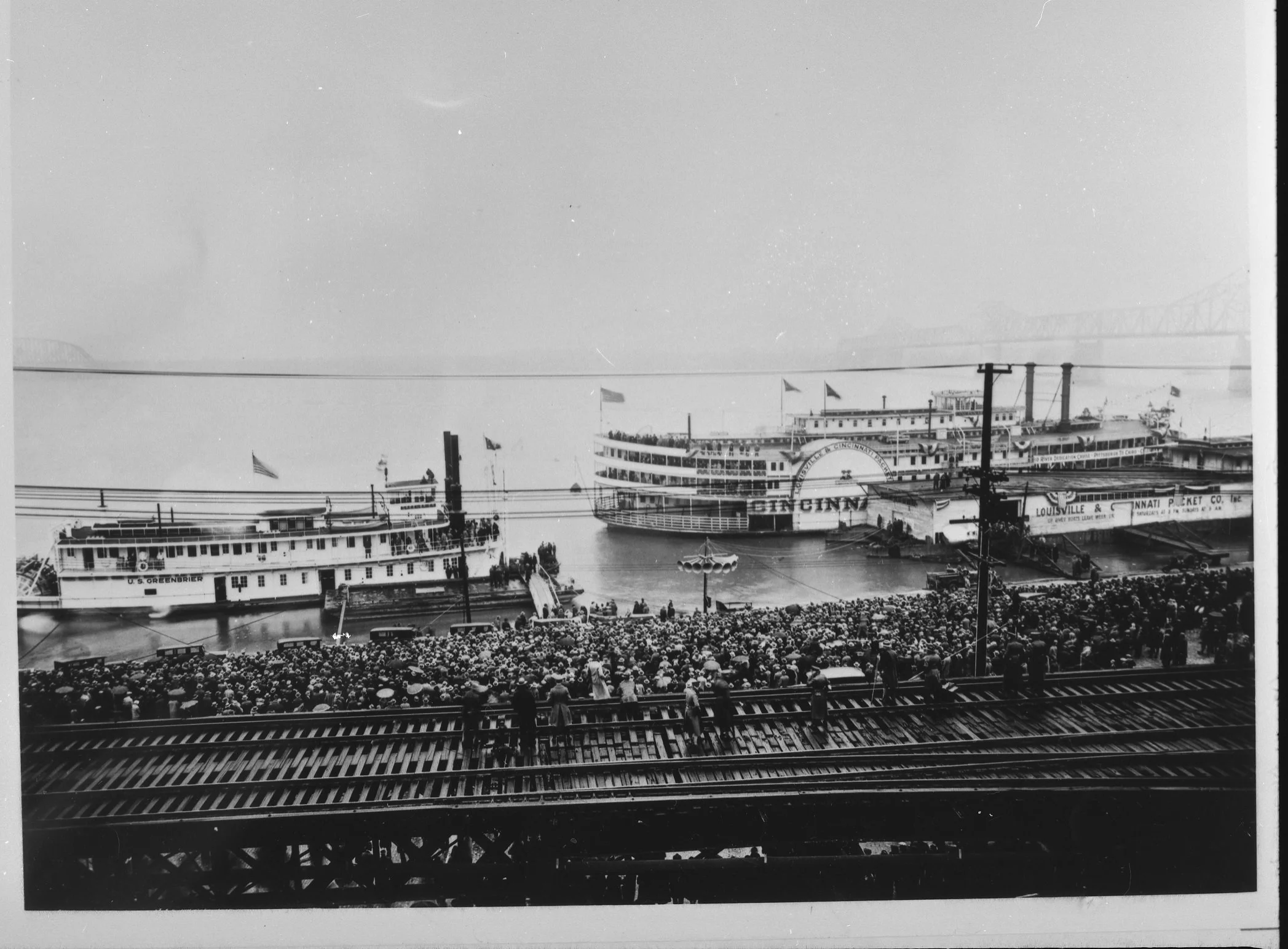
President Herbert Hoover arrives from Cincinnati by boat to give a speech at Louisville’s Memorial Auditorium to mark the completion of the Ohio River Canalization Project, October 23, 1929.
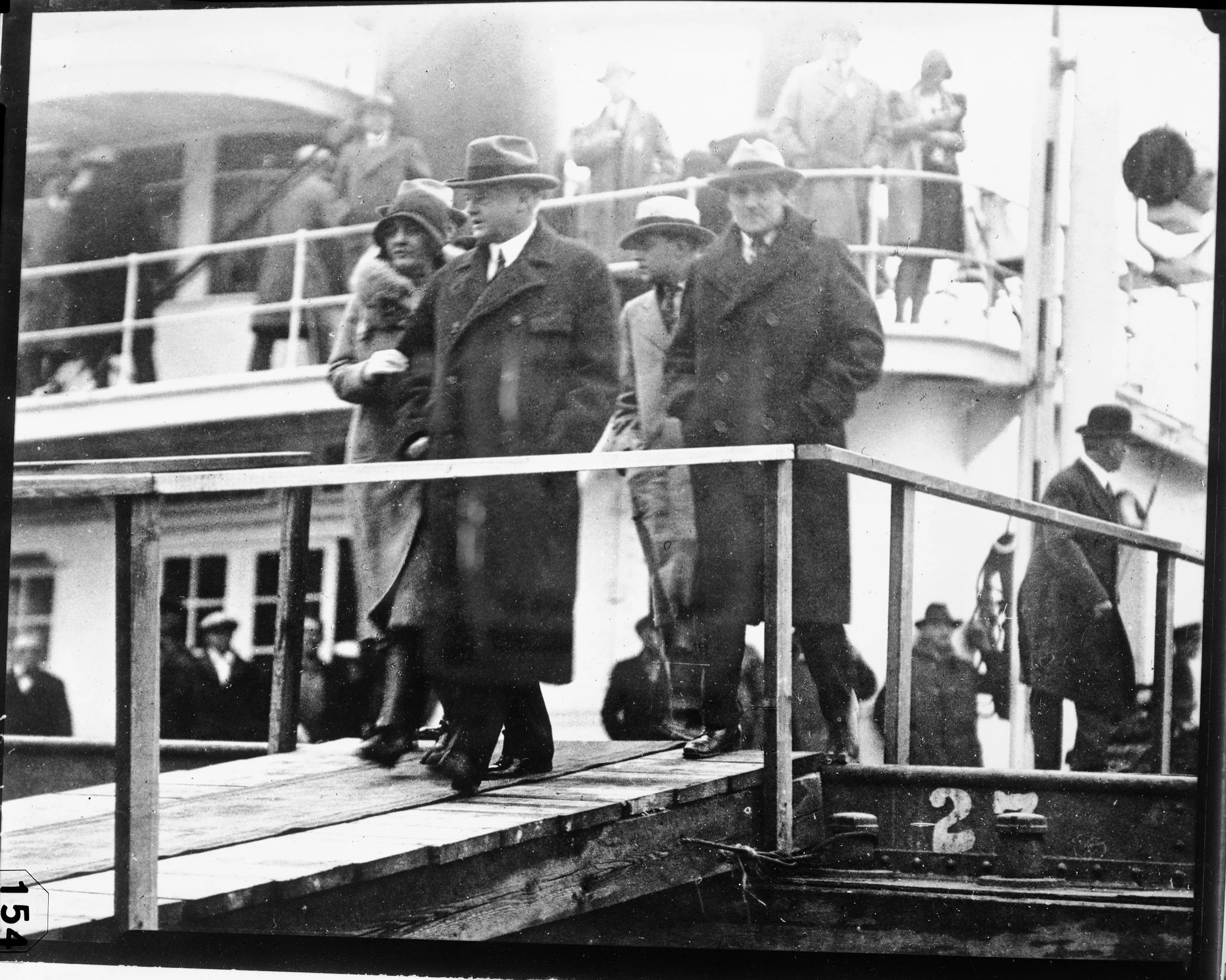
President Herbert Hoover arrives from Cincinnati by boat to give a speech at Louisville’s Memorial Auditorium to mark the completion of the Ohio River Canalization Project, October 23, 1929.
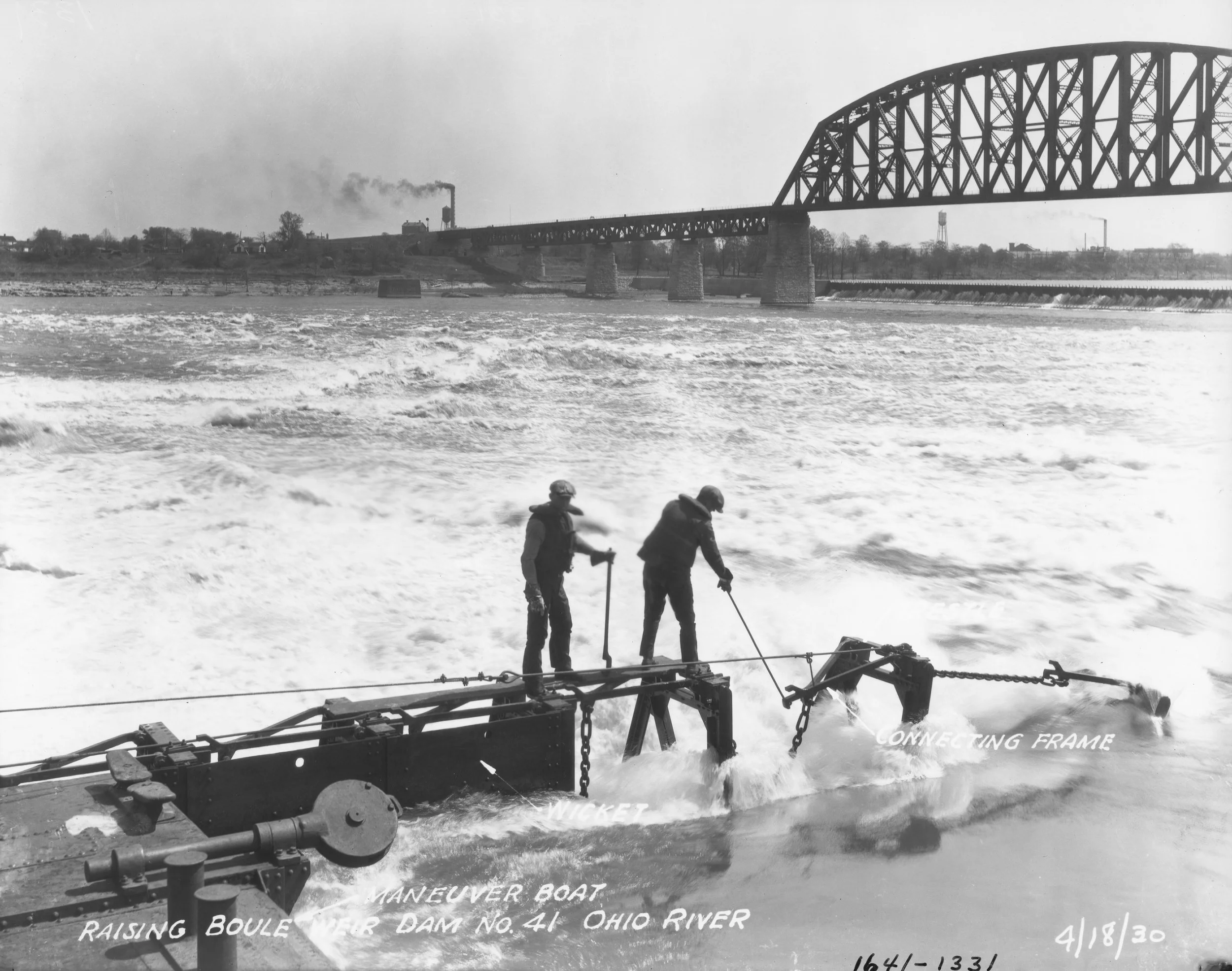
USACE crews raise boule weir at Dam 41 on the Ohio River in Louisville, Kentucky, now known as McAlpine Locks and Dam, April 18, 1930.
On June 16, 1775, the Continental Congress organized the Corps of Engineers. Three years later, Patriot George Rogers Clark led a flotilla of 150 soldiers and twenty families on flatboats to settle Corn Island, laying the foundation for what is now the city of Louisville, Kentucky. Since 1874, the Louisville and Portland Canal has been operated by the Corps of Engineers. We’ve asked Army Corps of Engineers (Louisville District) publicist Kelsie Hall to discuss the long legacy of the Corps in this community, as it now celebrates its 251st birthday!—Simon Meiners, Communications & Research Specialist
This year, the United States of America celebrates 250 years of independence. We often hear the stories of the patriots who fought to secure the nation’s freedom, but rarely the stories of those who supported the growth of America by building it. The US Army Corps of Engineers, marking 251 years this month, have helped shape the nation through engineering, innovation, and service.
What began as efforts to improve navigation around the dangerous Falls of the Ohio to open the waterway for safe and efficient commerce ultimately shaped the history of the city of Louisville, and resulted in the establishment of the USACE Louisville District in 1886.
In 1929, President Herbert Hoover visited Louisville as part of a multi-day steamboat tour along the Ohio River celebrating the completion of the Ohio River Canalization Project, a nearly two-decade, massive engineering feat to transform the 981-mile river into a year-round, nine-foot-deep navigable waterway. The visit reinforced President Hoover’s support for infrastructure development and his belief that waterways were essential to commerce and national progress. Today, the impact of the project is still felt, as the Ohio River serves as a major commercial transportation corridor and a modern inland waterway system that supports national supply chains. It also strengthened the federal government’s role in navigation infrastructure development and maintenance, a legacy the Louisville District is proud to continue.
But navigation was just the start for the Louisville District.
The Great Flood of 1937 devastated communities along the river, leaving thousands displaced and more than seventy percent of Louisville under water.
In the decades that followed, the Louisville District expanded its flood risk management mission, constructing floodwalls, levees, and reservoirs designed to better protect communities throughout the Ohio River Valley. Those systems have since helped prevent billions of dollars in flood damages while safeguarding lives, businesses, and critical infrastructure.
As the nation mobilized during World War II, the Louisville District’s mission expanded alongside the growing needs of the Army. The district supported military construction efforts by helping deliver facilities needed to prepare and train the warfighter and sustain wartime operations. That work marked the beginning of a military construction mission that builds the spaces where service members and their families live, work, train, and heal, and continues more than eighty years later.
Beyond military construction, the Louisville District restores ecosystems, protects water resources through its regulatory mission, and supports emergency response operations when disasters strike.
While the tools, technology, and missions have evolved over the last 250 years, the purpose behind the work remains unchanged: supporting the nation and the American people who depend on its infrastructure every day.
For more than 250 years, USACE has not only built infrastructure, it has helped build the nation we celebrate every July.
Kelsie Hall
Public Affairs Specialist, US Army Corps of Engineers Louisville District
Guest Contributor