Summer Camps, Swatch of Martha Washington’s Wedding Dress, Frazier Tours on WLKY, and More
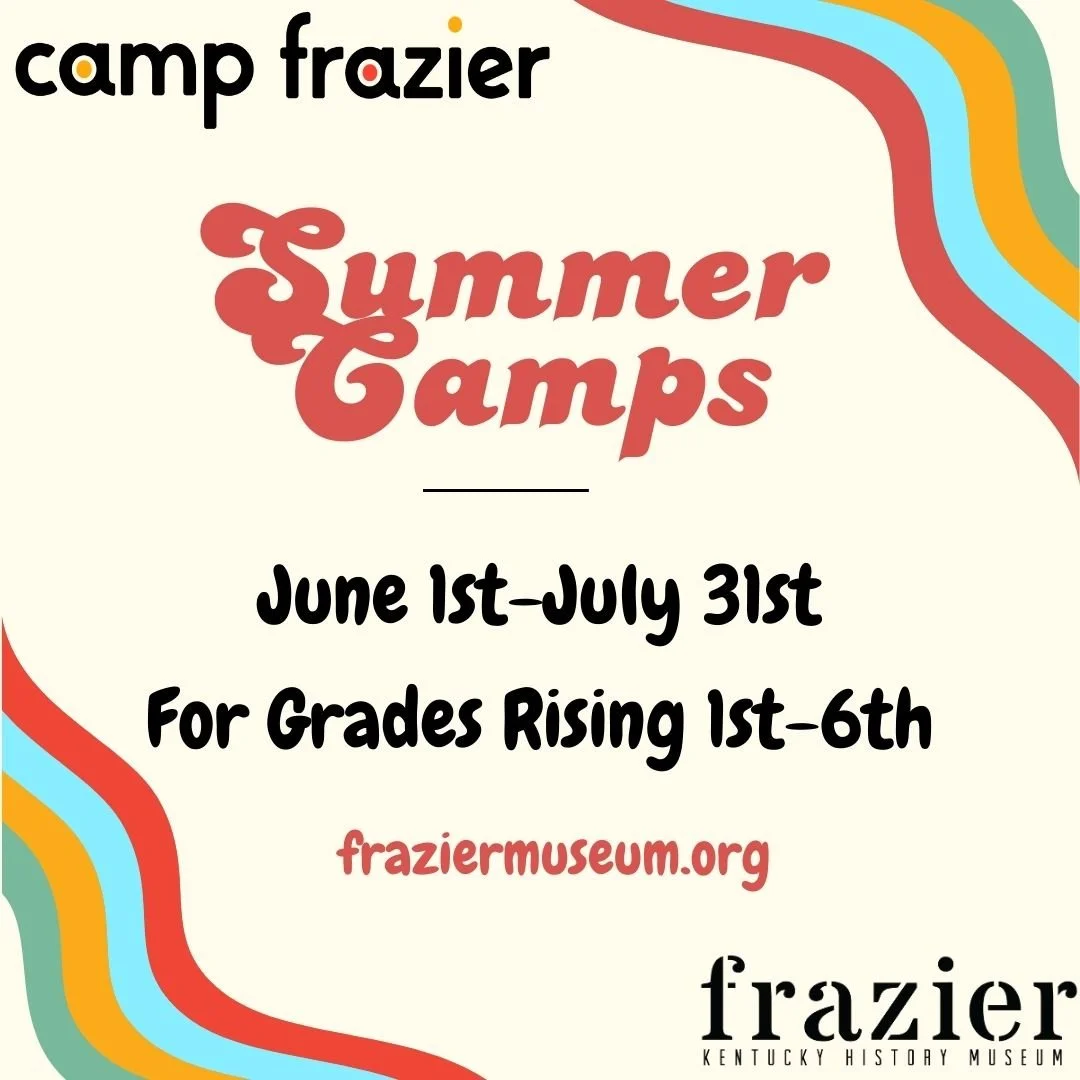
Camp Frazier’s 2026 Summer Camps are now live!
I don’t know about you all, but at this point the magic of the winter season and all the snow it brings has worn off on me. With everything covered in snow and ice, it looks more like a white wasteland than a winter wonderland—and to cope with the cold, I’ve been dreaming of warmer days.
To give you something to look forward to outside of the dreary, I am so excited to officially announce Camp Frazier’s 2026 Summer Camps!
Gear up for some fun in the sun in this year’s Camp Frazier Summer Camp! Featuring eight weeks full of fun and exciting themes from June to July, your camper is sure to have a blast. During our Wild Lives week-long camp, learn about the amazing animals around us and even meet some in person! Travel back in time in our Pursuit of Happiness camp all about America’s 250th anniversary, which features three new temporary exhibitions at the Frazier all about American Independence. And in Camp Frazier’s Across the Universe camp, explore a different fictional world each day such as KPop Demon Hunters, Marvel Comics, and Harry Potter!
Our Camp Frazier 2026 Summer Camps are geared towards rising grades first through sixth. Don’t wait—learn more about these terrific themes and explore what others we have to offer by registering your camper today!
And, don’t forget: our Growing this Spring! 2026 Spring Break Camp is live and available, too. Campers will learn how to give a weather report from a real meteorologist, meet Louisville’s famous canine Ethan Almighty and hear about how he got legislation passed in Kentucky, build their own theme park, and more! We offer day camps on April 6–10. Register now while spots remain! Our Presidents’ Day Pop-Up Camp sold out quickly, so act fast.
In today’s Frazier Weekly issue, Mick highlights some of the thirteen individuals featured in our Pursuit of Happiness exhibition, Rachel announces the display of a swatch of Martha Washington’s wedding dress, and Tish talks about a button from 1789 celebrating George Washington’s Presidential inauguration.
Thank you for reading!
Tori Kennedy
Manager of Youth & Family Programs
Frazier Kentucky History Museum
This Week in the Museum
From Yarrow Mamout to Prince Whipple: Thirteen Individuals Featured in Pursuit of Happiness
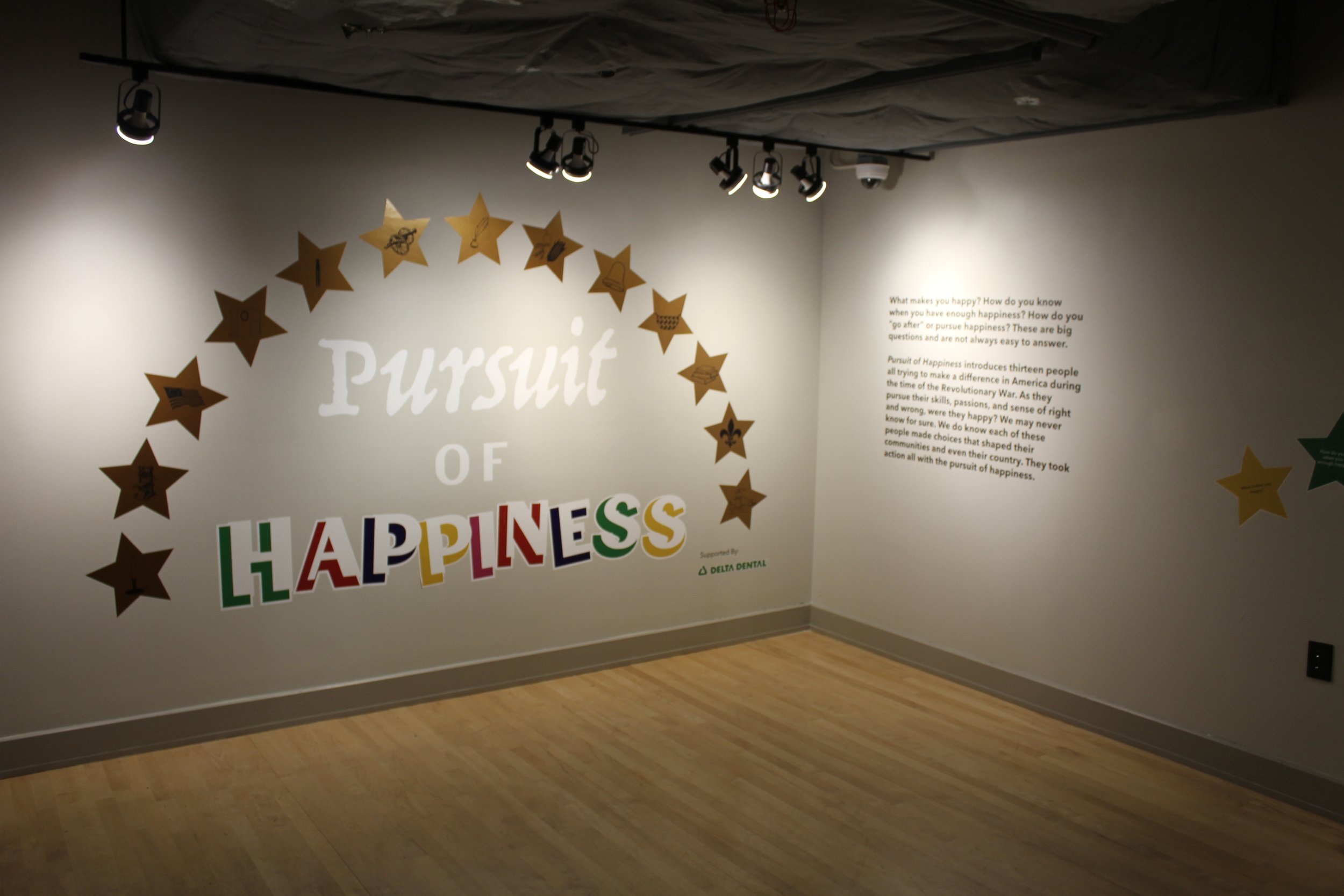
Start of the Frazier’s Pursuit of Happiness exhibition, January 16, 2026. The thirteen stars represent the thirteen individuals featured in the exhibition and the thirteen original colonies.
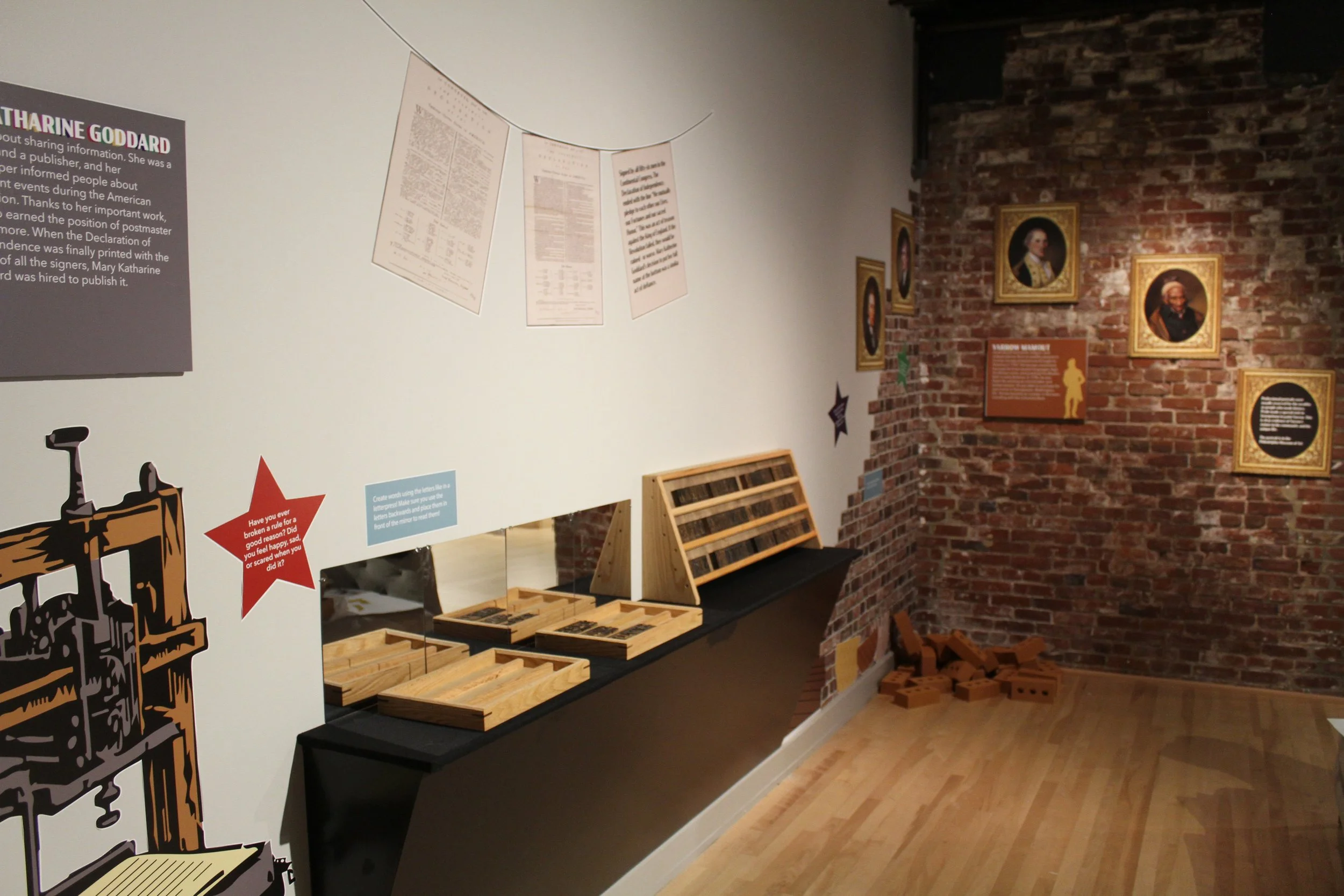
Detail of the area of Pursuit of Happiness where brickmaker Yarrow Mamout is featured, January 16, 2026.
When we started work on our new exhibition Pursuit of Happiness, we knew we wanted to do a few things. First, we wanted to give kids, families, and adults an opportunity to consider what pursuing happiness looks like to themselves and others. We also wanted to offer a hands-on look at stories from surprising people in America from the time of the Revolution. The thirteen people featured are a cross-section that might look familiar to Americans even today. There’s a young woman who worked in media, a bookseller-turned-soldier, a Black inventor, and a poet, to name a few.
From Shawnee chief Nonhelema to American president Thomas Jefferson, each of these thirteen individuals pursued happiness in a different way, while making remarkable contributions. Recently, we joined Spectrum News 1 KY for a Black History Month segment about a few of the people featured in the exhibition. Watch this and you’ll get a glimpse of Yarrow Mamout and Prince Whipple, a fascinating man who appears in several paintings with George Washington.
On the subject of Black History Month, all of our tours include features on Black Kentuckians in our galleries. Tours are offered Monday–Saturday at 11 a.m., 1 p.m., and 3 p.m.; and Sundays, at noon and 2 p.m. We also have a self-guided tour as part of the Kentucky African American Heritage Trail. This available at the front desk anytime we are open.
We hope to see you on an upcoming tour or in our galleries considering your own pursuit of happiness.

Mick Sullivan
Curator of Guest Experience
Swatch of Martha Washington’s 1759 Wedding Dress now on Display
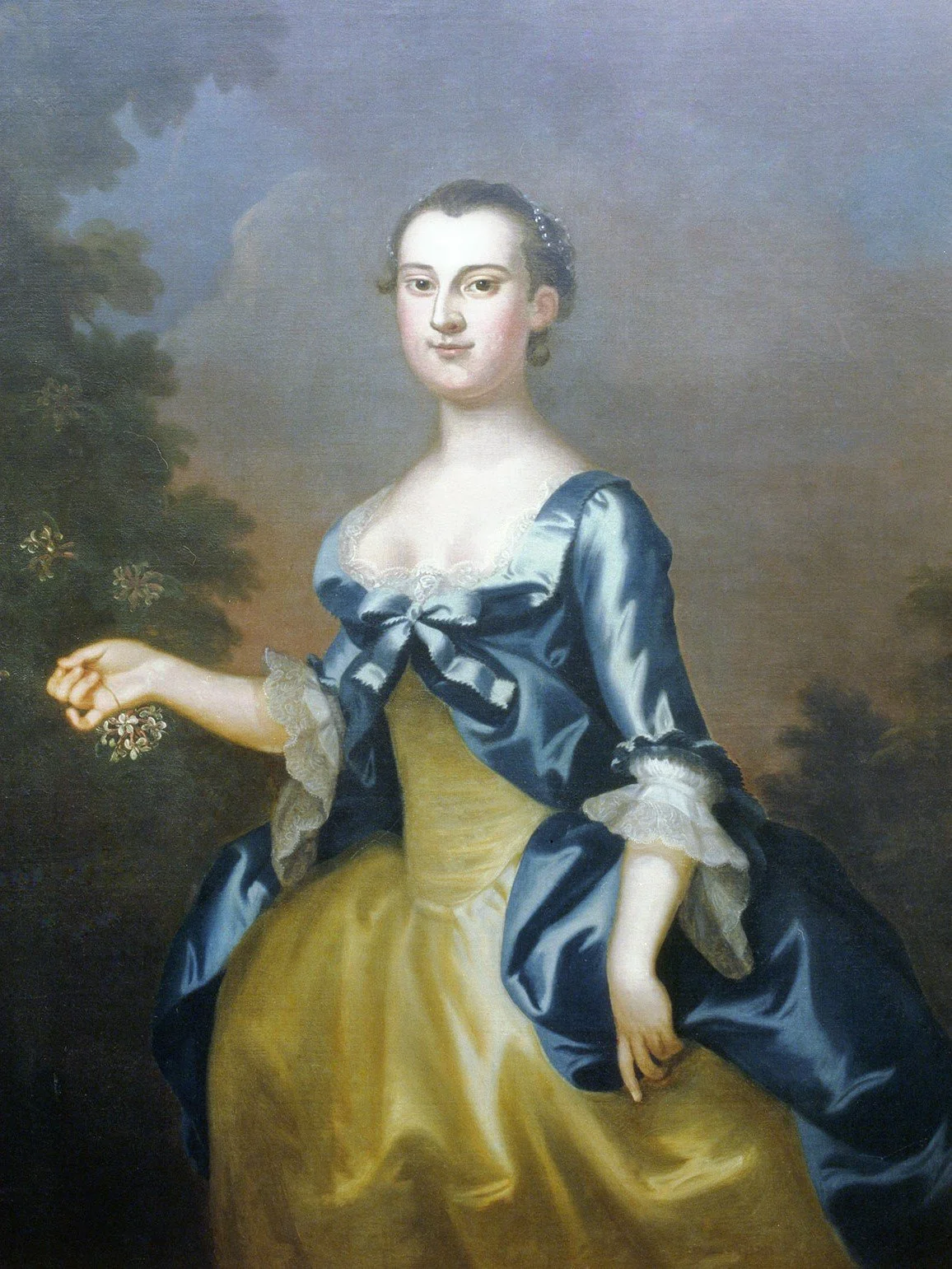
Oil painting of Martha Dandridge Custis by John Wollaston, 1757. Part of the Washington-Custis-Lee Collection at Washington and Lee University in Lexington, Virginia.
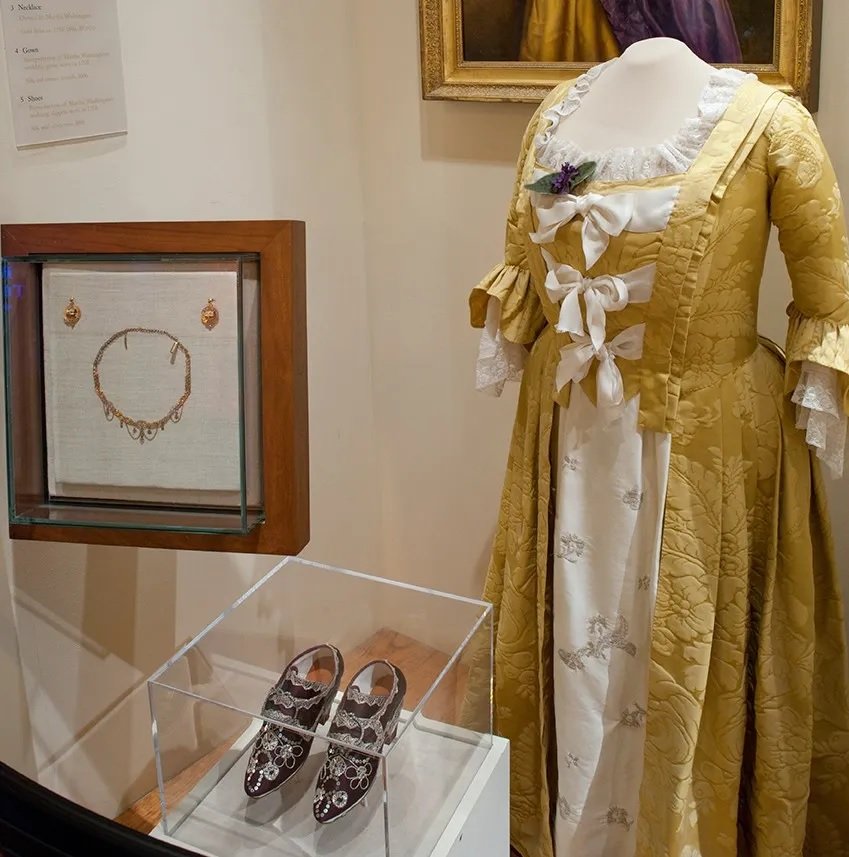
Replica of Martha Washington’s wedding dress on display at Mount Vernon. Credit: Mount Vernon Ladies’ Association.
When you envision Martha Washington, what comes to mind?
Maybe an older woman in a mob cap bonnet?
The Frazier Kentucky History Museum is focusing on Martha’s younger days and her relationship with George Washington in an upcoming program and with a special artifact on display in our Founder’s Gallery on the second floor.
She was twenty-seven years old when she married George Washington in 1759, a second marriage for Martha after her first husband, Daniel Parke Custis, passed away.
A small swatch of her yellow silk wedding gown, on loan from Sons of the American Revolution (SAR), is now on display at the Frazier.
Descendants and family members cut up the wedding dress and distributed those swatches as keepsakes.
One piece was famously given to Elizabeth Hamilton, wife of Alexander Hamilton, and passed down through her family.
Since this was before photography, portraits and personal articles give us an idea of what she wore in those days.
No portrait of Martha in her wedding dress exists, but it’s believed the dress she wore in a 1757 portrait is similar to the one she wore at her wedding. Mount Vernon has a replica of her wedding dress.
Please join us for our special program on Martha Washington titled Lady Washington: America’s First First Lady on Sunday, February 15. We’ll learn about her early days and her sense of fashion, but also what many say was her strength, her determination, and her influence on the nation’s first President.
You may even get a taste of a very special punch she liked to serve!

Rachel Platt
VP of Mission
From the Collections: Button Celebrating George Washington’s Presidential Inauguration, 1789
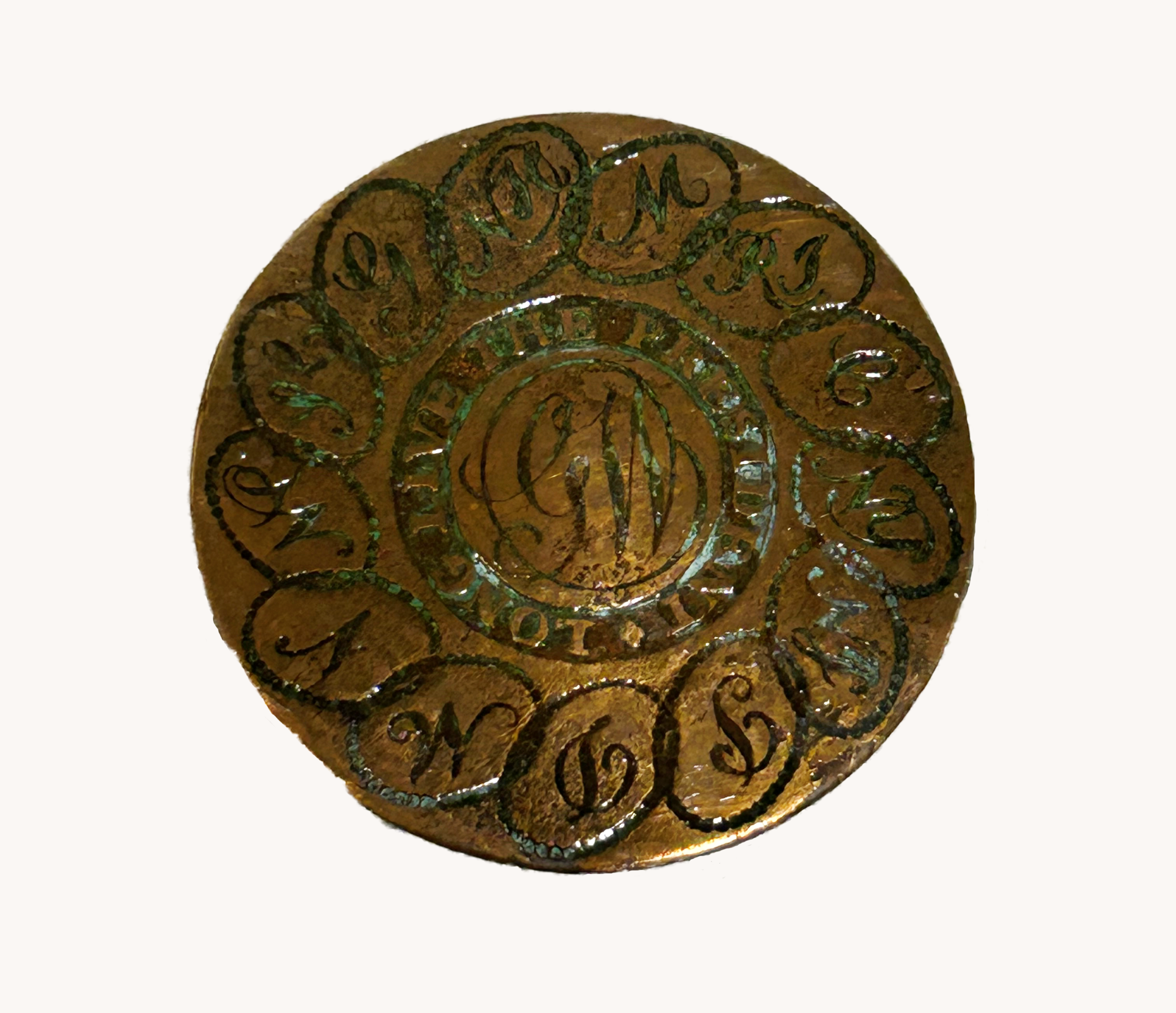
Button celebrating George Washington’s 1789 presidential inauguration. Part of the Frazier Kentucky History Museum’s collection.
This week, I want to share a really cool piece from the collection that has just gone up in the Presidents case in our Founder’s Gallery: a brass button!
I know that doesn’t sound like much—and, when I first saw it, I didn’t think much of it. A little larger than a quarter, the button is round and features on its center the initials “GW,” the words “Long Live the President,” and thirteen rings linked together with more initials inside of them. Those initials turn out to be initials of the thirteen original colonies.
Kind of strange, right? But it’s interesting. I originally thought: Wow, how old is this piece? Is it perhaps from the death of George Washington? But no! By doing research, I learned this button is from around 1789 and was made to celebrate President George Washington’s inauguration! Beginning in 1789, a series of about five different kinds of buttons were made for gentlemen’s waistcoats and coats in support of President Washington’s inauguration. Made of brass or copper, these buttons were worn by supporters of Washington’s presidency.
Buttons like ours are really the first political memento in our country. Of course, in our modern world, we see campaigning pins and buttons for every election. But in the beginning, it was buttons like this one that people wore to show their support.
So come down to the Frazier to see our new case full of items from presidents in our collection—including this really cool brass button!
Tish Boyer
Registrar & Manager of Collections Engagement
Frazier’s March 7 Teacher Training to Focus on the Question “What is Heritage?”
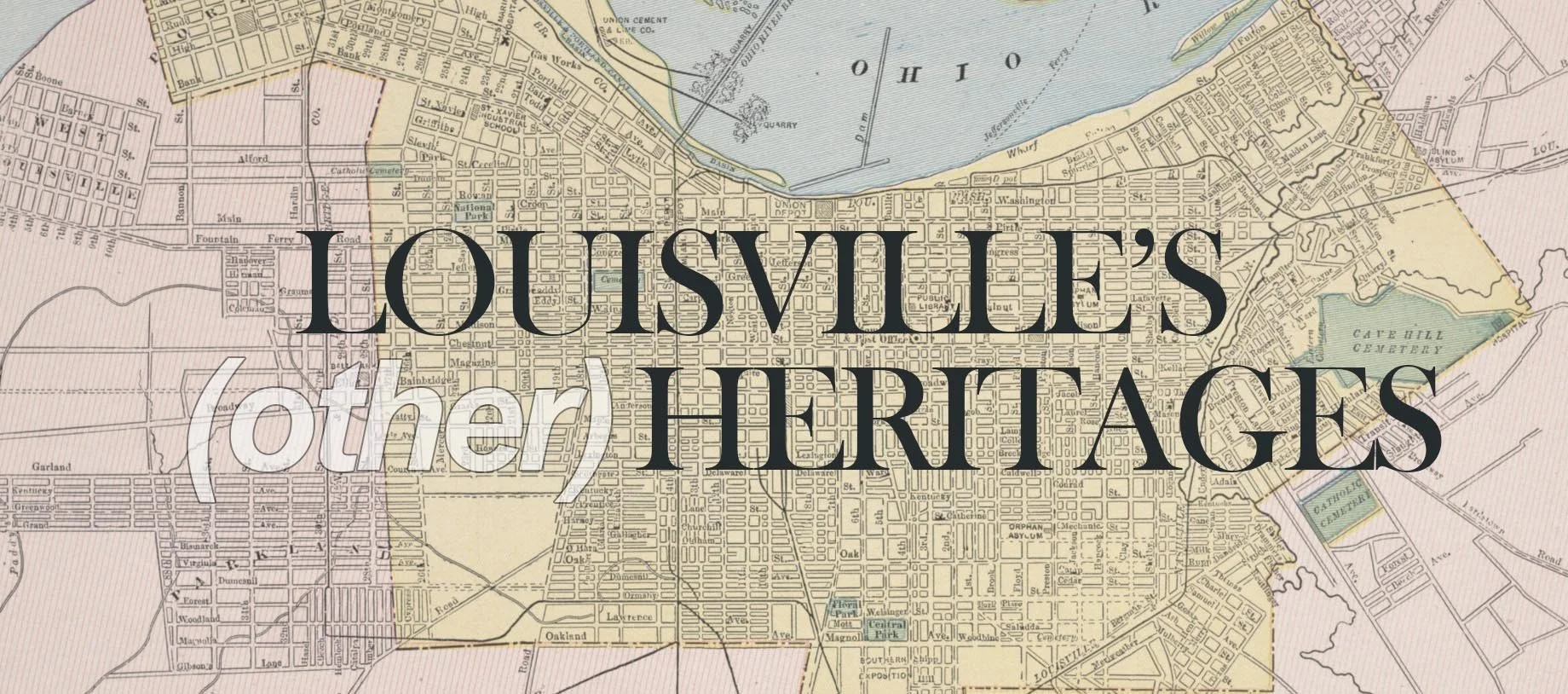
Louisville’s (Other) Heritages graphic.
The Frazier education team loves to partner and collaborate. So, when we were approached last year about an interesting project being undertaken by doctoral level students at the University of Louisville, we immediately wanted to know more and figure out how we could be involved. Under the direction of Professor Lisa Björkman, students invited five Louisvillians with first-generation migration backgrounds to share places and spaces in Louisville that were meaningful to them. The end result is a selection of story maps shared on the website Louisville’s (Other) Heritages.
Last spring, the students presented their project in the Frazier Museum’s Brown-Forman Theatre. Once the story-mapping was complete, we began thinking about ways to make the resource more accessible and useful for local teachers and students. I connected Professor Björkman with a longtime friend of the Frazier, Dr. Caroline Sheffield, Associate Professor of Social Studies Education at the University of Louisville, and they were off and running. Working together, the two were quickly able to develop a plan to create curriculum around the story maps and lock down funding from the University of Louisville’s Transdisciplinary Social Justice Research Consortium.
Curriculum development is under way, and we are very excited to host an upcoming training to show teachers how to utilize this unique resource in the classroom. The Teaching Louisville’s Many Heritages teacher professional development will take place in person at the Frazier Museum on March 7, 2026, from 10 a.m. to 1 p.m. There is no cost for educators to attend, but spaces are limited and advance registration is required.
To learn more, or to sign up, click here!
Feel free to reach out with any questions to education@fraziermuseum.org.

Megan Schanie
Sr. Manager of Educational Programs
WLKY Previews Frazier’s Vows with your Valentine this Morning

Vows with your Valentine flyer.
This email is scheduled to hit your inbox Monday, February 9, at 7 a.m. If you read it immediately—and why wouldn’t you!—then you’ve still got time to catch us on TV.
Around 5 this morning, I let at a WLKY reporter and photographer into the museum so we could record some TV live shots.
In the 5 o’clock and 6 o’clock hits, our curator Amanda Briede explored some of the unique wedding dresses in our Davis Jewelers’ Love & Marriage exhibition. That exhibition celebrates the history of love, marriage, and courtship in Kentucky. It closes March 29, so come visit while you still can! (I lead tours of it every Monday, 11 to 11:20 a.m.)
In the 9 o’clock hour, our events team members will preview Saturday’s Vows with your Valentine experience! This Saturday only, we’re offering a micro-wedding package: get married at the Frazier, with ten guests, champagne, a cake, a portrait, and a floral arrangement from Michaelis Events—all for the unbeatable price of $500! Since I’m ordained, I will officiate at least one of the ceremonies.
Learn more in our WLKY interviews this morning at 9:20 and 9:40 a.m.
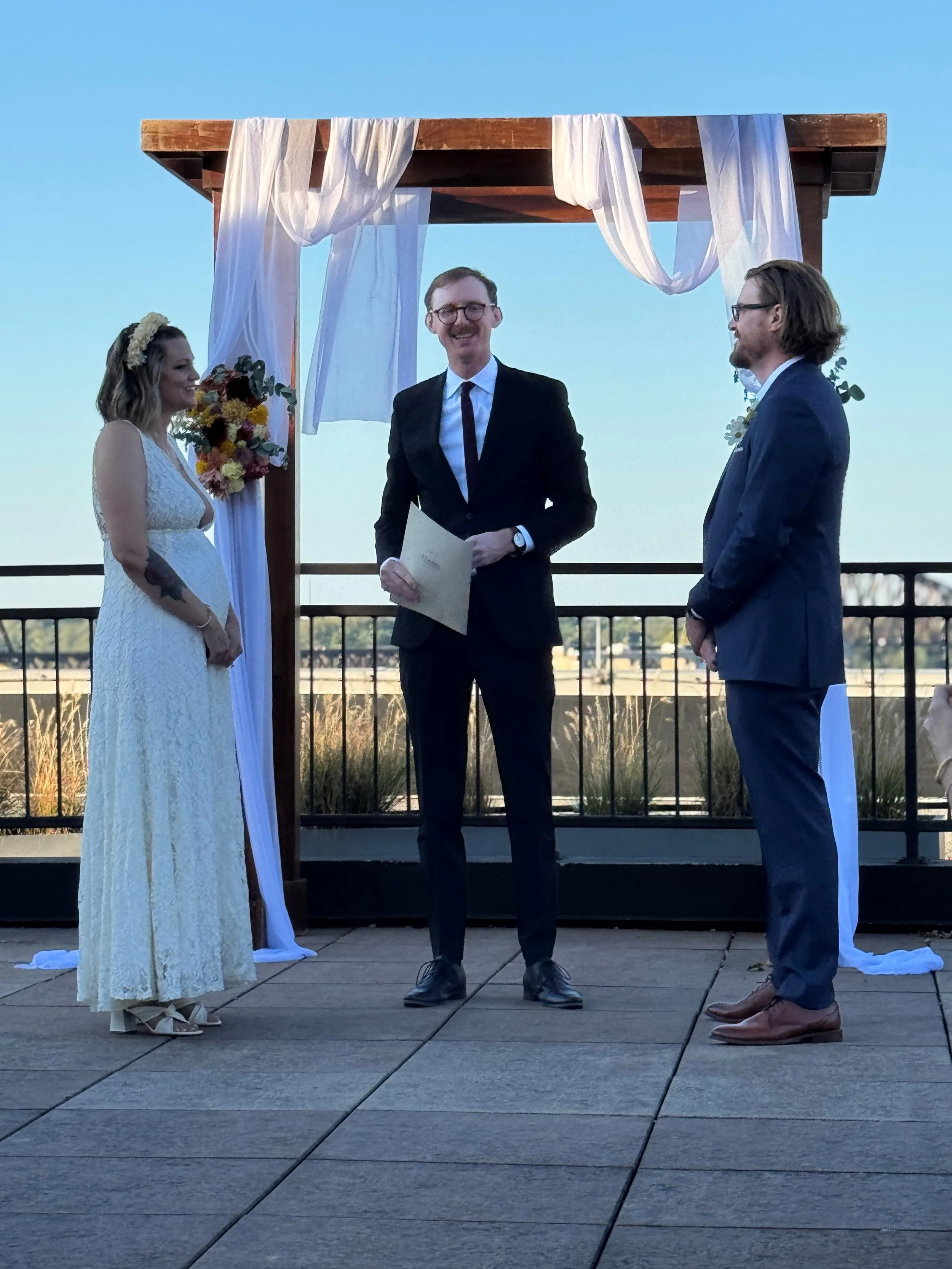
Simon Meiners
Communications & Research Specialist
Prime Video Docuseries on American Basketball Association to Premier Thursday

Visitors look at the Dan Issel uniform on the Kentucky Colonels platform in the Frazier’s Cool Kentucky exhibition, November 2020.
We know about the power of the American Basketball Association in these parts thanks to the Kentucky Colonels with names like Artis Gilmore, Louie Dampier, and Dan Issel.
They were a dominant team in that league, winning the1975 championship.
If you’ve visited the Frazier, you’ve seen a lot of the Colonels’ memorabilia on loan to us from Lloyd Gardner, who was the trainer for the team.
And now, starting February 12 on Prime video, the four-part docuseries Soul Power: The Legend of the American Basketball Association debuts.
Two of the executive producers are Common and Julius Erving, a.k.a. Dr. J, who first played in the ABA before merging into the NBA in 1976.
The docuseries Soul Power looks at the ABA’s cultural impact on the game, including the three-point shot. View the trailer below.
After you watch the series and feel nostalgic, be sure to stop by the Frazier to salute the Kentucky Colonels!
Rachel Platt
VP of Mission
On the Trail with Abby: Jeptha Creed Distillery in Shelbyville

On the Trail with Abby graphic.
Bourbon tourism is booming—and the Kentucky Bourbon Trail® is growing faster than ever! Each week, the Frazier’s Abby Flanders takes readers on a digital stop-by-stop tour of this expanding adventure, spotlighting the distilleries, stories, and expressions behind America’s native spirit. Ready to hit the trail in real life? Start your journey at the Frazier Kentucky History Museum, home of the Kentucky Bourbon Trail® Welcome Center.
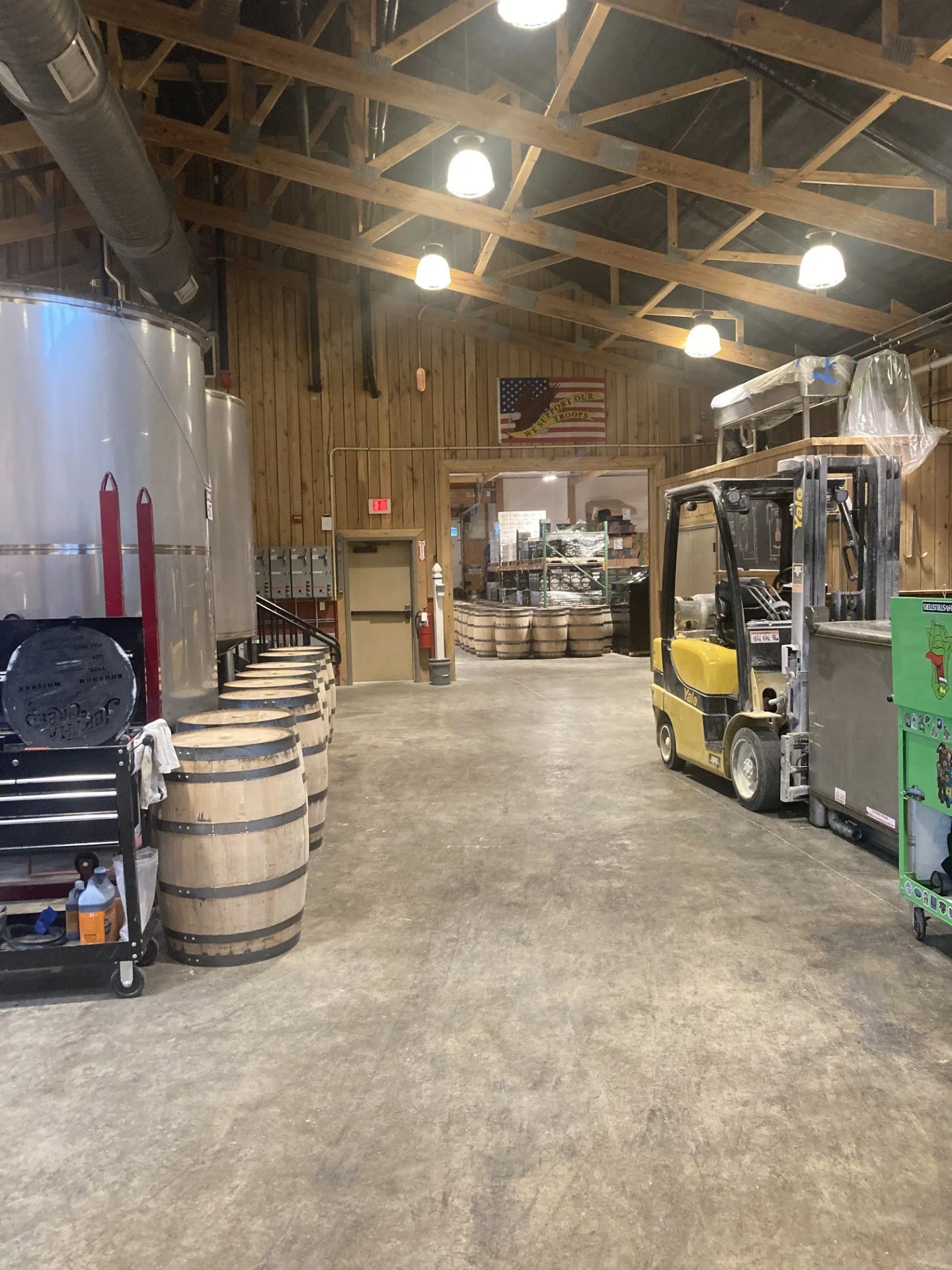
Behind the scenes at Jeptha Creed distillery in Shelbyville, Shelby County, Kentucky, May 26, 2024.
This week on the trail, we don’t stray too far from Louisville. Jeptha Creed, located in Shelbyville, Shelby County, is a women-built distillery rooted in family and tradition. Co-owners Joyce and Autumn Nethery are boots on the ground as Master Distiller and Director of Operations. Many claim that they are “ground-to-glass,” but Jeptha Creed means it!
The Nethery family grows every kernel of Bloody Butcher corn used in their Bourbon. You might be wondering: What is Bloody Butcher corn and why is it named as such? It’s not as gruesome as it sounds. Bloody Butcher corn stays white during the corn’s milk stage (when cobs might be picked to eat with dinner). Then, a small red dot appears on every kernel. After two more weeks, the cob is splattered with dark oranges and reds, said to resemble a butcher’s bloody apron. Bloody Butcher is not the easiest crop to grow, but it has a distinctive, nutty sweetness. It’s one of the many things that makes Jeptha Creed’s spirits unique. You can learn more, and even meet their distillery cats, in Jeptha Creed’s “Farm to Your Glass Experience.”
Are you celebrating America’s 250th birthday with us yet? Check out Jeptha Creed’s Red, White & Blue Bourbon, a colorful mash bill featuring that Bloody Butcher corn, Heirloom White corn, and Bruce’s Blue Corn to get in the spirit.

Abby Flanders
Administrative Chief of Engagement
Bridging the Divide
In Case You Missed It: My Holocaust Legacy: A Blessing, Not a Burden (Feb. 1)
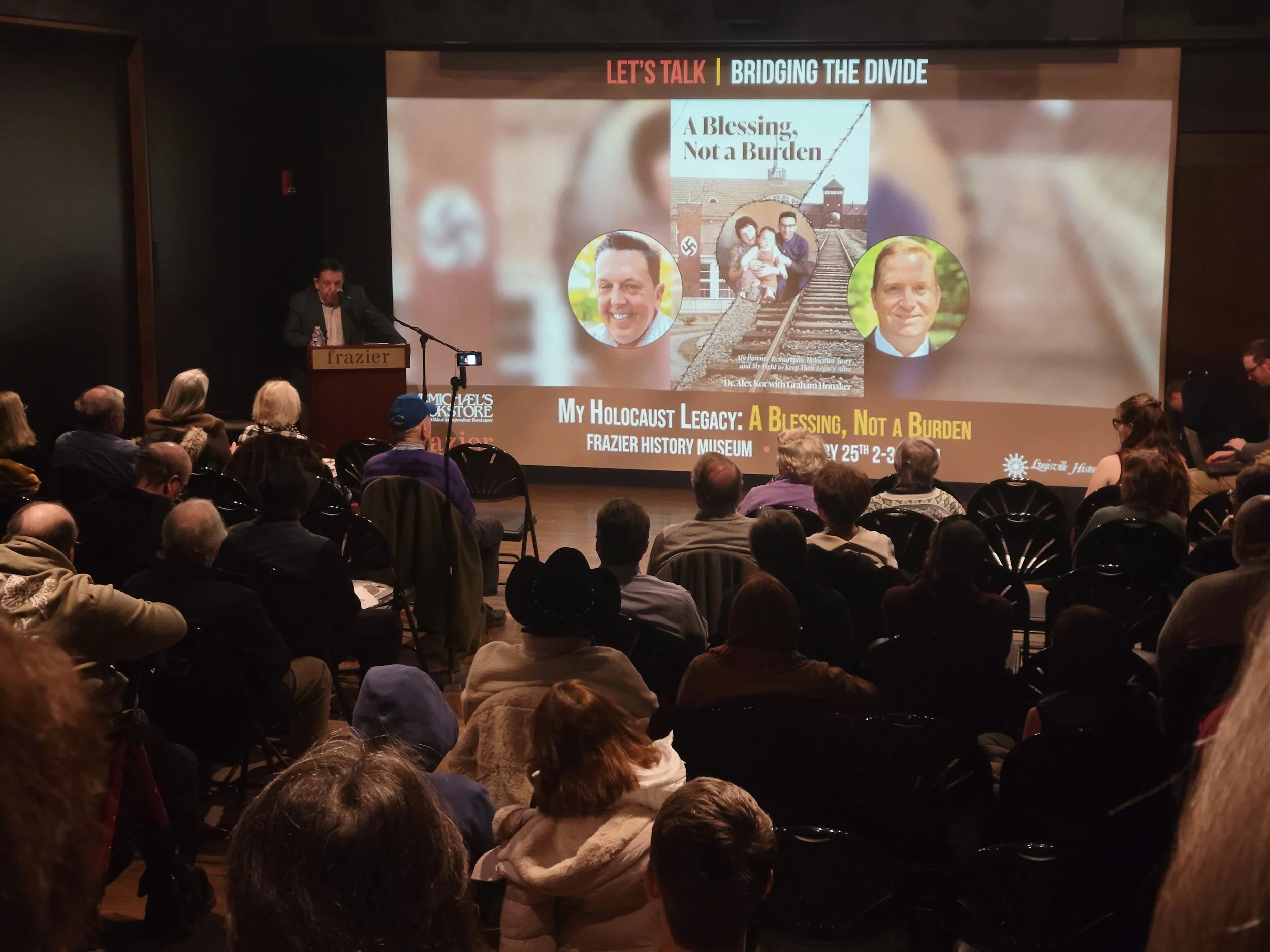
Dr. Alex Kor speaks during the My Holocaust Legacy program at the Frazier, February 1, 2026.
There were so many important lessons in our recent program My Holocaust Legacy: A Blessing, Not a Burden.
Dr. Alex Kor shared the stories of his parents, each of whom was a survivor of concentration camps during the Holocaust. They are no longer with us, but their legacies live on and come with powerful reminders to us all.
Certainly, to call out discrimination whenever we see it. And that is something that takes all of us.
And what about forgiveness?
That decision by Dr. Kor’s mother was a controversial one, but core to his mother.
Dr. Kor wrote A Blessing, Not a Burden along with Graham Honaker, who also spoke at our program.
Thanks to Gary Falk with the Louisville Historical League, the program was recorded—and we’d like to share it with you below.
These topics are difficult, but necessary to talk about—so we never let hatred and discrimination go unchecked.
Rachel Platt
VP of Mission
Aflora Artist Spotlight: Leslie A. Mendoza
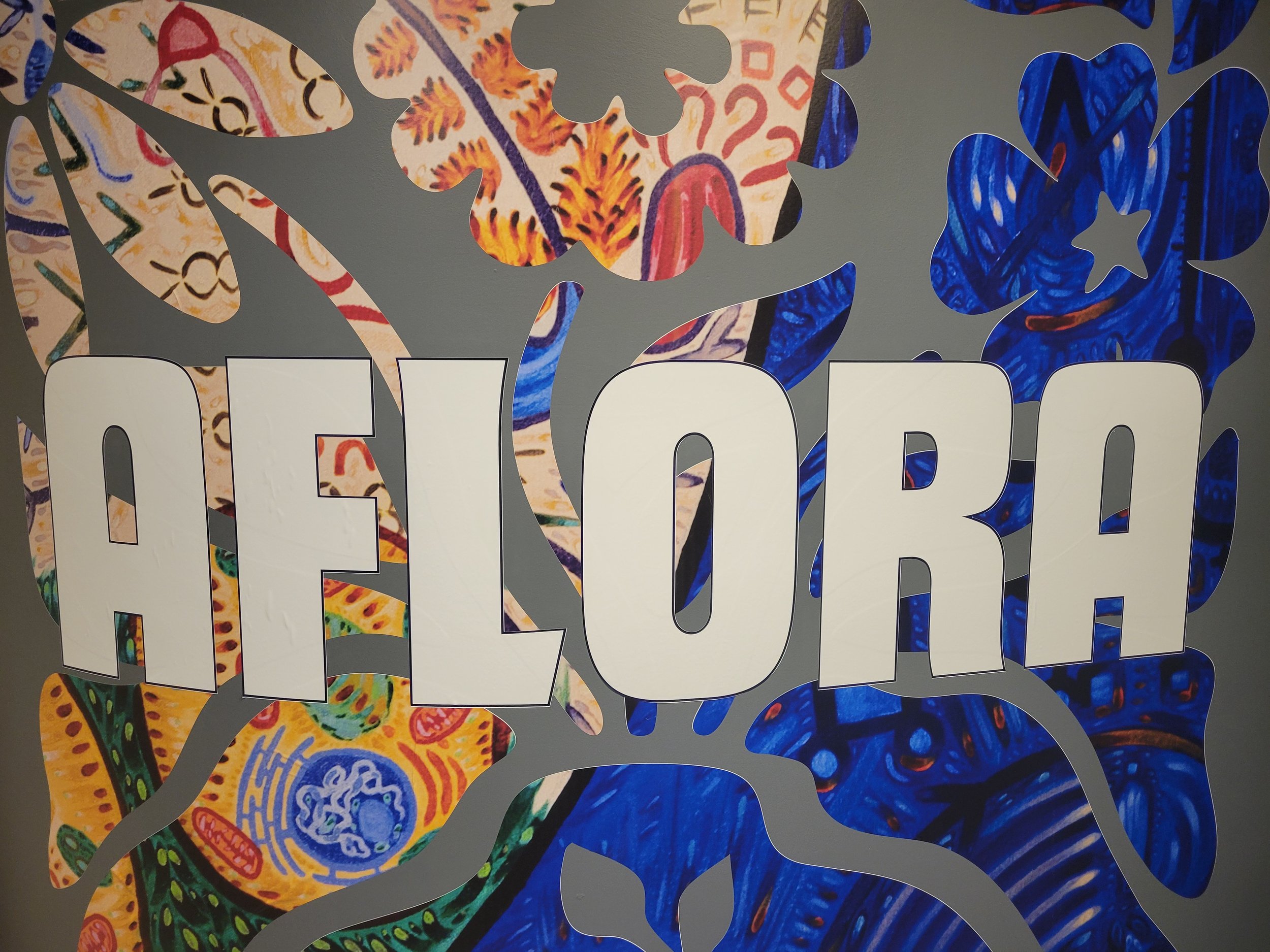
Exterior of the Aflora exhibition at the Frazier, February 5, 2026.
We recently partnered with La Casita Center to create the Aflora exhibition, which is now on display at the Frazier Kentucky History Museum. It is a vibrant showcase of Latinx culture and resilience in the face of adversity. The following article was written by contributing artist and poet Leslie A. Mendoza, who speaks of the power of writing and embracing creativity. The Frazier will also host an Aflora artist panel on Sunday, March 1, granting attendees rare insight into the artists’ creative processes and inspiration. Stay tuned for more details!—Jason Berkowitz, Engagement Specialist
We are starving artists but not in the romanticized term that was coined over 250 years ago. We are artists because we are human. To be human is to have a creative cycle and like the water cycle, they sustain life. We are starving because we are starving to create, to create the way our hearts knew, before we learned the words of judgement.
The water cycle starts with evaporation: heat builds, pressure rises, and water must move. It becomes clouds, then rain, then rivers, before returning again. As humans we feel beauty, loss, love, hate and everything in between. We take these emotions, these experiences and absorb them, putting pressure on our bodies. Once that pressure becomes too much, it must move.
When it moves it becomes an expression we release. We dance, we draw, we write, we cook, we sing, we rain.
My reason for writing poetry is because I must, it is instinctual. I wrote my first poem as a child but I did not know it was a poem. I wrote what I was feeling and I remember thinking the words were beautiful but the experience was not. I felt, which is to say, I understood that if the emotions I had were something I did not want inside of me, I could write them out. When the natural cycles are blocked like dams stopping rivers or pollution disrupting weather, the ecosystems suffer. When our creative cycle is blocked we feel restless, disconnected, irritable which leads to anxiety and aggression. We must continue to live in this creative cycle rather than suppress it. Children show us what we were made to do. They experience life, they express it, they move on. Do they not draw feelings before they can name those feelings?
Making art is how their brains, our brains, wire emotional regulation before we learn to suppress our expressions. Writing has been my expression when I have absorbed too much pain or too much tenderness. My poetry is my rain, my release.
We have a creativity cycle. Experience, absorb, release, return again. For all of history and across cultures we have created art when we needed to be understood. When we felt too much, when we needed meaning out of chaos. When trauma happens our culture fractures, and art erupts. Expressions are released as music movements, art statements, poetry, fashion, and in many more ways, but the importance lies in releasing these expressions into the river. We share meaning, we regulate, we nourish, we renew. The cycle repeats.
Why then, do we run from the creative cycle? Why do we let experiences build for so long inside of us? As children we knew to instinctively allow the flow of the creative cycle to take place. At some point, we stopped writing stories, sculpting, painting, making things with our hands and declaring it art. At some point a voice told us to fear being seen or we learned it was not valuable to create. We may not even remember whose voice it was or where it came from but it did and we quit. We put down our pens and brushes and picked up embarrassment and shame.
I invite you to return to live in the creative cycle. To unlearn the judgement that holds us back from our natural expressions. To express because it is how we release our pressure and nourish our souls. To know we are artists and we will no longer starve to create.

Leslie A. Mendoza
Artist
Guest Contributor