The 10 Best Frazier Weekly Articles of 2025
This has been a banner year at the Frazier Kentucky History Museum.
We opened special exhibitions like Aflora and Davis Jewelers’ Love & Marriage. We filled the house with programs on folk musician John Prine, the Packhorse Librarians, and Wild Turkey. We launched our Bourbon Through Bluegrass tastings. We launched our Kentucky Wide podcast. We screened the new KentuckyShow! We unveiled a 132-foot mural on our building. And—lest we forget—Kentucky Living magazine readers named us the Best Museum in Kentucky!
How do we plan to keep the momentum going in 2026? Find out in next Monday’s issue of Frazier Weekly.
Each Monday at 7 a.m., we send you a new issue—chock-full of original articles, videos, and interviews, contributed by our staff members.
Today’s issue is the annual Best Of edition! We’ve compiled the ten best Frazier Weekly articles of 2025, arranged by date of publication.
We’ve got a few announcements, though.
First, we’ve shortened our hours of operation on New Year’s Eve and New Year’s Day: we’ll be open this Wednesday and Thursday from 11 a.m. to 4 p.m. Also, we’ll close the building for maintenance on Wednesday, January 14. Aside from that, we’ll remain open seven days a week—so come see us!
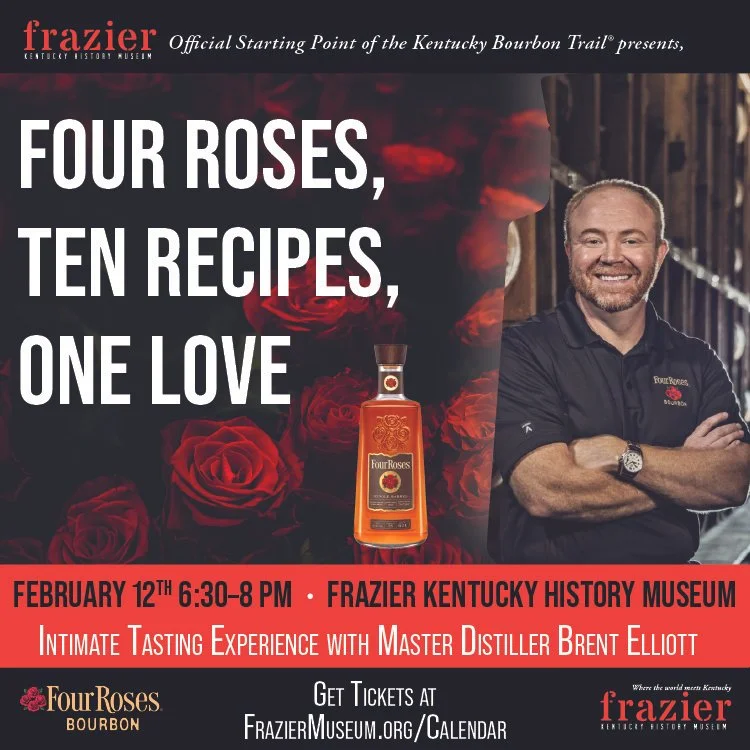
Four Roses, Ten Recipes, One Love flyer.
Second, we’re happy to announce our first Bourbon program of the year. Join us February 12 for Four Roses, Ten Recipes, One Love! Explore the unique recipes, yeast strains, and craftsmanship that make Four Roses a true original—complex, elegant, and unforgettable. Four Roses’ Master Distiller Brent Elliott and Brand Champion Tucker Carper will share stories and lead guided tastings, culminating with the exclusive single-barrel OBSO 9+ year selection that all attendees will have the option to purchase. Act now, because this program will sell out!
Finally—if you still need someplace to send your kiddos this week—consider our Winter Break Camp! We’ve got camp today, tomorrow, and Wednesday—and we offer registration by the day.
As always, thanks for reading. If you enjoy Frazier Weekly, please tell your friends, family, and colleagues to subscribe.
Happy new year!

Simon Meiners
Communications & Research Specialist
Frazier Kentucky History Museum
The 10 Best Frazier Weekly Articles of 2025

120: Cool KY Counties graphic.
Published in the February 3, 2025, issue.
The Frazier believes that every Kentucky county possesses unique and incredible stories that shaped our past and inform our future. This conviction led to our 120: Cool KY Counties exhibit, which has collected hundreds of stories from across the Commonwealth—including histories, legends, songs, and oral traditions. I was fortunate to accompany my colleague, Mick Sullivan, on a trip to Grayson County to interview a Leitchfield native who shaped the fantasy world of Dungeons & Dragons with his incomparable oil paintings during his tenure with TSR, Inc. in the 1980s.
At first glance, Larry Elmore is an ordinary Kentuckian. Like many of us who grew up before technology was a quotidian fact of life, Larry has memories of running wild in the woods, staying out until the sun went down, and accomplishing the kind of dangerous, boyhood stunts that put the fear of God into the youngster. Later in life, the rolling hills, trickling streams, and craggy rock formations of his childhood would manifest in the artwork he produced for the creators of a new strategy wargame called Dungeons & Dragons. Larry relocated from Leitchfield, Kentucky, to Lake Geneva, Wisconsin, in 1981 and quickly settled into his dream job producing fantasy artwork for TSR, Inc. During our interview with Larry in November 2024, he recalled how unique working for the company was and how unfettered he felt artistically. He worked long, often irregular, hours, but he was thriving doing something he loved.
Not everyone is lucky enough to say that their life’s work was a labor of love. For me, researching Larry and visiting him and his wife in Leitchfield for the Frazier was a way for me to achieve a dream come true and meet a celebrity who, unbeknownst to him, has had such an impact on my life. I would like to emphasize the scope of the impact that Dungeons & Dragons and Larry and his colleagues’ fantasy art has had on generations of people around the world who play TTRPGs, consume fantasy nonfiction and media, and use collaborative storytelling for creative and therapeutic purposes. While originally a male-dominant hobby, today D&D has grown to become more diverse and inclusive to reflect broader social shifts. Teachers use D&D to teach history, math, creative writing, and problem-solving.
When we think about the mission of our 120: Cool KY Counties exhibit to identify and record the stories of Kentuckians living amongst us who have left a legacy and cultural impact, Larry’s story and the influence of his artwork is something that we can all feel so proud of and connected to. It is our rivers, quarries, and plateaus that form the backdrop to Larry’s magical, fantasy world. So, in a sense, Kentucky has left its own mark on the fictional world of Dungeons & Dragons.
You can watch our interview with Larry Elmore in our 120: Cool KY Counties exhibit on the first floor of the museum or online.

Leslie Anderson
Sr. Manager of Grants & Community Development

John Shell poses with his youngest child, James Albert Shell, undated. Albert was born in 1915 to Betty Chappell Shell, who died when he was three years old. This is the son who accompanied John to the State Fair in 1919. Credit: Janet Shell Hartman, Old Man John Shell Facebook Group.

Home of George Burkhart, undated.

Smoky Mountains Hiking Club members rest at a large, hollowed-out chestnut tree, undated.
Published in the February 24, 2025, issue.
If you want to live a long life, you might want to look at the lives of Kentuckians John Shell and George Burkhart.
Known as the oldest man in Kentucky, John Shell lived in Leslie County. Born around 1788, Shell lived his entire life in this isolated region, known for its self-reliant communities. While records from that time are sparse, we know that Shell worked his farm, had a blacksmith shop, harvested herbs and honey, turned wooden bowls and plates, made whiskey, and was a market hunter. Along the way, he had twelve children with his first wife, Elizabeth.
But what Shell was known for was his stories. Shell held court with his tales about seeing Daniel Boone kill many bears, deer, and turkeys. He once claimed that his earliest memory was when the news came over the mountain that the “father of our country” George Washington had died. He recalled the earthquake of 1811, saying that it lasted for two whole days. And Shell told the story of how he helped defend the settlement of Harlan against a flaming-arrow Indian attack. He later told that he had lived so long that he grew three sets of teeth.
Family history tells the story that when the Civil War broke out, Shell rode a horse to Virginia to fight for the Confederacy. He finally got to Robert E. Lee, who told him “Sir, I appreciate you for riding this far. But sir, I cannot take you because of your age.” John Shell was seventy-four years old at the time, according to family lore.
After the death of his first wife, and after he was well over one hundred years old, John Shell remarried and had another son, Albert James Shell. John and Albert were invited by the governor to be guests at the 1919 Kentucky State Fair, where Shell was presented as the oldest man in the world. Encouraged by promoters, Shell inflated his age and began to make fair appearances in Kentucky and Tennessee, becoming widely known as “the world’s oldest man.” In 1921, Shell was featured in The New York Times and other East Coast papers, raising interests of doctors who visited John to learn his secrets for longevity.
Shell eventually tired of traveling the fair circuit and returned to his farm, where he died in 1922. It was widely reported that he was 134 at the time of his death and that his funeral was attended by two sons, one aged ninety and one aged seven. Census records would show that Shell was actually 103 or 104 when he died.
When asked the secret of his long life, Shell said it was due to a diet of “hog, hominy, and honey.”
One county away, in Harlan County, lived George Burkhart. Born in 1741, George Burkhart remains legendary in Harlan.
Burkhart’s story began as he was leading his family from Virginia to Kentucky. As they passed through the mountains of Appalachia they encountered an approaching storm. Seeking shelter, Burkhart saw a hollowed-out sycamore tree and ushered his family inside to wait out the storm. Once the storm had passed, Burkhart, being self-reliant and resourceful, recognized the potential for the tree to become a home for his family.
The tree was forty-five feet in circumference and fifteen feet in diameter. For years, Burkhart, his wife, and their five children lived in this space with two beds, a table, and chests. It was said that one of the beds was in the roots of the tree. The tree had two forks and Burkhart turned one of them into a chimney, creating a hearth.
In 1849, a traveling agent for the American Bible Society found George and his family living in the sycamore tree and spent several nights with them. He wrote that Burkhart told him that he was a Lutheran, being of German faith, and that he received the offered Bible with gratitude.
Could it possibly be true that a family was living in a tree? Yes! Before the logging boom of the late nineteenth century, Appalachia was home to many giant trees. In fact, the treescape in Appalachia rivaled the forests of Sequoias in the northwest. In 1771, George Washington documented the largest trees ever measured in Appalachia, on Three Brothers Island in the Ohio River. Washington wrote that one of the trees was sixty-one feet in circumference. In 1750, the explorer Stephen Sewell lived in a hollowed-out sycamore tree in West Virginia. Hollowed out trees are part of the Appalachian lore. Even the Hatfields were said to place dead people in a hollowed-out sycamore that they called “the stink tree.”
Burkhart would bury three wives and in 1835, late in his life, he would marry his fourth wife, Lavinia, who was thirty-five years old. The age disparity was too much to overcome, and Burkhart was devastated when Lavinia left him.
Burkhart was too old to continue his courting, so he turned his interest in sorcery into an income. His power with his wand was well-known. People came from Tennessee and Virginia to seek relief from witches and other enemies. He also cured bewitched dogs, cats, and livestock.
Burkhart died in 1849 at the age of 108.
Both John Shell and George Burkhart are legends in their respective counties and in our state. Their stories are examples of the rich oral traditions and cultural heritage of the Appalachian region. These two men are examples of the resiliency, perseverance, and spirit that we associate with the peoples of Appalachia.

Susan Reed
Stories in Mind Facilitator
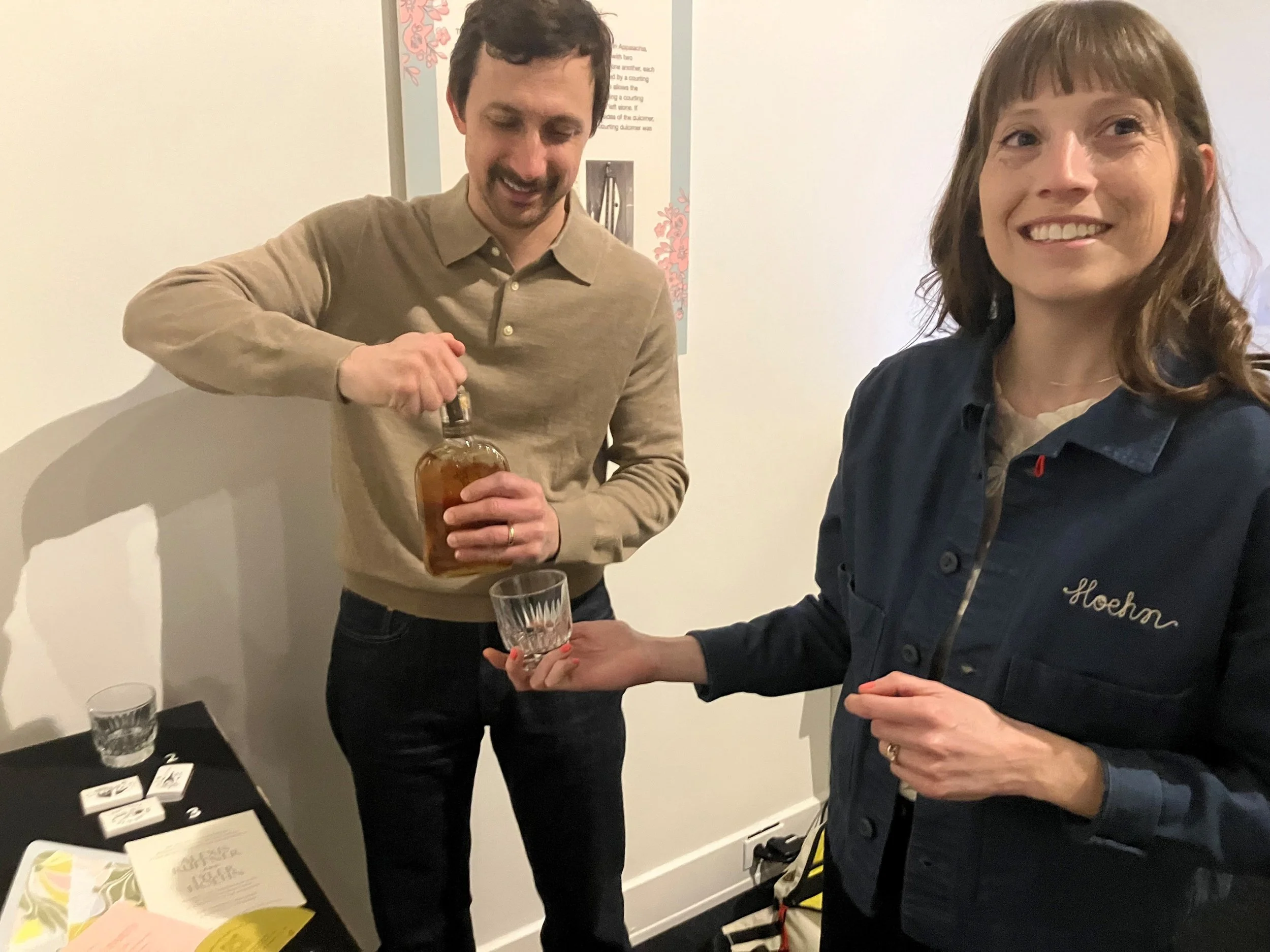
From left, Tyler and Alex Hoehn celebrate their one-year wedding anniversary by sipping the Bourbon they’d buried at the site of their ceremony, April 13, 2025. The Bourbon bottle is currently on display in our Davis Jewelers’ Love & Marriage exhibition.
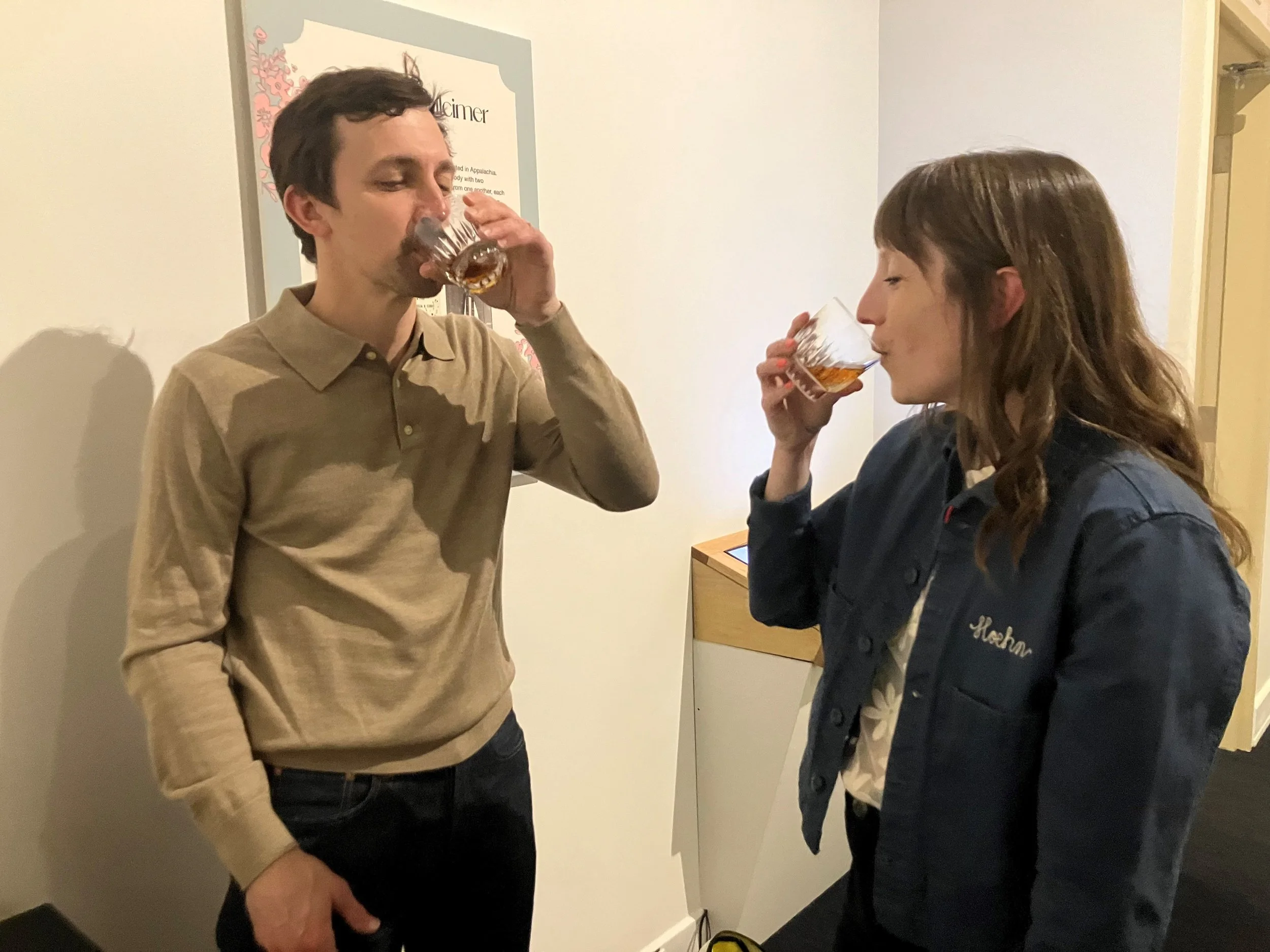
From left, Tyler and Alex Hoehn celebrate their one-year wedding anniversary by sipping the Bourbon they’d buried at the site of their ceremony, April 13, 2025. The Bourbon bottle is currently on display in our Davis Jewelers’ Love & Marriage exhibition.
Published in the April 14, 2025, issue.
I hope that some of you have had the opportunity to see our newest exhibition Davis Jewelers’ Love & Marriage that opened at our Night at the Frazier gala on April 5. The last room of the exhibition is called “Something Bluegrass” and is dedicated to Kentucky stories, traditions, and dressmakers. Though every dress in the exhibition is worn by a Kentuckian, and Kentucky designers and stories appear throughout the exhibition, this gallery really focuses in on those ideas. You can learn about weddings in Mammoth Cave and Appalachian traditions such as lovespoons, the Appalachian Stack Cake, and double wedding ring quilts.
One of the most Kentucky-centric traditions that is discussed in the exhibition is burying a bottle of Bourbon. It is said that if a couple buries a bottle of Bourbon on the property of their venue or reception grounds exactly one month before their wedding, it will guarantee good weather. The bottle must be Bourbon; no other whiskey or spirit will do. On their wedding day, the bride and groom dig up the bottle of Bourbon and have some to celebrate.
The bottle of Woodford Reserve that is featured in the exhibition is on loan from some friends of mine, Alex and Tyler Hoehn, who were married last year. (Alex also loaned us her beautiful wedding dress, which is the final dress in our timeline of dresses!) They buried the bottle at the site of their wedding ceremony, Snooper’s Rock in Prentice Cooper State Forest, just outside of Chattanooga, Tennessee. It seems that the tradition worked for them, as they had perfect weather on their wedding day!
Yesterday was Alex and Tyler’s one-year anniversary, so we opened the case that is displaying their Bourbon so that they could have a special celebratory drink of the Bourbon that brought them such good luck on their wedding day.
Congratulations to the Hoehns!

Amanda Briede
Sr. Curator of Exhibitions
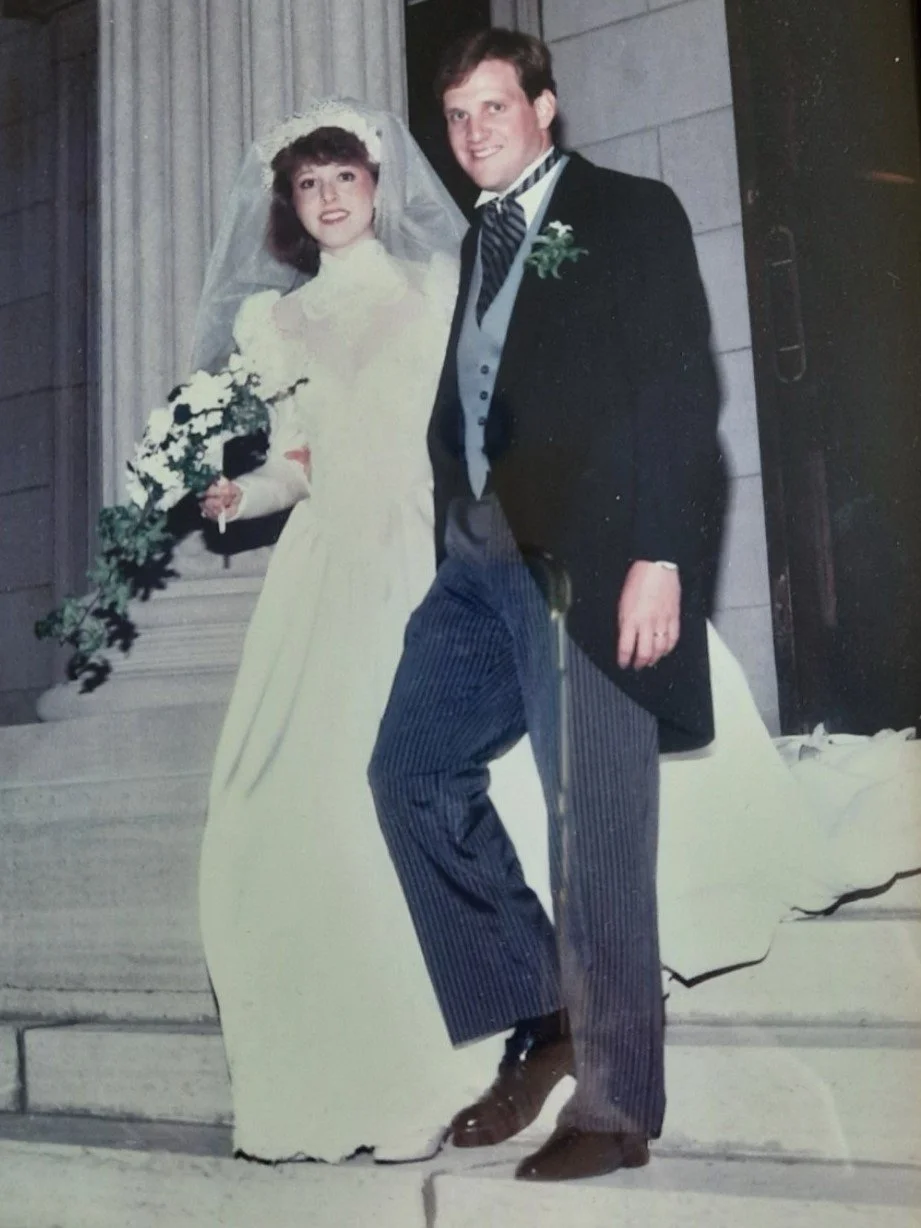
Amy Lynch and Brad Harlow pose on their wedding day, May 7, 1988.

Amy Lynch and Brad Harlow pose by Amy’s wedding dress on display in the Frazier’s Davis Jewelers’ Love & Marriage exhibition, April 5, 2025.
Published in the May 5, 2025, issue.
The Frazier History Museum recently opened Davis Jewelers’ Love & Marriage, an exhibition that explores the many ways love has been celebrated across time. A section called Decades features a chronological timeline of wedding dresses. When I learned this would be part of the exhibition during the curatorial planning process, I was excited to see my mother’s wedding dress selected to represent the 1980s, a time that saw the revival of the mutton sleeve trend. In sharing her gown, I uncovered more Kentucky ties in her wedding story than I ever realized. Though both of my parents are Eastern Kentucky University graduates, and my mom has called Kentucky home for over thirty years, she’s originally from West Virginia, where the wedding ceremony took place. But on May 7, 1988—Derby Day in Louisville!—she married a native Louisvillian in a dress purchased from a historic bridal shop right here in town. Their story came full circle at the opening of Davis Jewelers’ Love & Marriage the same evening of our Night at the Frazier gala where my parents experienced the exhibition and saw my mother’s dress on display—the first time out of its preservation box since 1988. I invite you to visit Davis Jewelers’ Love & Marriage, on view through March 29, 2026, and discover the many Kentucky stories woven into this celebratory, heartfelt exhibition.—Hayley Harlow, Sr. Manager of Fundraising
When our daughter Hayley mentioned the Frazier was planning to open an exhibition featuring Kentucky weddings throughout the decades, I had a reminiscent moment about my own wedding dress.
Many memories surrounding our wedding flooded into my mind: how I met the love of my life, Louisville native Bradley Harlow, in English class at Eastern Kentucky University in 1982; our plans after graduation in 1985; and our own journeys that led us apart for two years. Brad was going to Southern Baptist Seminary, and I headed back to my hometown of Charleston, West Virginia, to teach science. After two years of long-distance dating, we became engaged, and I moved to Kentucky.
Planning a wedding long distance was a challenge, but my mom Georgia was amazing. She planned many of the details, but I shopped for my dress. As most engaged young women, we all read Brides magazine. I ripped the page out of the magazine and headed to Greenups Belles and Brides in downtown Louisville as suggested by my future mother-in-law, Mary Harlow. I was warmly greeted by a saleswoman wearing all black. She brought out three dresses. The first one I looked at was the dress of my dreams. My wedding portrait was painted in oils by Louisville Maish-McMillen studios in 1987.
I’m honored that my 1988 wedding dress (purchased in 1987) was chosen to be in the Frazier’s tribute exhibition Davis Jewelers’ Love & Marriage. If you haven’t visited the Frazier recently, I highly recommend you make plans to do so soon.

Amy Lynch Harlow
Guest Contributor
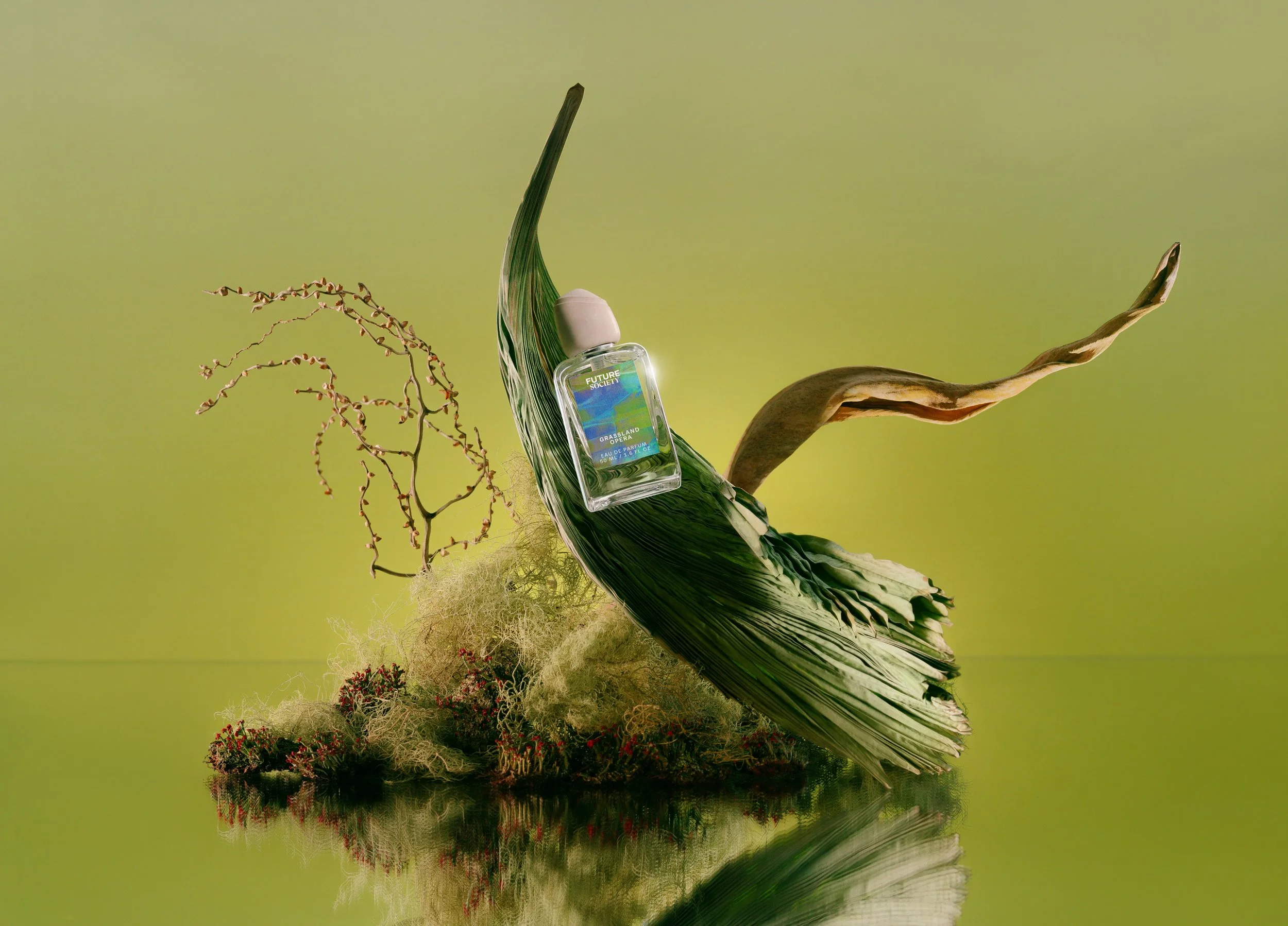
Future Society’s Grassland Opera fragrance sold in the Frazier’s Museum Shop.
Published in the May 12, 2025, issue.
In the 1860s, a Louisville botanist named Dr. Charles Wilkins Short collected specimens of a plant known as the scurfpea from Rock Island in the Falls of the Ohio. Once a popular food source for bison crossing the river, it has never been observed anywhere else. With changes to that stretch of river by canalization and damming, the scurfpea plant slowly disappeared. No one has seen—or smelled—the scurfpea since 1881.
Nearly a century and a half later, Boston-based scientist Christina Agapakis explored the idea of recreating the scent of an extinct flower. After considering many options, Dr. Short’s sample of the Falls-of-the-Ohio-Scurfpea at the Havard herbarium was chosen. Collaborating internationally with scientists led to the first results—an installation in 2019 at the Smithsonian’s Cooper Hewitt Museum that allowed guests to smell the scientifically recreated extinct flower.
I’ve been interested in Dr. Agapakis’s project for years. Earlier this year, she put me in contact with people at Future Society, a scent company who collaborated with GingkoBioworks, where Dr. Agapakis had worked on the project. Future Society recently debuted a commercial scent, a perfume, based on the now-extinct flower that grew in only one place in the world: the Falls of the Ohio.
Dr. Short had deep ties to the area, from Transylvania University to the Hayfield neighborhood in Louisville, which is named after his home near Atherton High School. His botany work is well respected and impactful. So, if you wind up wearing the scent—which we have for sale at the Frazier’s Museum Shop—you’ll do more than smell great: you’ll also be tying yourself to a lot of local history and some amazing modern science.

Mick Sullivan
Curator of Guest Experience
Published in the May 26, 2025, issue.
As the official starting point of the Kentucky Bourbon Trail®, the Frazier History Museum shares stories of the people, places, and producers of the Kentucky Bourbon industry. To learn more, visit our Kentucky Bourbon Trail® Welcome Center or tour our Spirit of Kentucky® exhibition.—Simon Meiners, Communications & Research Specialist
This episode of Sippin’ with Stephen features my good friend Macaulay Minton, Owner and Chief Alchemist at Dark Arts Whiskey House. Macaulay informs folks of the upcoming opening of the Dark Arts Whiskey House located in Lexington, Kentucky, and what all they will be offering to the public. We then taste and review his Dark Arts Bourbon Finished with Toasted Mizunara Oak Staves. For all things Dark Arts Whiskey House, please visit their website.

Stephen Yates
Community & Corporate Sales Manager

Duke Marsh plays piano at PNC Plaza in Downtown Louisville, June 10, 2025.

Ad for Duke Marsh piano performance at the Stouffer’s Top of the Tower restaurant in First National Tower, now PNC Tower, published in the December 7, 1976, Courier Journal.
Published in the June 16, 2025, issue.
The streets of Downtown Louisville have just gotten a little more musical.
In May, the Louisville Downtown Partnership placed four hand-painted pianos in outdoor locations throughout Downtown as part of their Downtown Tunes program.
Each of the four pianos was donated by Louisville residents and then painted by students at J. Graham Brown School and Francis Parker School of Louisville. The vibrant colors and visually striking themes invite passersby to take a look—and maybe take a seat at the keys!
I knew the project would strike a chord with my grandfather, Duke Marsh, a New Albany native and multi-instrumentalist who has been playing music gigs in the Louisville Metro area for decades. I asked him to meet with me at the piano located at PNC Plaza at 5th and Market. Titled Symphony of Color, the multicolored piano has been beautifully decorated by students at Francis Parker School of Louisville. Despite a few missing keys, Duke gave the plaza an impromptu performance of “On the Sunny Side of the Street” that you can watch here.
“Does this ever bring back memories!” Duke said as we gazed up at PNC Tower. “Four years in a row, six nights a week, I’d walk through those doors and take the elevator to the thirty-eights floor.”
I learned that, from 1975 to 1979, Duke played piano at the Top of the Tower restaurant in what was then called the First National Tower.
“It’s so funny, though, that we ended up playing the piano in the courtyard of the same building after all these years!”
When I asked my grandfather to check out the Downtown Tunes project with me, I knew I was sure to hear a song—but I was delighted to hear a story, too. I like to think that kind of human connection through music and public art is what LDP was hoping to inspire with their project.
If you would like to share your own song with the city, the four pianos will be stationed at their Downtown locations through October, and they are available to the public every day from 9 a.m. to 9 p.m., weather permitting.
Locations for the pianos can be found online.
To hear more of Duke’s music, you can visit his YouTube channel.
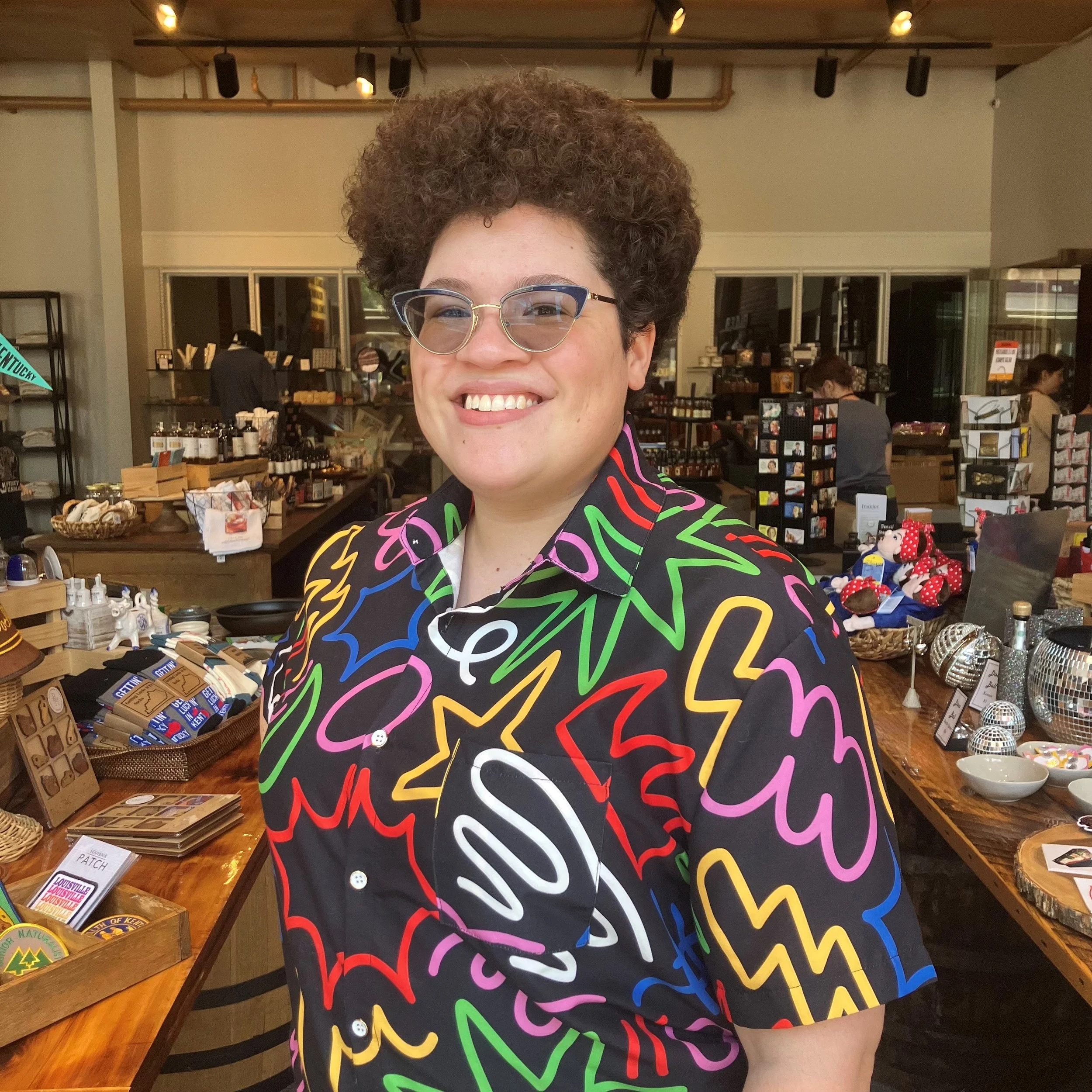
Sarah Jemerson
Education & Engagement Lead
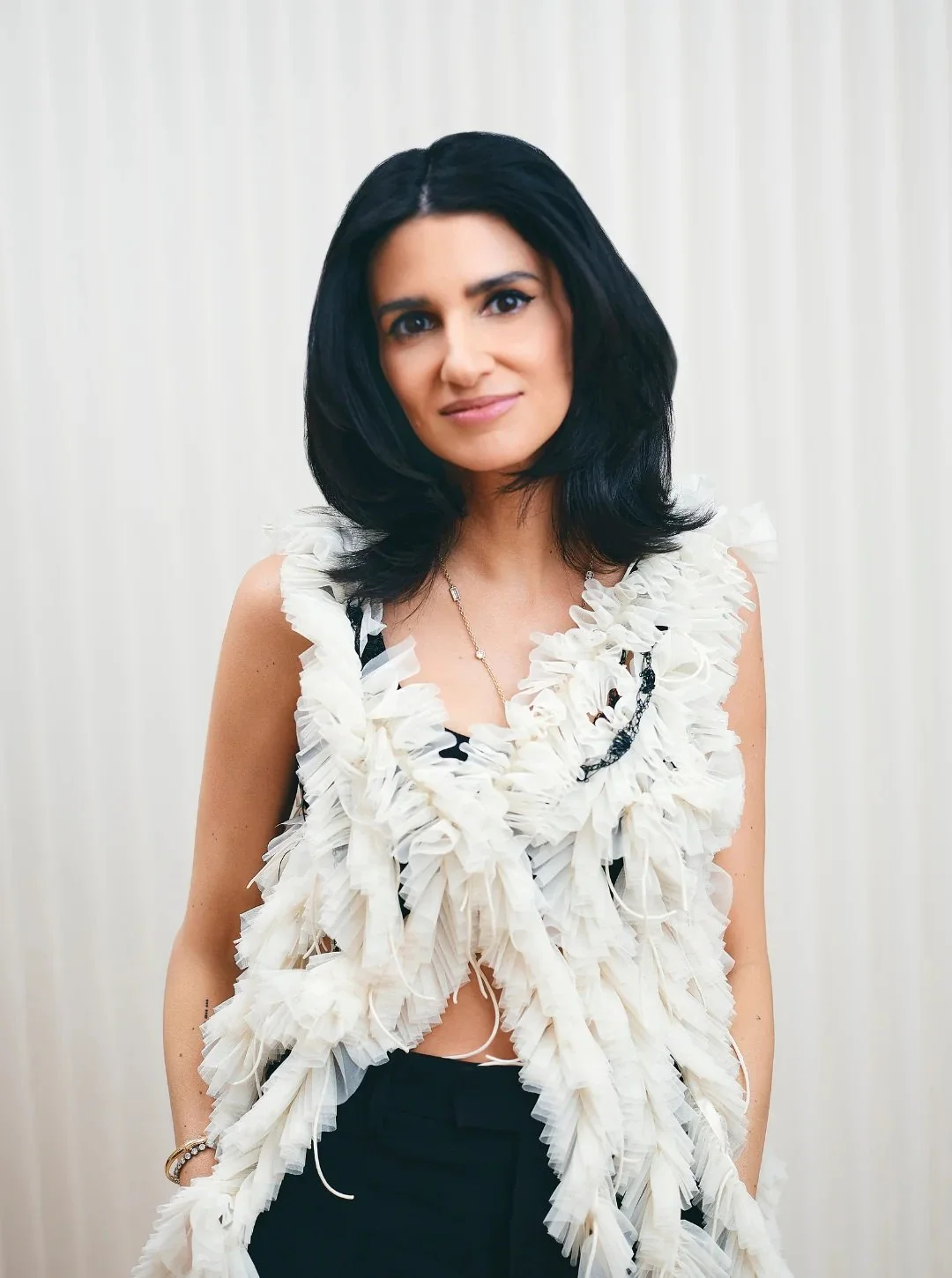
Shahla Karimi. Credit: Jesse Korman, Shahla Karimi Jewelry.
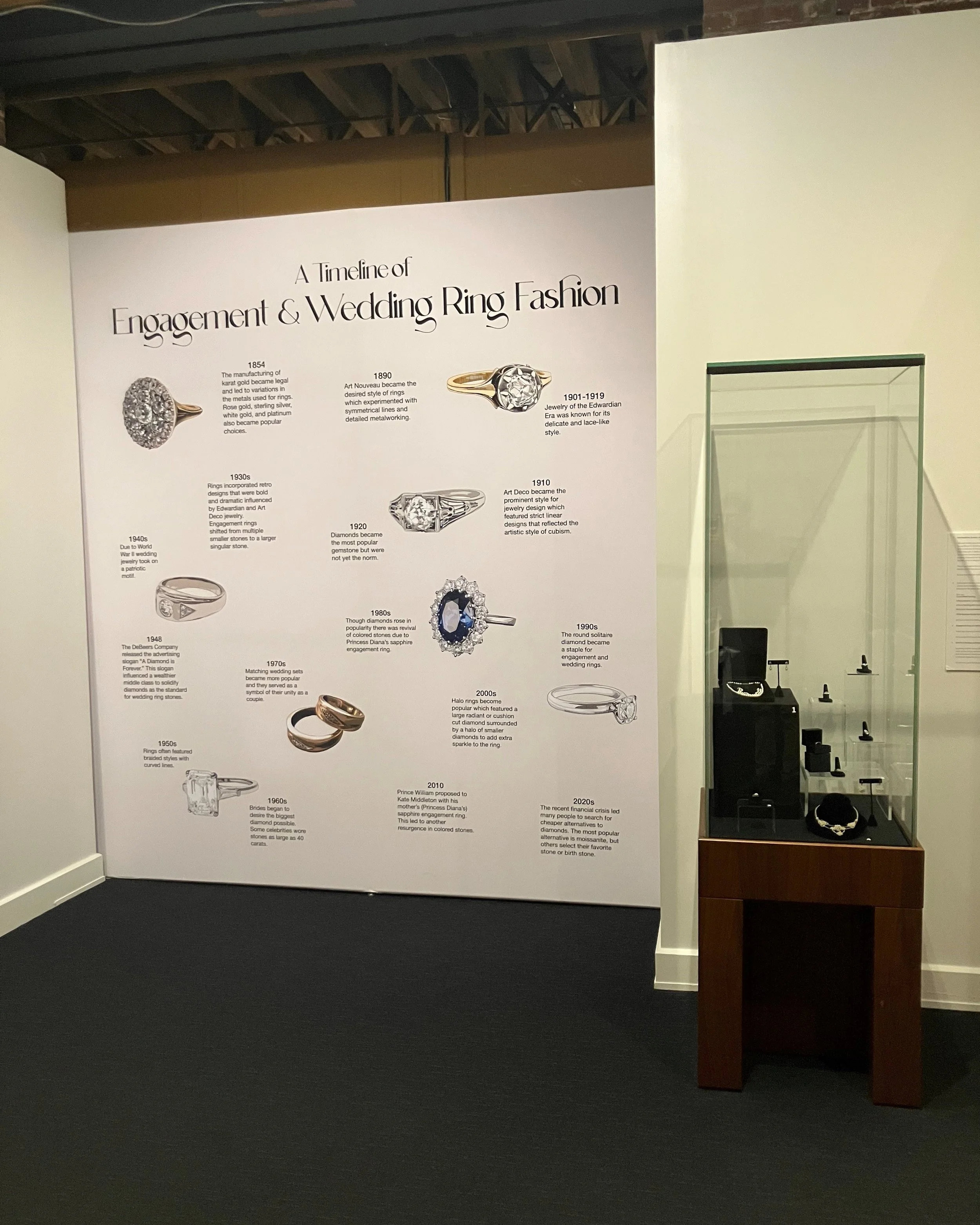
A case with Shahla Karimi Jewelry pieces on display in the Frazier’s Davis Jewelers’ Love & Marriage exhibition, August 27, 2025.
Published in the September 29, 2025, issue.
On September 1, I wrote an article about how Kentuckian Shahla Karimi has designed rings for Taylor Swift. As it turns out, my coworker Casey Harden grew up with Shahla. Frazier visitors can see select Shahla Karimi Jewelry pieces on display in our Davis Jewelers’ Love & Marriage exhibition. But if you’d like to meet Shahla yourself, join us November 6 for our Is This Love That I’m Feeling? program! I’ve asked Casey to shed light on their shared history in Oldham County.—Simon Meiners, Communications & Research Specialist
In our new exhibition Davis Jewelers: Love & Marriage, we have the unique opportunity to showcase all things weddings: dresses, veils, suits, trousseau cases, and, of course, jewelry. The jewelry section of the exhibition is especially significant to me because it features rings by the most exceptional and amazing Kentucky jewelry designer, Shahla Karimi.
Am I biased? Yes. Why? Because she’s my best friend.
Our friendship began in a yellow brick building out Highway 393 in Buckner: Oldham County High School, in Mrs. Lutz’s English class, to be precise. We were partnered on an interview project. Shahla jumped in talking all things animals and how she wanted to be the next Jack Hannah. Her knack for storytelling took my “I just moved here” to telling the class I was in the witness protection program. Naturally, we hit it off; our idiosyncrasies matched. We were sidekicks for four years: supporting, pushing, caring for, and sometimes fighting with each other. We had an inside saying whenever we had to tackle something scary or hard: “You’re a big brave dog.” She’s the bravest dog I know!
Fast-forward to college graduation, at which point Shahla was bound for New York City and everything the Big Apple had to offer. While we will lived separate lives, one thing remained the same: She always knew Kentucky was home was. As I was living my #MuseumLife, she was dreaming big. That was no surprise to anyone who knows Shahla—she’s always dreaming big. As a lifelong artist, a math prodigy, and someone who truly understands fashion, she was destined for jewelry design. She started off small, hosting a shop on Etsy. But her dedication and determination paid off when she officially launched Shahla Karimi Jewelry. Her jewelry is storytelling, bridging tradition with modernity. Showcasing people’s love, passion, and truth, she allows their personalities to shine through every piece of jewelry.
Seeing Shahla’s creations featured in this exhibition feels like a celebration of not only her talent, but the years she has poured into her work. The girl I used to sneak into Tinseltown with is now designing jewelry for movie stars like Lucy Liu, Kaley Cuoco, and Reece Witherspoon.
But no matter her success or international recognition, one thing hasn’t changed: She’s still my best friend.

Casey Harden
Sr. Director of Engagement
Published in the September 29, 2025, issue.
Fall is FINALLY here! This means brisk weather, the smell of burning wood, changing colors, hot cider, and festivals galore. The two festivals I am highlighting this week are based on local histories and traditions related to autumn, and as such, should have you feeling the season proper. Pumpkin spice is optional, of course.
And don’t forget: you can learn more about Kentucky’s local traditions in the Frazier’s 120: Cool KY Counties exhibit.
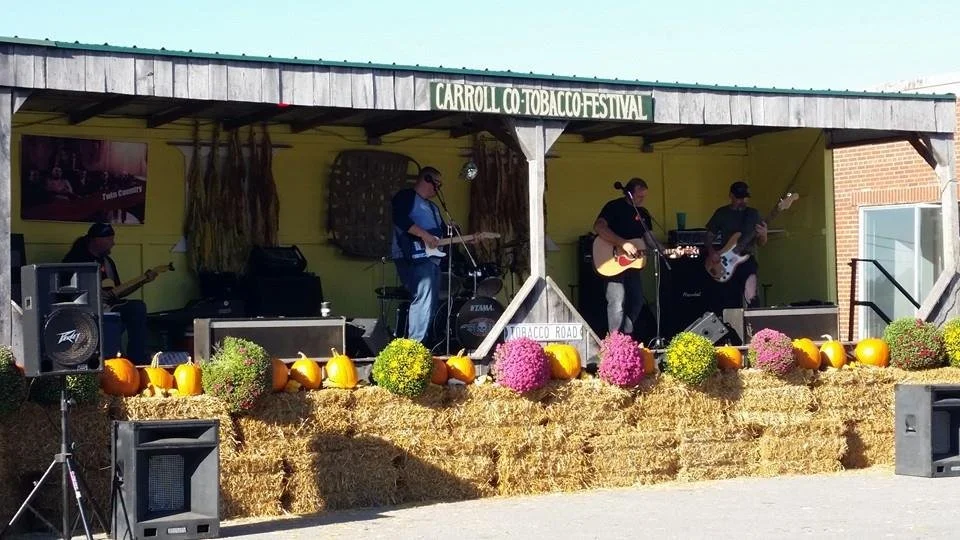
A musical artist performs at the Tobacco Festival in Carrollton, Carroll County, Kentucky.
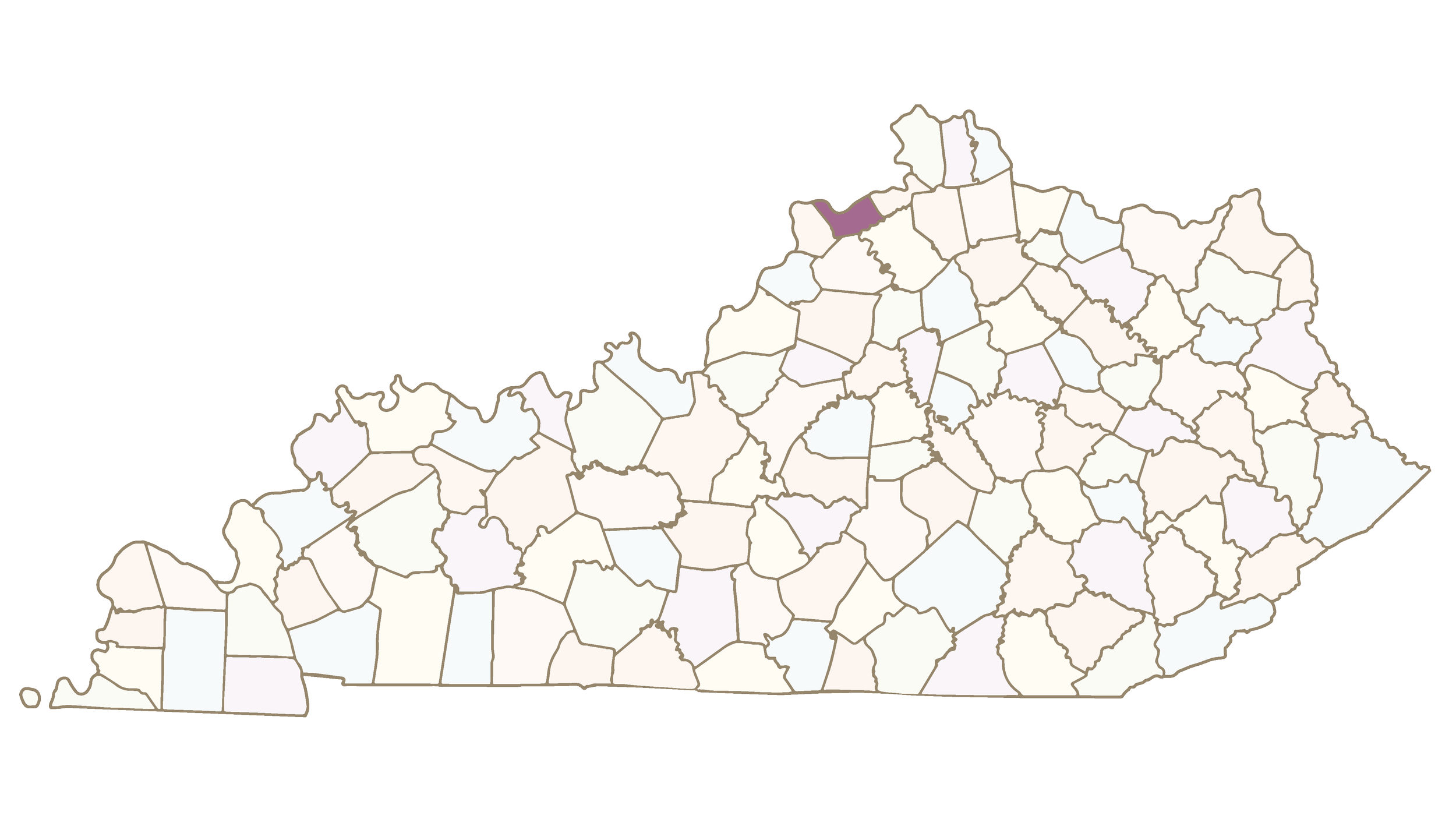
Map of Kentucky with Carroll County highlighted.
Carroll County’s Tobacco Festival (October 3–4, 2025)
No doubt many of our rural readers are quite familiar with the smell of drying tobacco. Having spent my teen years in neighboring Trimble County, I fondly remember the distinct aroma of drying tobacco hanging from our barn’s rafters. More than anything, it signaled the start of fall and all the magic that brings—family, friends, a holiday blitz, too much food, and, yes, festivals. And since tobacco farming plays such a crucial role in Kentucky’s history and heritage, I can think of no better festival to usher in October than Carroll County’s Tobacco Festival.
Held on Main Street in downtown Carrollton, the long-running festival is now in its seventy-eighth year. The small, unassuming town on the banks of the Ohio River is the perfect place to celebrate the aromatic crop, having once been one of the leading producers of burley tobacco in Kentucky. Carrollton was also once home to the second-largest burley tobacco market in the world, boasting an abundance of warehouses, soaring employment numbers, and a strong local economy.
Though local tobacco production is no longer at its peak, it will always be a huge part of Carroll County’s rich heritage. Indeed, festival director Ernest Welch Jr. credits the crop for helping build Carrollton itself. Intrigued? Come see for yourself this weekend! There is everything under the sun to entertain kids ages one to one hundred: live music, food vendors, arts and crafts, raffles and silent auctions, pageants and singing contests, wrasslin’, and a Saturday parade at 1 p.m. What better way to spend the first weekend in October!

Children observe the race at the Woolly Worm Festival in Beattyville, Lee County, Kentucky.
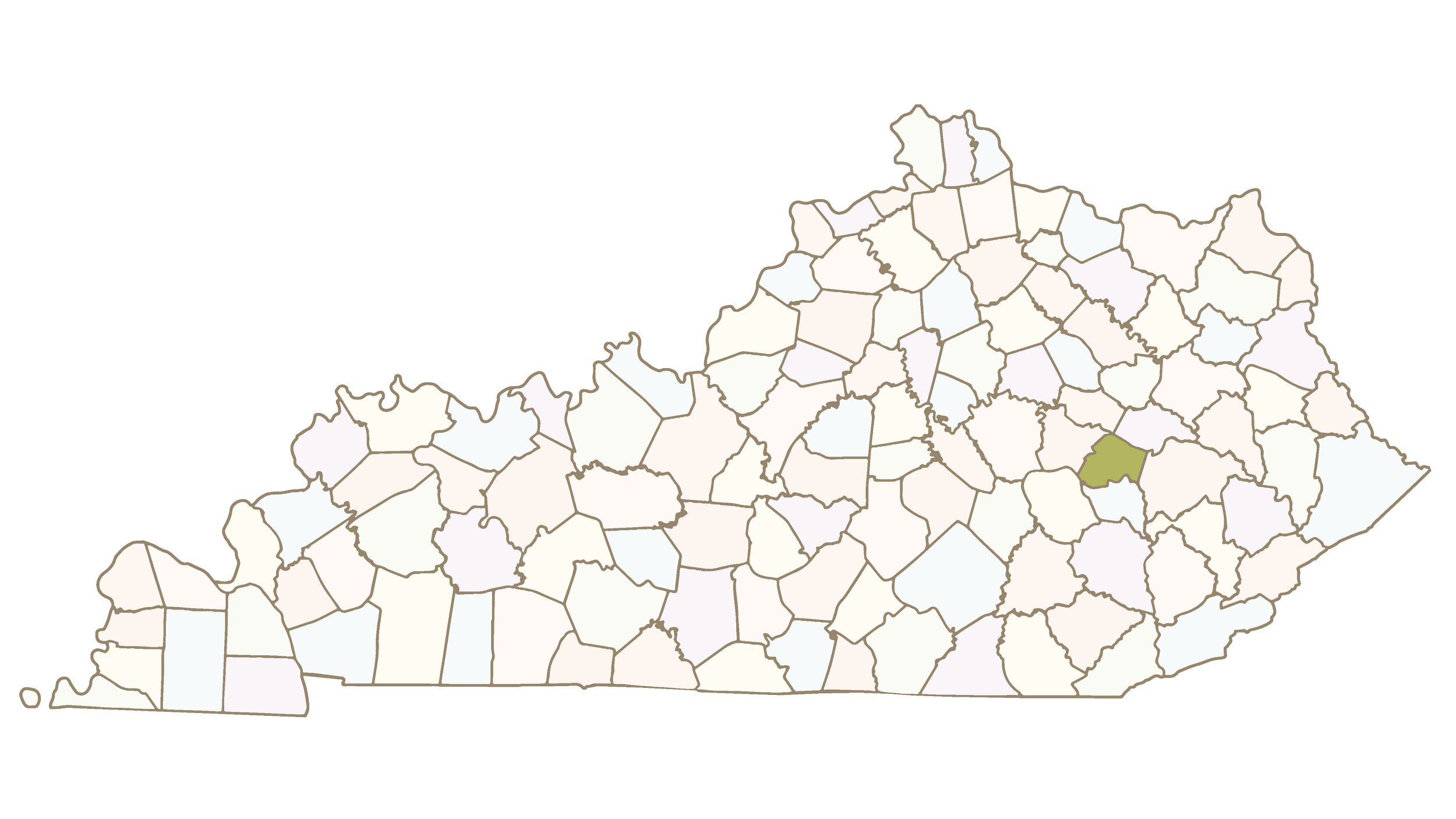
Map of Kentucky with Lee County highlighted.
Lee County’s Woolly Worm Festival (October 24–26, 2025)
During your life’s journey, you may have spotted that red and black caterpillar more commonly referred to as a “woolly worm.” Found throughout the US, they are anything but rare. It has long been said that one can predict the coming winter season by noting the color of its thirteen segments, each corresponding with a week in winter. If a segment is light brown, a mild week is to be expected. A black segment, however, foreshadows severe weather, with farmers traditionally planning their harvests and woodcutting accordingly.
The fine residents of Lee County are certainly no strangers to these cute little guys. In fact, local farmers have historically relied on their unique color patterns to manage their crops. The Woolly Worm Festival was created in 1988 to honor this long-standing tradition and was soon a massive success. The festival now brings in over 100,000 attendees annually to Beattyville—a staggering achievement for a small town of approximately 1,500 people. This year’s thirty-eighth annual festival should see even more visitors, as people travel from all over to enjoy the weekend’s festivities.
Perhaps the most fascinating events taking place are the woolly worm races. Participants are first tasked with locating their own woolly worms (Banded Woolly Bears only!), finding them on places such as wood piles, leaves, and outdoor furniture. Organizers provide instructions on how to properly care for your woolly worm before the big race, while also asking that the worms be released back into the wild once the competition ends. (Very considerate, if you ask me.) That said, if worms racing up string is not your thing, then you are still in luck! Other festival activities include a cornhole tournament, a pet show (with awards given to cutest kitten, the prettiest puppy, and the most impressive trick), a car show, a Sunday parade, live music and performances, arts and crafts, local authors, plenty of food, and over a hundred vendors. I hope to see you in Beattyville the weekend of October 24–26 for a creepy-crawly good time!

Jason Berkowitz
Engagement Specialist
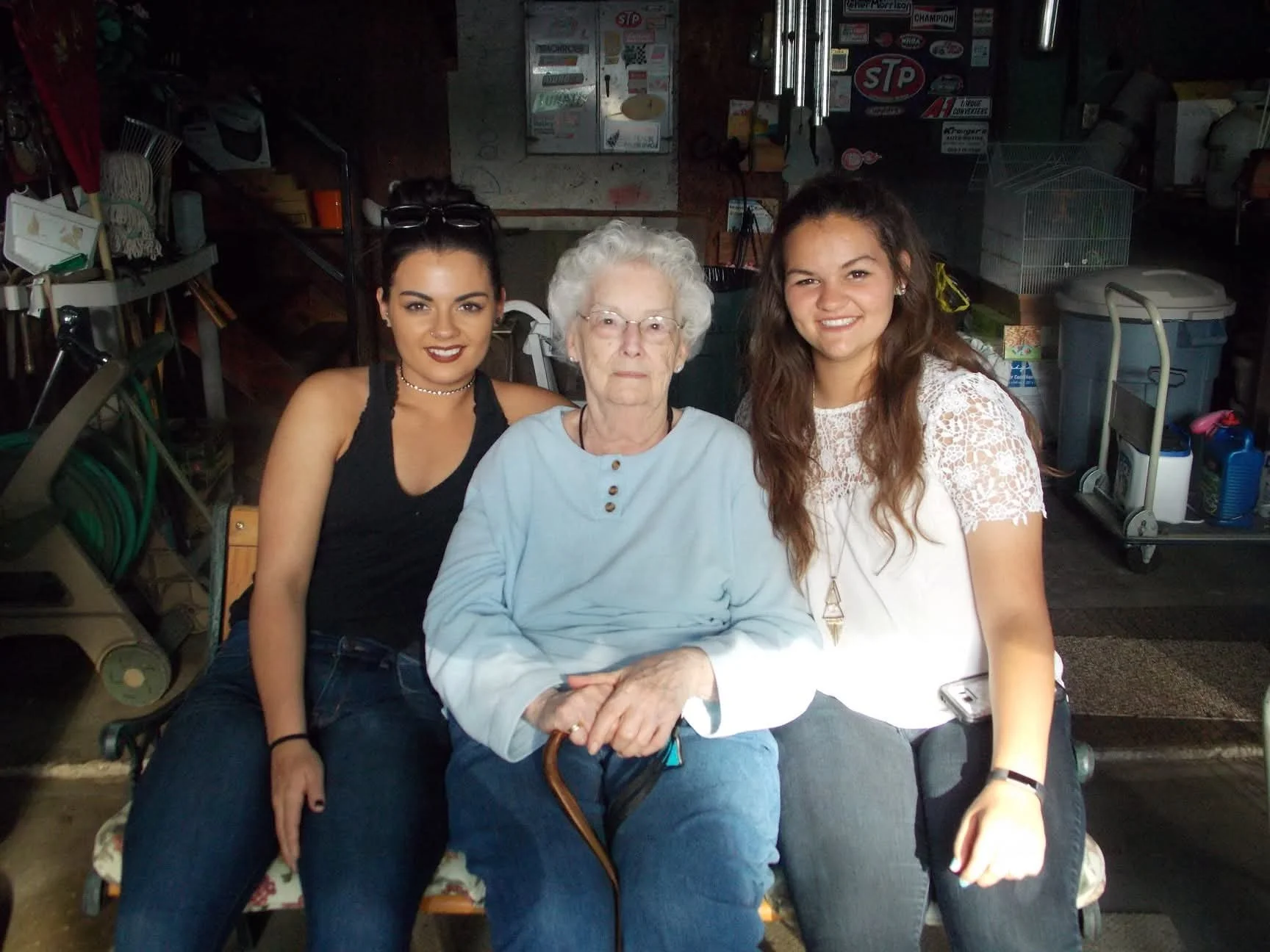
South Louisville native Mary Norma Kennedy (middle) pictured with granddaughters Kaitlyn Kennedy (left) and Tori Kennedy (right).
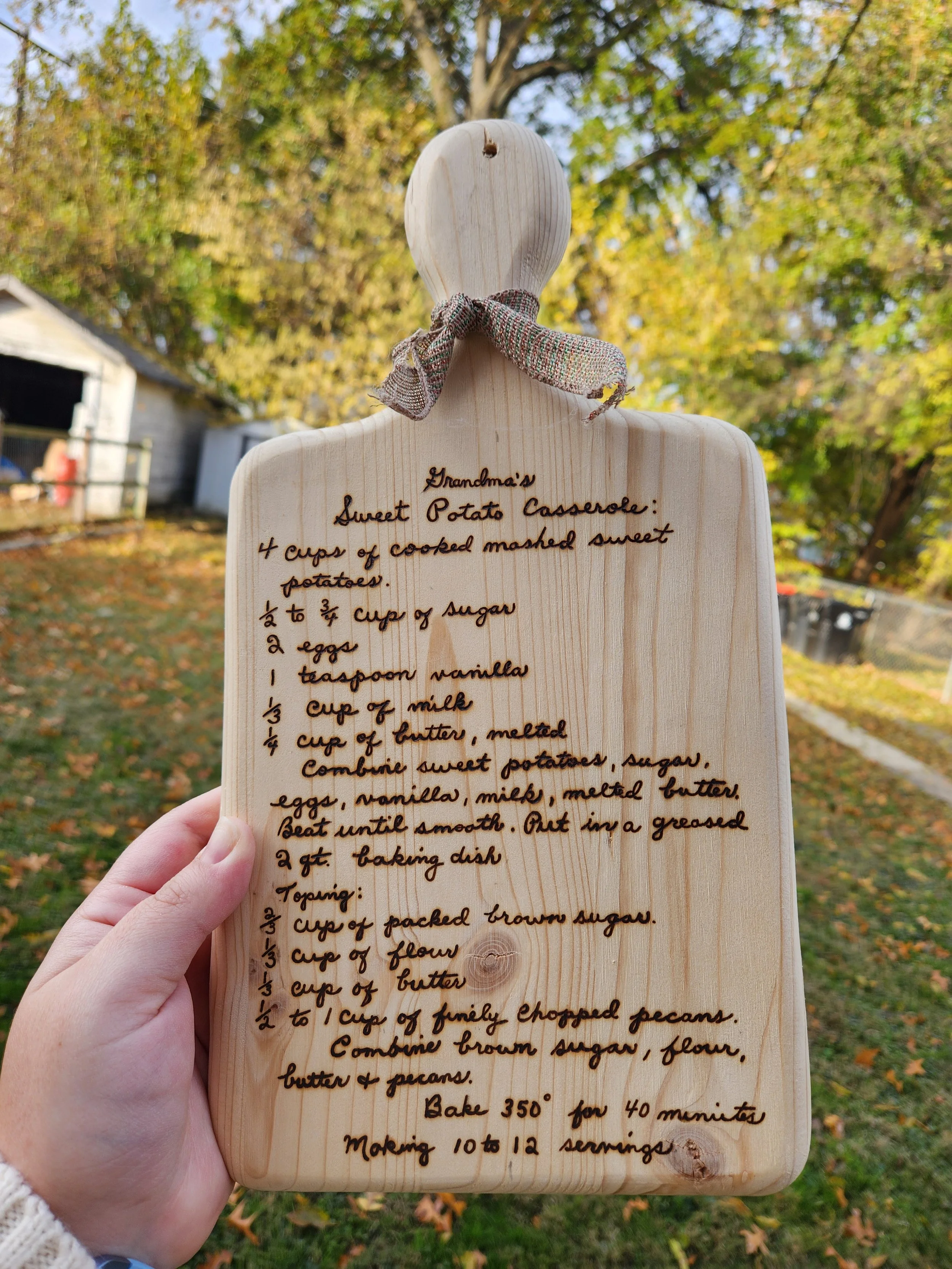
Mary Norma Kennedy’s sweet potato casserole recipe wood-burned onto a cutting board.
Published in the November 24, 2025, issue.
Although Christmas is my favorite holiday, I do wish people would wait until after Thanksgiving to start putting up their decorations. Thanksgiving may be a smaller holiday, but I think it deserves just as much appreciation as the ones it is sandwiched between in the calendar. It is a time of fellowship with friends and family, where we reflect on the good we have experienced throughout the year amidst the bad and catch-up with one another around a hot, home-cooked meal. It’s a time to be grateful for those around the table with you—and to remember those that no longer are.
This year, I’ve decided my contribution to Thanksgiving will be a sweet potato casserole, with a recipe from my late Grandmother, Mary Norma Kennedy. I was given a very sweet gift last Christmas, a wood burning of her recipe in her original handwriting into a cutting board. In the spirit of togetherness and being grateful for those around us, I can’t think of another recipe to follow that would be a more perfect embodiment of the Thanksgiving holiday values. The typed-out version of the recipe is below, and I encourage you to explore and recreate family recipes of your own this Thanksgiving!
Recipe for Grandma Kennedy’s Sweet Potato Casserole
Ingredients:
4 cups cooked mashed sweet potatoes
½ to ¾ cup sugar
2 eggs
1 teaspoon vanilla
1/3 cup milk
¼ cup butter, melted
Instructions:
Combine sweet potatoes, sugar, eggs, vanilla, milk, and melted butter. Beat until smooth. Put in a greased 2-quart baking dish.
Ingredients (for Topping):
2/3 cup packed brown sugar
1/3 cup flour
1/3 cup butter
½ to 1 cup finely chopped pecans
Instructions (for Topping):
Combine brown sugar, flour, butter, and pecans. Bake at 350 degrees for 40 minutes. Makes 10 to 12 servings.
Tori Kennedy
Manager of Youth & Family Programs
Honorable Mention
· “Local Artist’s Quilt Accepted into Collection of Obama Presidential Center” by Rachel Platt (January 20)
· “Open Letter” by Gwendolyn Gray (March 10)
· “U of L Urban and Public Affairs Students Present on Story-Mapping Project” by Lisa Björkman (April 14)
· “Frazier’s Volleyball Team Diggin’ History Debuts at Baxter Jack’s!” by Abby Flanders (April 21)
· “Frazier to Give Away First 250 Silkscreen Prints Free at Thurby!” by Lucas Keown and Nick Cook (April 28)
· “It Worked! A Southern Tradition and a Perfect Rooftop Wedding at the Frazier” by Katie Lowe (April 28)
· “Frazier Offering New and Improved Bourbon Tasting Experiences” by Heidi Janes (May 19)
· “Museum Shop: Frazier Barrel Selection Bourbons *Only* Sold Here!” by Mindy Johnson (May 19)
· “Object in Focus: Mary Todd Lincoln’s Arrest Warrant, May 19, 1875” by Simon Meiners (May 19)
· “From the Collections: Agnes V. Kohne’s Wedding Dress, 1925” by Tish Boyer (June 23)
· “Travel to the Past at Kentucky Renaissance Fair in Eminence, Henry County” by Nicole Clay (June 23)
· “Open Letter” by Andy Treinen (August 18)
· “Introducing the Frazier’s Director of Development Sandra Dodge!” by Sandra Dodge (September 1)
· “Host your Holiday Party at the Best Museum in Kentucky!” by Samantha Wilcox (November 17)
· “Museum Shop: Anderson Houses’ Frontier Soups” by Kristin Grief (November 24)
· “Save the Date: Vows with your Valentine!” by Melanie C. Duke (December 1)