Cool Kentucky Shop, Glass Artist Stephen Rolfe Powell, Trimble County WWII Vet Seeks Purple Heart, and More
What does Kentucky mean to you?
Is it the bluegrass? The Bourbon? The light on the Ohio River at dusk, which makes everything feel pink? You may tell your friends about the way a Kentucky summer smells—honeysuckle and fresh-cut grass—or how the dew glistens in the holler at sunrise.
At the Frazier, we’ve always believed Kentucky is more than a place—it’s a feeling. Here we tell the stories that shape this state. It’s something COOL you carry with you. And now, it’s something you can take home.
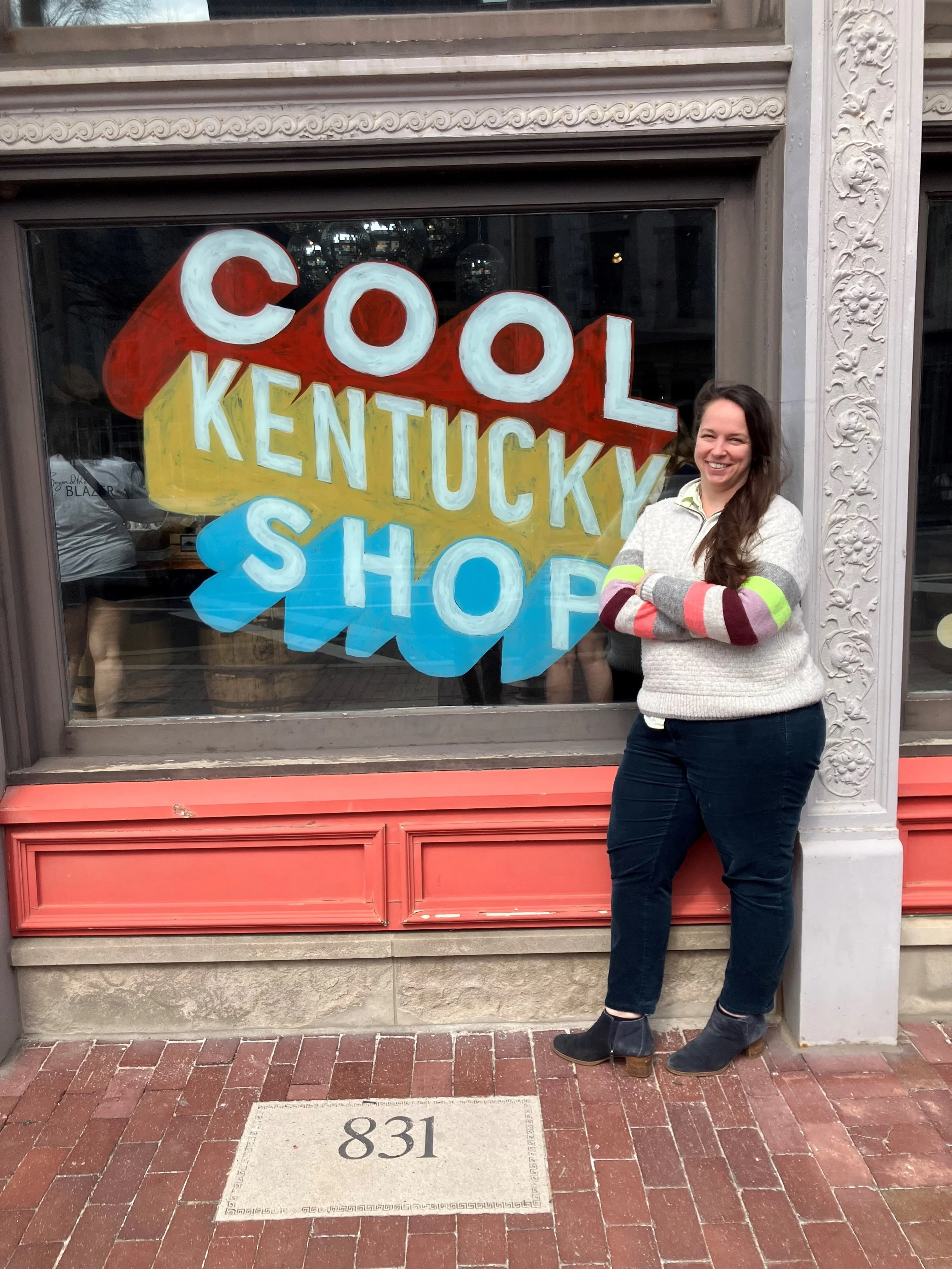
The Frazier’s Suzanne Siegel poses with the new window art for the Frazier’s Cool Kentucky Shop, March 25, 2026.
Introducing the Cool Kentucky Shop—a curated collection of authentic, unexpected, and unmistakable Kentucky finds. From Bourbon-inspired goods and locally made products to gifts that celebrate the humor, heritage, and spirit of the Commonwealth, every item is chosen to tell a story—and help you share it.
Inside the Cool Kentucky Shop, every shelf tells a story worth stopping for. You’ll find the spirit of Rosie the Riveter staring back at you—sleeves rolled, jaw set, reminding you that grit never goes out of style. You’ll discover that the most sung song in human history, “Happy Birthday to You,” was born right here in Kentucky, dreamed up by two Louisville sisters who had no idea they were writing the soundtrack to every celebration the world would ever know. You’ll catch yourself smiling at a disco ball, because some things don’t need a reason—they just need to spin, throw light in every direction, and remind you that joy is its own justification. And then, inevitably, you’ll find the Bourbon—and you’ll understand that Kentucky didn’t just make a drink, we made a devotion. Every bottle is years of patience and slow transformation inside charred oak, a philosophy as much as a pour. This is what the Cool Kentucky Shop does better than anywhere else—it takes the things that make this Commonwealth extraordinary and puts them right in your hands, where they belong.
Whether you’re visiting us in Louisville or discovering us from across the country, you don’t have to be in Kentucky or Louisville to take a piece of Cool Kentucky with you.
We are where the world shops Kentucky.
We are more than a store: We’re a new way to experience and gift the spirit of Kentucky—through the things you wear, give, display, and pass along.
We’re just getting started, and we can’t wait for you to explore how we’ve rebranded our museum shop. Learn more and shop online at coolkentuckyshop.com. Follow us on Facebook and Instagram.
In today’s Frazier Weekly, Amanda spotlights a glass artist featured in our 120: Cool KY Counties exhibit. We’ve got content on Women’s History Month, we rebalance for the spring equinox, and we meet with a 99-year-old veteran on a quest for a Purple Heart.
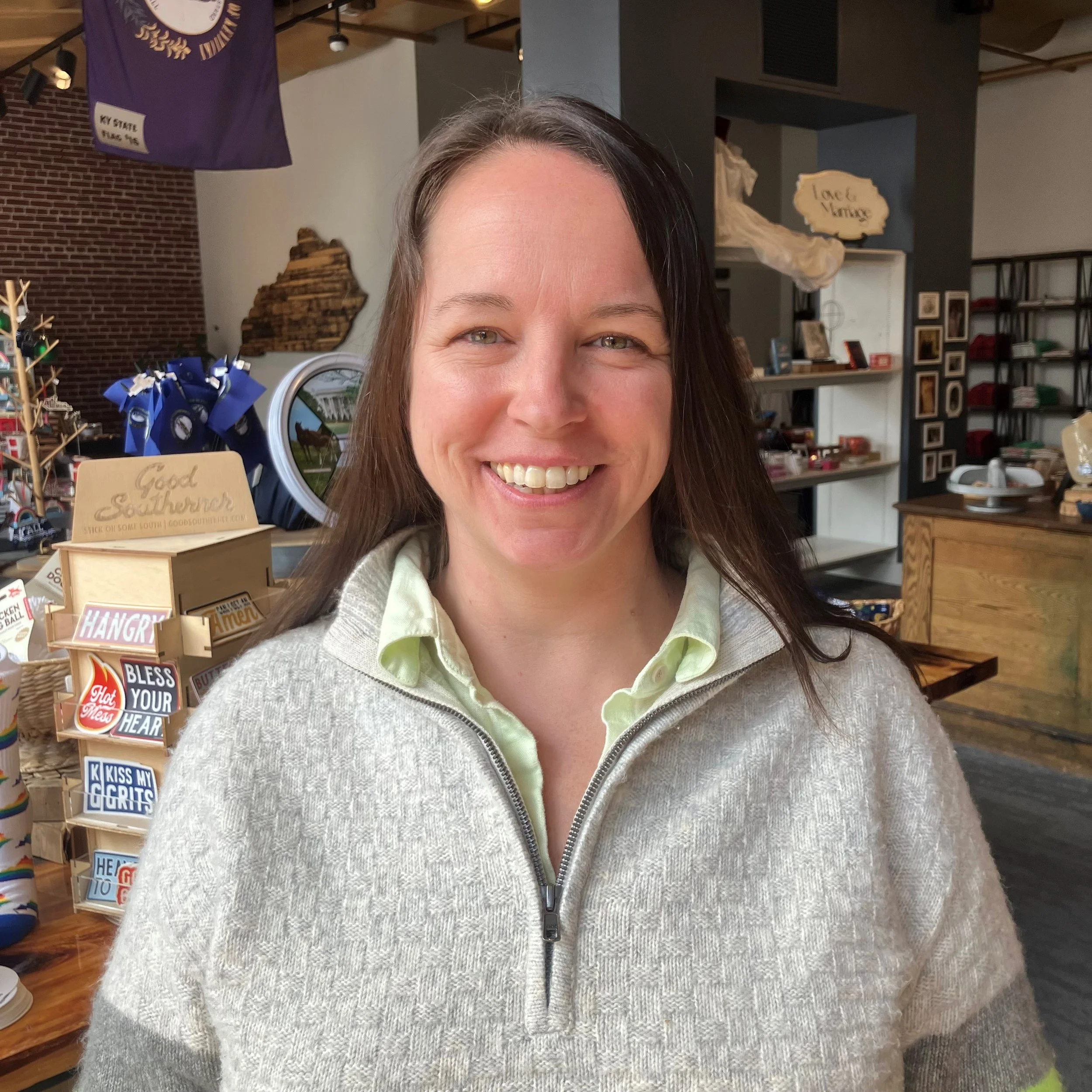
Suzanne Siegel
Digital eCommerce Manager
Frazier Kentucky History Museum
This Week in the Museum
Curator’s Corner: Stephen Rolfe Powell’s Glass Art Added to 120
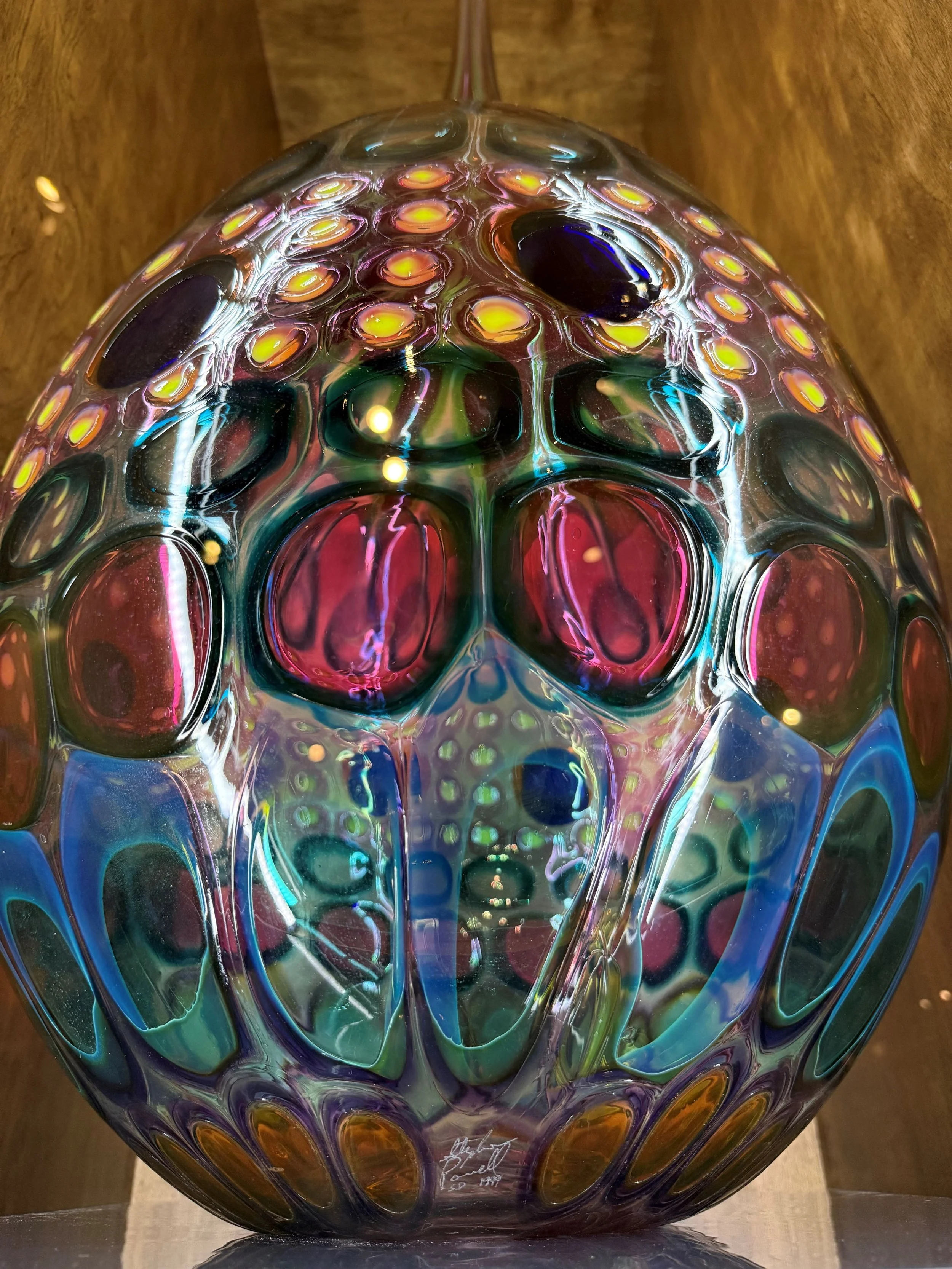
Detail of Stephen Rolfe Powell’s 1999 glass artwork Laconic Fig Flirtation, February 23, 2026. On loan from the GLASS National Art Museum at the Art Center of the Bluegrass. On display in the Frazier’s 120 exhibit.
Something you may not know about me is that I did not study history in college: I studied fine art. In fact, I hold both a bachelor’s and a master’s of fine arts with a concentration in glass blowing. Believe it or not, there is a deep history of fine art glass in Kentucky, primarily stemming from one man: Stephen Rolfe Powell.
Powell began the glass department at Centre College in Danville, Boyle County, in 1985. It was the first such glass program in the state and one of the first in the region. Many of Kentucky’s most prominent glass artists were students of Powell’s, and they have gone on to teach up-and-coming glass artists themselves. I affectionately refer to Powell as my “glass grandpa” because he taught my teacher and mentor, Ché Rhodes. Ché graduated from Centre in 1995 and began the glass blowing program at the University of Louisville in 2005, the year I took my first glass blowing glass.
Powell and his legacy hold a very special place in my heart. I’d argue glass has had a bigger impact on my life than almost anything else. It was my expertise with glass that helped me get my first job in museums: installing artwork, including the Leight Glass Collection, at the Speed Art Museum more than ten years ago. So, you can imagine that when presented with the opportunity to have one of Powell’s pieces on display in our 120: Cool KY Counties exhibit, I jumped at the opportunity. In our recent update of the case, Powell’s piece takes center stage.
The fine folks at the GLASS National Art Museum at the Art Center of the Bluegrass in Danville loaned us the piece and even drove up to install it (and I’m still a little sad they didn’t let me touch it). The museum houses the largest collection of Powell’s pieces in the world, and they agreed to let one piece live in the 120 case for two years. I am incredibly honored to have work by Powell and two of his students, Ché Rhodes and Brook White of Flame Run, on display in the museum. You can see Ché’s installation featured in The Commonwealth: Divided we Fall and Brook helped create the glass and steel sign for Cool Kentucky. While I don’t have any of my glass work on display in the museum, my artistic touch and the lessons I learned from Ché can be found all over the museum.
To learn more about Stephen Rolfe Powell, the GLASS National Art Museum, and Danville, check out this video that we just added for Boyle County on the 120 touch screens. And, of course, be sure to take a peek at Powell’s beautiful glass piece, now on display in the 120 case.

Amanda Briede
Sr. Curator of Exhibitions
How Printer Mary Katharine Goddard Pursued Happiness
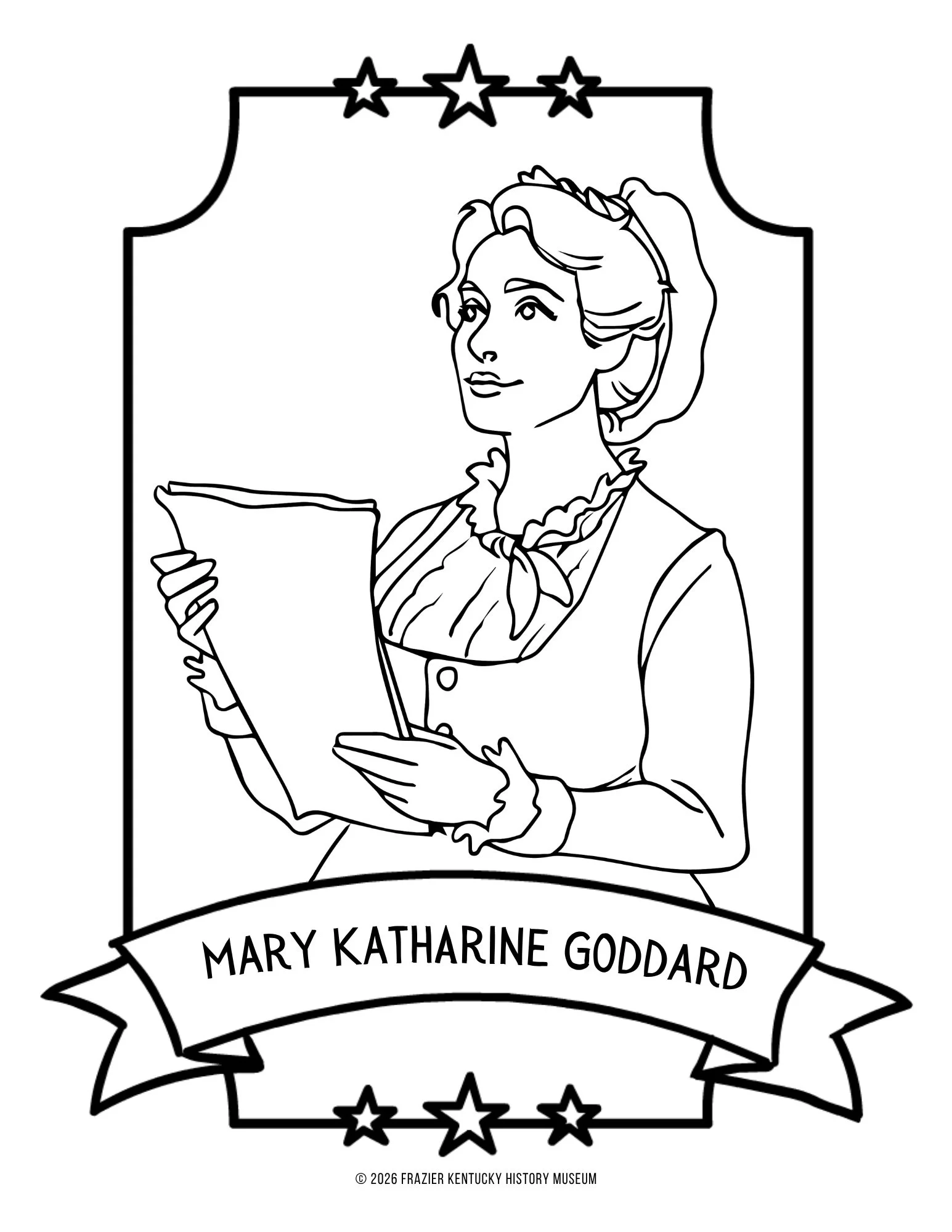
Cartoon of Mary Katharine Goddard, March 26, 2026. Credit: Sarah Jemerson.
One of my favorite parts of the Frazier’s Pursuit of Happiness exhibition is shining a light on unsung stories from the Revolutionary period. For Women’s History Month we want to share one of our favorites: Mary Katharine Goddard. Though her name is hilariously close to the Molly Shannon character from SNL, she is a “Superstar” in her own way.
Mary Katharine owned and operated her own printing business. When it came time to reproduce the Declaration of Independence, she had an important job: Mary Katharine printed the first copies that included the names of all fifty-six signers. This was momentous, because attaching their name to the document publicly was a dangerous thing to do. On other documents she printed, Goddard identified herself as “MK Goddard.” However, on the bottom of her copies of the Declaration of Independence, she signed it with her full name as the printer—clearly an endorsement of the document and all it contained.
My colleague Sarah Jemerson is creating a collection of drawings of people featured in Pursuit of Happiness. We use them in field trips, family days, and you will see them on the walls soon.
We can’t wait to see you here!

Mick Sullivan
Curator of Guest Experience
Frazier Highlights Seven Kentucky Women you Should Know About
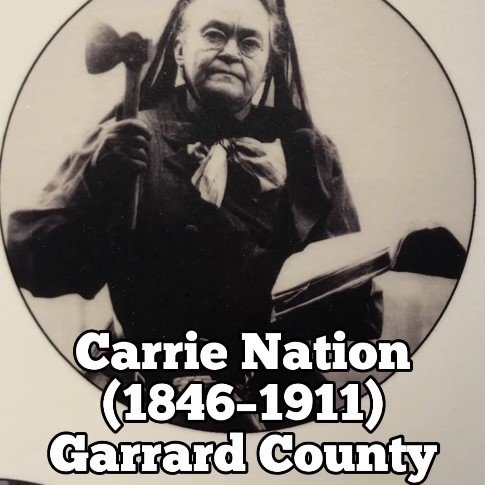
Still from the Frazier’s “Seven Kentuckians you Should Know About: Women’s History Month Edition” social media post, March 11, 2026.
March is Women’s History Month!
To celebrate, I made another “Seven Kentuckians You Should Know About” social post, this time featuring all women.
As you can see, each of these women is represented in some way at the Frazier:
· Jane Coomes (c. 1745–1816). Mercer County. Fort Harrod settler who became the first schoolteacher in Kentucky.
· Dolly (1700s–1800s). Madison County. Enslaved woman who gave birth to the first child born at Fort Boonesboro.
· Carrie Nation (1846–1911). Garrard County. Temperance radical who wrecked saloons with brick bats and hatchets.
· Margie Mattingly Samuels (1916–85). Nelson County. Chemist who named Maker’s Mark Bourbon and designed its red wax seal, bottle shape, logo, and label.
· Rose Will Monroe (1920–97). Pulaski County. Bomber aircraft riveter immortalized in a 1940s newsreel as “Rosie the Riveter.”
· Jean Ritchie (1922–2015). Perry County. Balladeer who sang hundreds of centuries-old British, Irish, and Scottish folk tunes.
· Martha Nelson Thomas (1950–2013). Graves County. Soft sculpture artist whose Doll Babies inspired the Cabbage Patch Kids.
The post was published on Facebook, Instagram, and TikTok. You can watch the post on Facebook as well as Instagram and TikTok.

Simon Meiners
Communications & Research Specialist
Equinox a Time to Reflect on Millennia-Old Spring Rituals
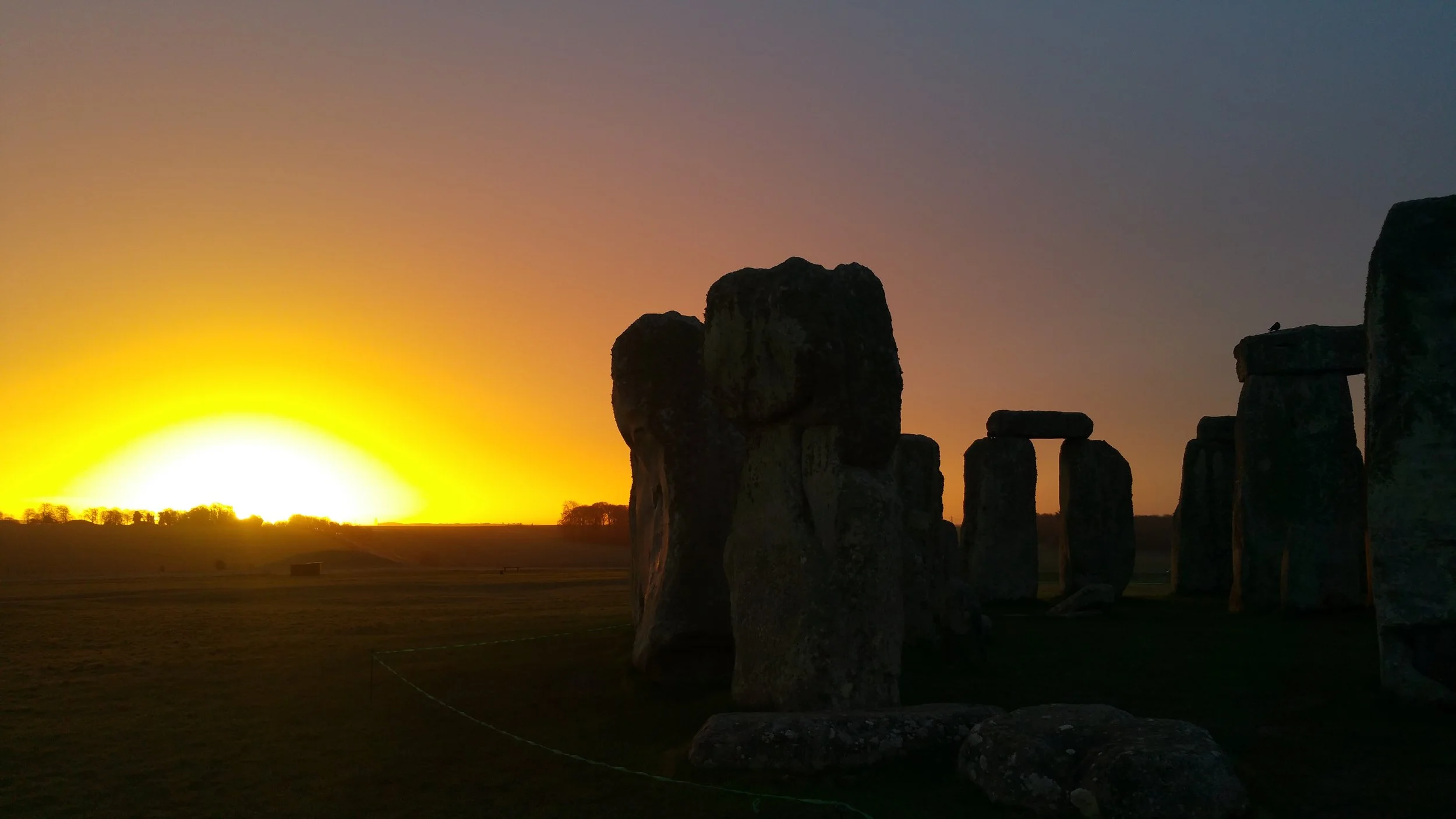
Stonehenge at sunrise, March 6, 2017. Credit: Stonehenge Stone Circle.
Susan Reed, an Engagement Specialist here at the Frazier, can also double as our spiritual guru. She has twenty-five years of therapy experience and is a believer in the healing power of creativity and thrives on deeper connections. As part of our Stories in Mind team, she works with residents in local nursing homes through history to combat loneliness and isolation and develop meaningful relationships. Now for the spiritual guru part, she wanted to write about “renewal” with the spring equinox. I said please, we can all use some balance in our lives.—Rachel Platt, VP of Mission
With the beginning of spring, many of us are excitedly planning our visit to the local gardening center, engaging in spring cleaning, cleaning out gutters, and other tasks of the season. But few of us recognize that in doing these tasks, we are participating in rituals as old as humanity itself.
Twice a year, the Earth arrives at a moment of quiet symmetry: the equinox. This celestial event marks the point at which day and night are equal in length, a fleeting balance that has captivated human imagination. The spring equinox, occurring this year on March 20, has long been recognized as a historical, cultural, and spiritual event.
Coming from the Latin aequus (equal) and nox (night), the word “equinox” reflects the equilibrium between light and darkness. For ancient civilizations, this balance was far more than a scientific curiosity—it was a signal of change. It marked the end of winter’s scarcity and the beginning of agricultural renewal. Fields could be worked, seeds could be planted, and communities could look ahead.
Culturally, people developed rituals and monuments to honor the equinox. The best-known example of this is Stonehenge. Stones aligned with remarkable precision to capture the sun’s position on the equinox; Stonehenge demonstrates early astronomical knowledge and spiritual reverence. Stonehenge and other equinox sites served as communal gathering places that marked the transition to spring. Festivals celebrated fertility, growth, and rebirth—universal themes that reflected humanity’s deep connection to the natural world.
The spring equinox symbolized renewal of both the land and the human spirit. It was a time to shed the heaviness of winter and embrace possibility. Cleaning, preparing, and beginning anew were common practices, echoing the transformation seen in budding trees and warming soil.
Perhaps the most enduring significance of the spring equinox lies in its symbolism of balance. This phenomenon invites reflection. Just as the Earth pauses in balance before tipping toward longer days, we too are offered a moment to consider the balance within our own lives.
Life can pull us toward extremes: work and rest, busyness and stillness, connection and solitude. The equinox reminds us that harmony and balance is not a permanent state, but rather a moment to notice and to choose intentionally.
So, as you visit the garden center and get that long overdue car wash, know that you are participating in a ritual as old as humanity itself—one that see the turning of the Earth not just as the passage of time, but the possibility of renewal and balance in your life.

Susan Reed
Engagement Specialist
Frazier Objects Used in Music Video for U of L Class Project
When you work at the Frazier Museum, cool things are always popping up. In January, when it was freezing cold and Louisville was covered in snow and ice, I got an interesting phone call. K.A. Owens, who interned at the Frazier way back when we were a historical arms and armor museum, had a question. His class at U of L had been tasked with creating a music video for a song titled “Lonely Nights” by the group Wax Fang and they were looking for some reproduction armor. We long ago moved our focus at the Frazier to Kentucky history—but lingering away in the back corners of our basement are some helmets and gauntlets from our early days. K.A. had made the right call. We were happy to loan a former intern some objects for a project and the rest is history. As you’ll see below, the video project was very well done, and we were happy to play a small part in it. And I can’t get that song out of my head. I predict some Wax Fang will be added to my playlists in the near future.—Megan Schanie, Sr. Manager of Educational Programs
The “Lonely Nights” video was made as a class project for Communications 341: Music Video in the spring 2026 semester at the University of Louisville. The instructor, Professor Remington Smith, gave the class the assignment of creating a music video for the song “Lonely Nights” by Wax Fang. The video was shot without the artist.
The director of the project was Elijah Marshall. As director, Elijah created the concept of a Lonely Knight trying to do good and make a place for himself in the world. The cinematographer was Elle Kennedy, the assistant director and editor was Shelbie Herrschaft, and I was the grip gaffer. The Lonely Knight was played by Edwin Kelso.
I’d been an intern at the Frazier and asked Megan Schanie of the Frazier if it would be possible to borrow armor from Frazier for the shoot. Megan was kind enough to allow the video crew to borrow a helmet, mail, gauntlets, and leg armor for the project. The project was partially shot in twenty-two-degree weather outdoors at Central Park in Louisville, Kentucky, along with two different interior locations: Recbar in Jeffersontown and the Student Recreation Center at the University of Louisville. COMM 341 thanks the Frazier and Megan Schanie for assisting with the project.
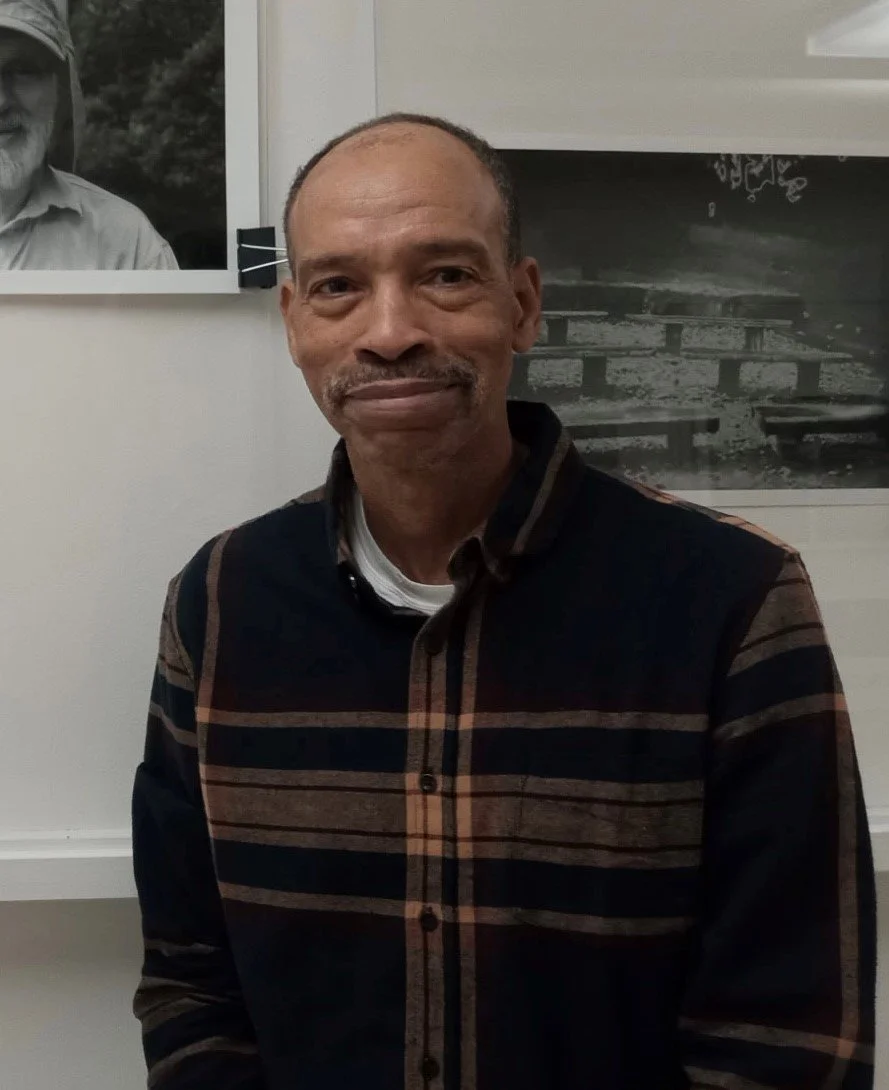
K.A. Owens
Student, University of Louisville
Guest Contributor
Kentucky Writers Hall of Fame to Induct Class of 2026 Tonight
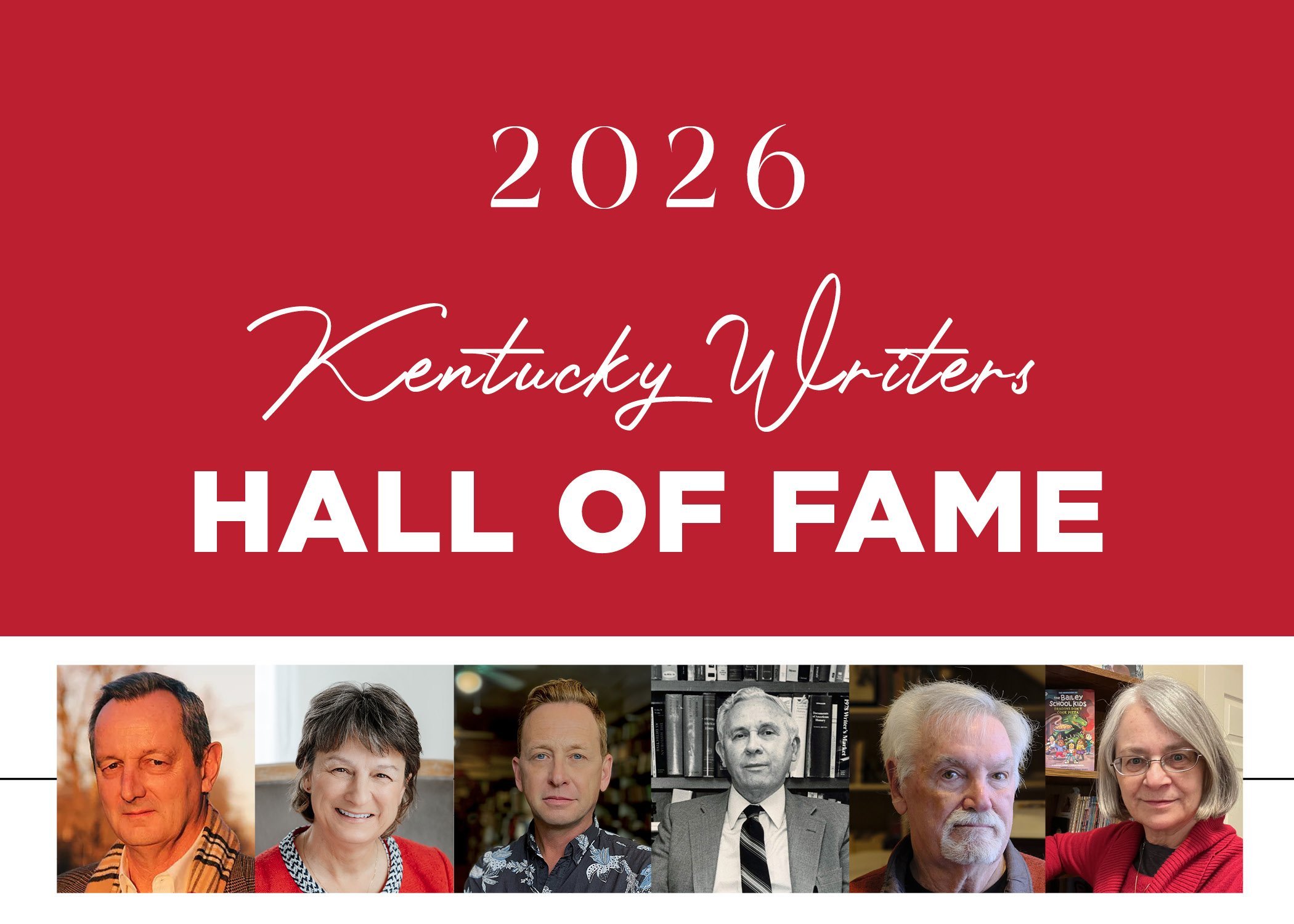
2026 class of Kentucky Writers Hall of Fame graphic. From left, Frederick Smock, Debbie Dadey, Silas House, Lowell Harrison, Jeff Worley, and Marcia Thornton Jones.
We know him, we love him, and now we’re congratulating him on being inducted into the 2026 Kentucky Writers Hall of Fame.
Silas House is one of six inductees who will be celebrated tonight at a ceremony in Lexington at the historic Kentucky Theatre.
Silas House has a home here at the Frazier in the Literary Kentucky section of our Cool Kentucky exhibition. He also joined us for a special program featuring him in 2024. Listening to him read his work was a privilege.
House is joined by Marcia Thornton Jones and Debbie Dadey, a writing team who are successful authors of children’s books.
Jeff Worley is a former Kentucky poet laureate.
Also being honored are the late Frederick Smock, an acclaimed Louisville poet and teacher at Bellarmine University, and Lowell Harrison, a renowned Kentucky historian.
Congrats to all the inductees.

Rachel Platt
VP of Mission
On the Trail with Abby: Maker’s Mark Distillery in Marion County

On the Trail with Abby graphic.
Bourbon tourism is booming—and the Kentucky Bourbon Trail® is growing faster than ever! Each week, the Frazier’s Abby Flanders takes readers on a digital stop-by-stop tour of this expanding adventure, spotlighting the distilleries, stories, and expressions behind America’s native spirit. Ready to hit the trail in real life? Start your journey at the Frazier Kentucky History Museum, home of the Kentucky Bourbon Trail® Welcome Center.
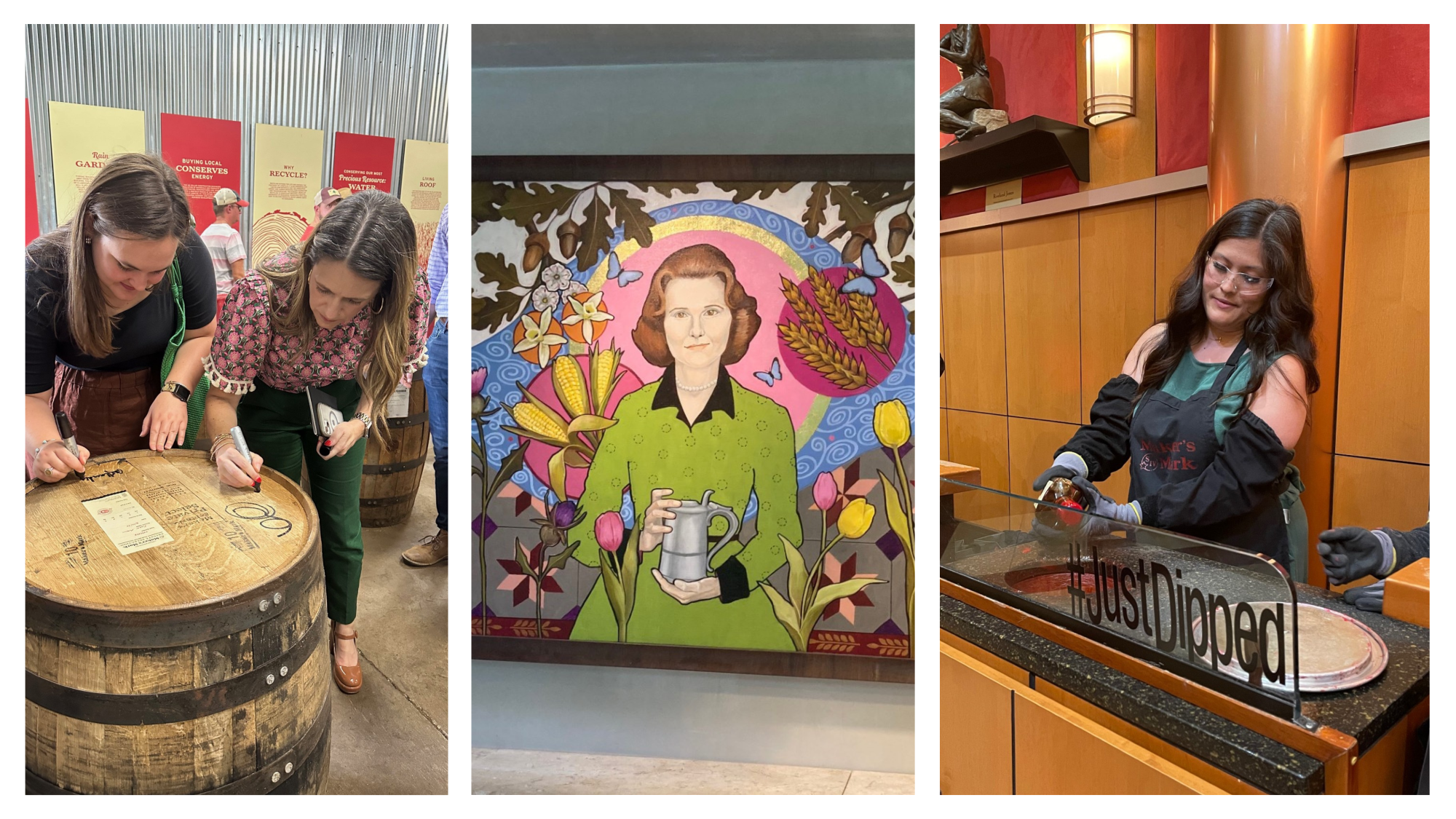
From left, Abby Flanders and Casey Harden sign the barrel during the Frazier’s Maker’s Mark Barrel Pick outing; portrait of Margie Samuels by artist Honora Jacob; Katie Lowe dipping a Maker’s Mark bottle in red wax.
This week’s distillery, located in Marion County, Kentucky, needs little introduction. As one of the biggest names in Bourbon, Maker’s Mark and its iconic red wax seal stands on its own.
There’s a lot to love about Maker’s Mark, from the consistency of their original Bourbon to their B Corp status. I was fortunate enough to help create the recipe for Frazier’s own Maker’s Barrel, which features a 1, 2, 1, 4, 2 stave profile. You can pick up a bottle of the limited edition run in our Cool Kentucky Shop!
But who created that infamous red seal? Margie Mattingly Samuels, wife of brand founder Bill Samuels Sr., gets the credit. Bill led the charge for what was inside each bottle, but Margie took on the creative and brand aspects such as the seal, bottle shape, parchment-like label, and name, which propelled Maker’s into the spotlight.
As we near the end of Women’s History Month, let’s raise a glass to Margie, and all the other women who have built Bourbon as we know it. Cheers!

Abby Flanders
Administrative Chief of Engagement
History All Around Us
Local World War II Veteran Says it’s Time for his Purple Heart
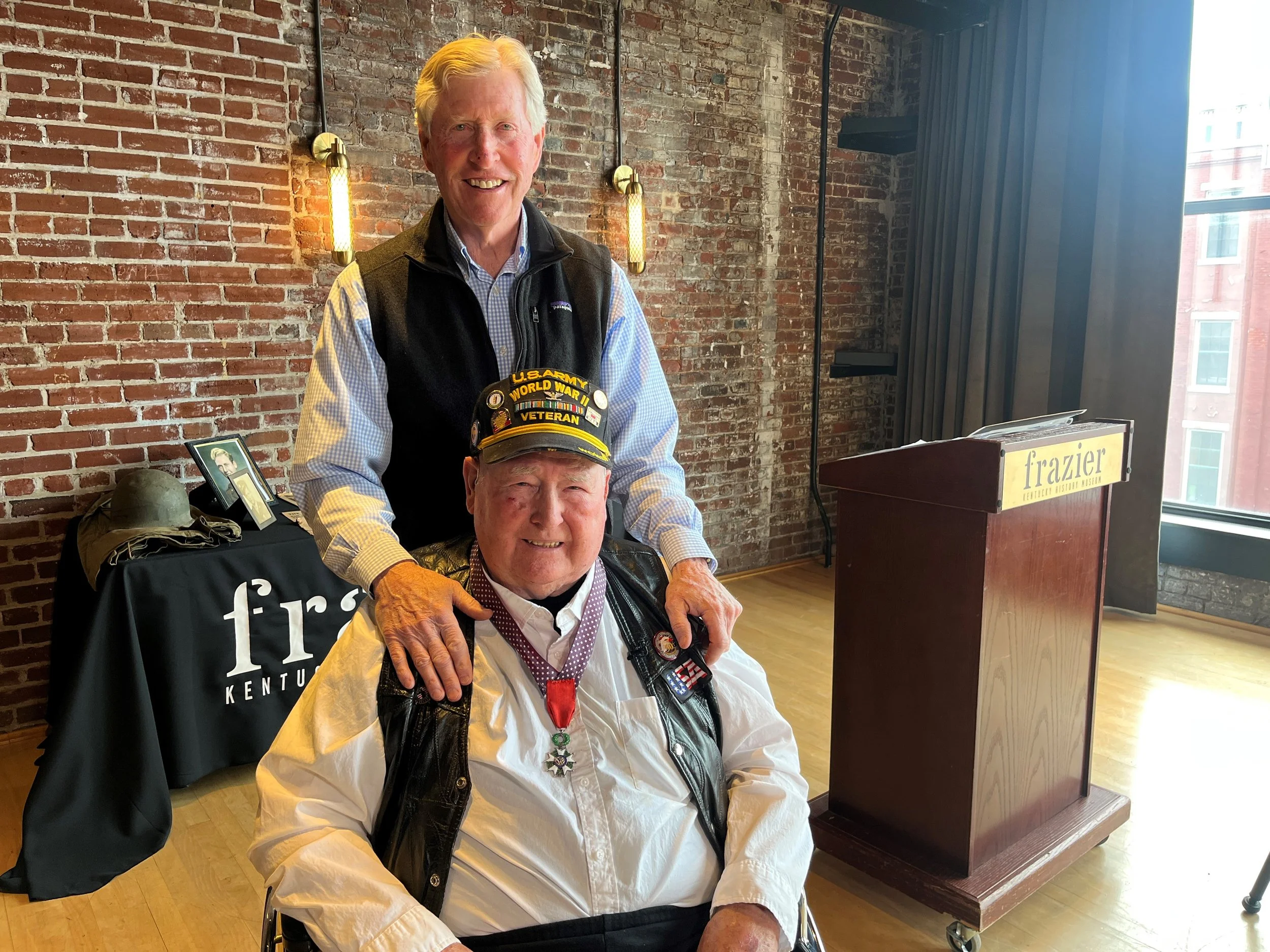
Jeff Thoke poses with World War II veteran Glenn Fisher during news conference at the Frazier, March 23, 2026.
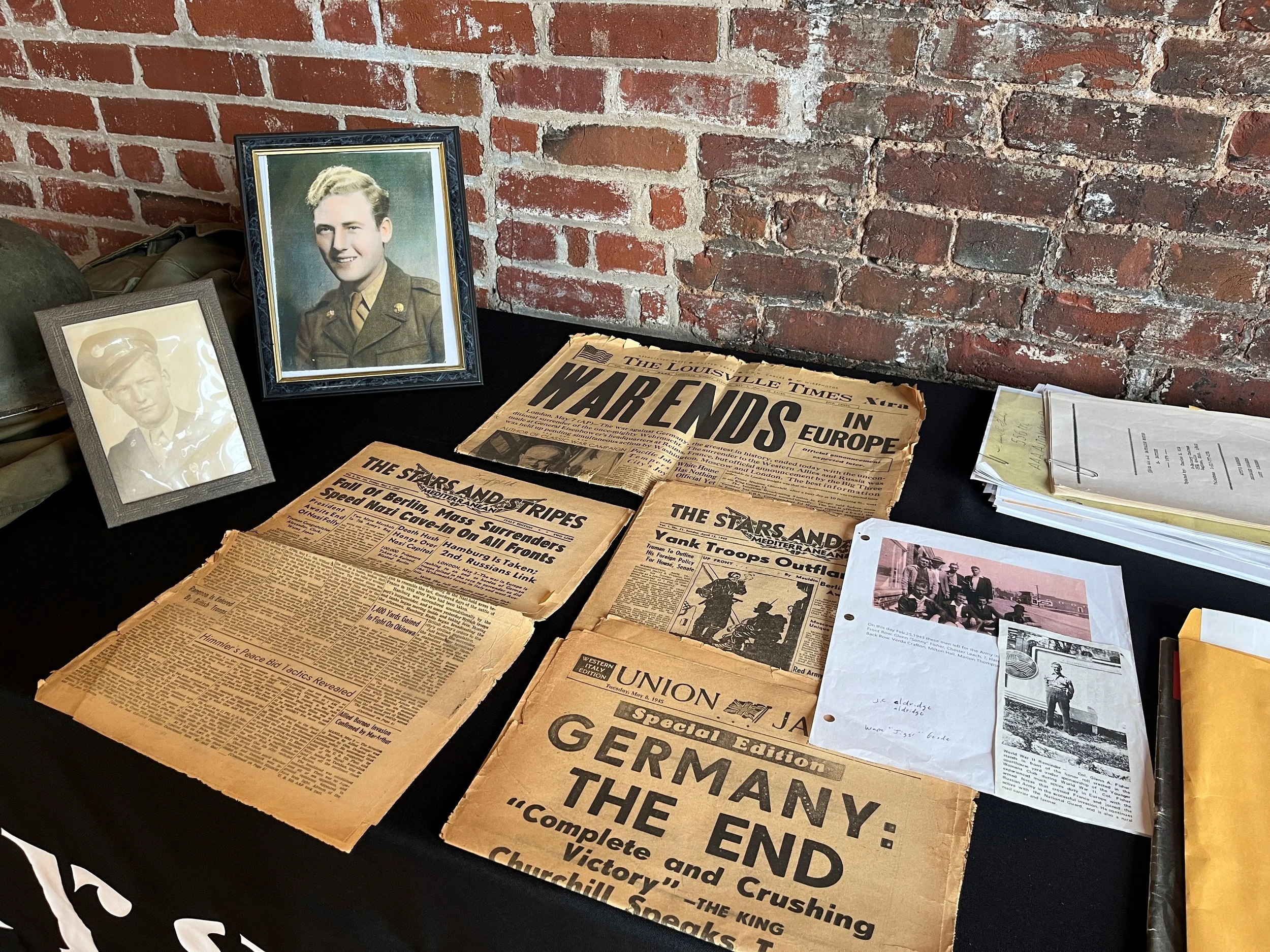
Newspapers and objects from World War II veteran Glenn Fisher, March 23, 2026.
Before he turns one hundred years old in October, Trimble County resident Glenn Fisher hopes he gets his due: a Purple Heart for his service in World War II. And for the injuries he sustained that resulted in more shrapnel being removed just three years ago, shrapnel that’s been inside him for nearly eighty years.
Fisher, who was with the 556th Anti-Aircraft Artillery Unit, was injured in March 1945 in Germany when enemy shells hit and exploded. Fourteen in his unit were injured that day, including Glenn. Two comrades died, one of them his good friend Paul Baker. Fisher was hit by shrapnel in the face and in his backside near his hip.
Information on those who died that day was well documented, but not so much for those who were injured, receiving their first treatment in a field hospital. Therein lies the problem with receiving the Purple Heart.
Enter the picture Jeff Thoke, a longtime friend of Fisher. He’s also with the Bluegrass Honor Flights that serves veterans. He has been working for months to try and cut through red tape to make Glenn’s wish come true. So far, he has only received denials from the US Army due to a lack of documentation.
Did I mention Glenn was just sixteen years old when he enlisted? He enlisted with the permission of his parents following the December 7, 1941, attack on Pearl Harbor.
We held a news conference at the Frazier last week to try and amplify Glenn’s story. I know Glenn from my time as a journalist covering Honor Flights with our veterans to Washington, DC. There are so few World War II veterans left and the clock is ticking. In Glenn’s case, the clock is ticking to do the right thing.
I sure hope someone is listening.
Glenn turns one hundred on October 10.
Rachel Platt
VP of Mission